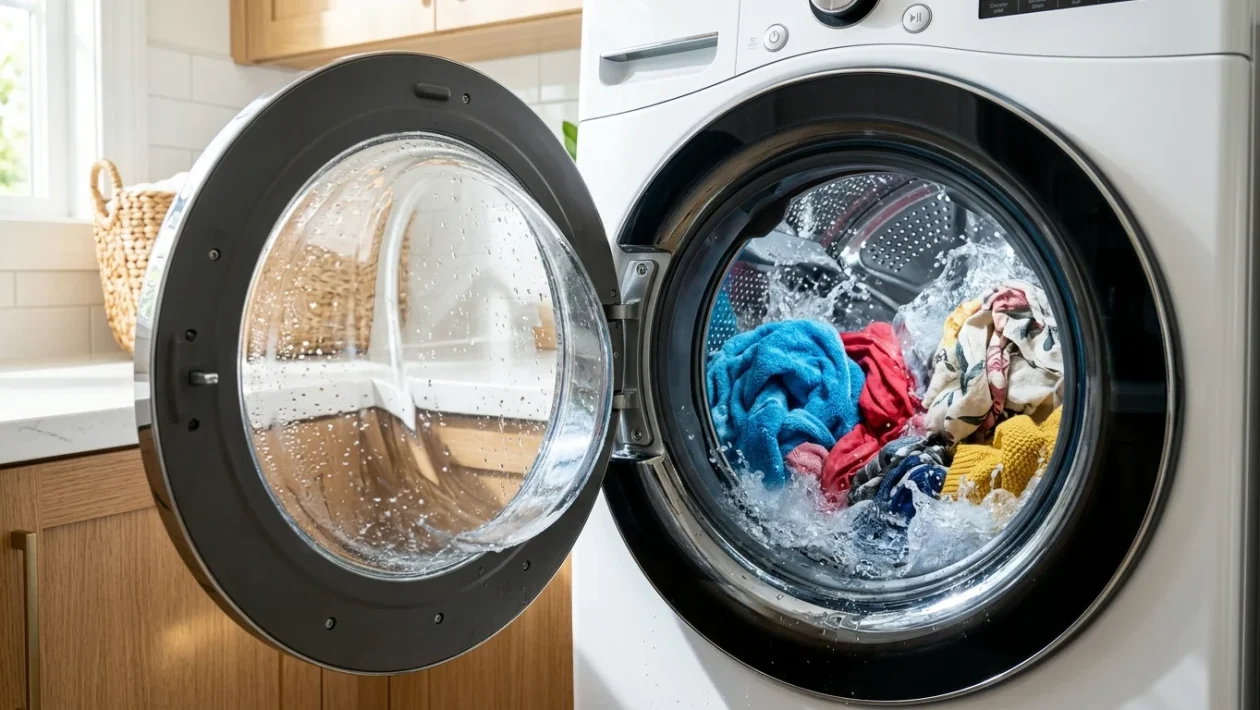
A front-loading washing machine spinning a load of colorful daily garments.
Choosing between hot and cold water for your laundry affects more than just cleanliness. It impacts fabric longevity and your monthly energy bill.
For decades, hot water was the undeniable gold standard for a deep clean. Today, laundry experts argue that cold water is actually the superior choice for everyday loads.
Why Cold Water Rules the Laundry Room
The American Cleaning Institute (ACI) states that cold water is now ideal for most standard laundry tasks. This shift is primarily driven by modern detergents, which manufacturers specifically formulate to break down dirt and stains at lower temperatures.
Washing in cold water does more than just remove grime. It actively protects bright colors from fading and prevents delicate fabrics from shrinking in the wash.
Cold cycles are significantly gentler on materials like cotton, wool, and synthetic blends. Furthermore, by skipping the heating cycle entirely, you drastically cut your washing machine’s overall energy consumption.
When Hot Water is Non-Negotiable
Despite the undeniable benefits of cold water, high temperatures still serve a critical role in household hygiene.
The Centers for Disease Control and Prevention (CDC) issues a strict guideline for potentially contaminated items. If clothing, towels, or bedding have been exposed to bodily fluids or used by someone who is sick, you must use the warmest water the fabric can handle.
Neatly folded piles of fresh laundry separated by color and fabric type.
After washing contaminated laundry, the CDC recommends drying these items completely to ensure any lingering pathogens are destroyed.
Hot water is also the superior choice for heavily soiled work clothes, durable white cottons, and standard household linens, provided the manufacturer’s care label allows it.
The Expert Verdict
Industry consensus points to cold water as the smartest default setting for standard households. It cleans effectively while extending the life of your wardrobe and lowering energy costs.
Ultimately, the fabric and the situation dictate the rules. Always check the garment’s care label and match your detergent to the water temperature before starting a cycle.
Quiz
Laundry Water Temperature
Answer 5 quick questions about the article you just read.
-
What do experts currently recommend as the best choice for everyday laundry loads?
Why: The text notes that experts now view cold water as the superior choice for standard daily washes.
-
What allows modern detergents to clean effectively without hot water?
Why: Modern detergents are specifically manufactured to break down stains and dirt at lower temperatures.
-
In which situation does the CDC mandate using the warmest water the fabric can handle?
Why: The CDC guidelines state that items used by a sick person or exposed to bodily fluids must be washed in the warmest water possible.
-
How does choosing a cold cycle impact your household resources?
Why: By skipping the heating cycle entirely, a cold wash drastically reduces a washing machine's overall energy usage.
-
What is the recommended final step for handling contaminated laundry?
Why: The CDC recommends completely drying these items to ensure any remaining pathogens are destroyed.