Intricate ancient gold jewelry worn by elite women in the Greek colonies of Magna Graecia.
Clothing has never been just about staying warm. For millennia, it has functioned as a sharp tool for communicating social rank, culture, and identity.
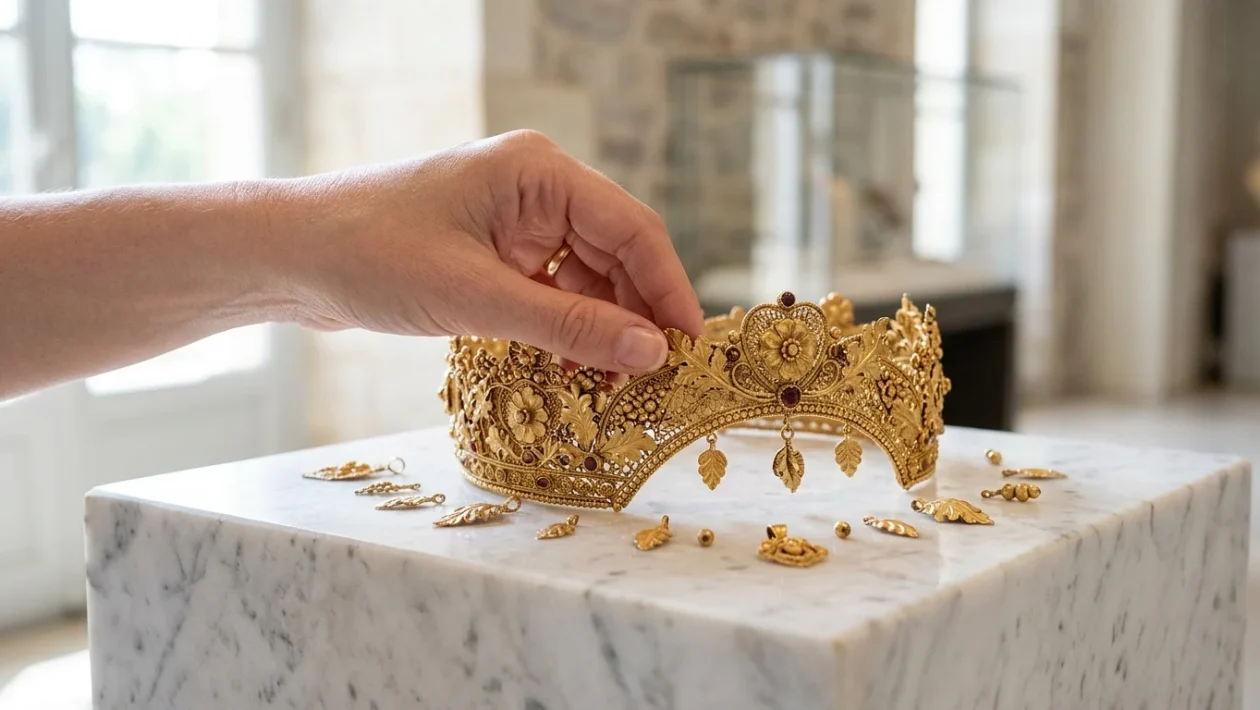
A highly detailed ancient gold crown adorned with delicate floral elements.
Between the 6th and 4th centuries BCE, gold jewelry became a powerful social indicator in the Greek colonies of southern Italy, an area known as Magna Graecia. Elite women adopted Hellenic trends and merged them with local styles to broadcast their status.
Archaeologists have recovered most of these pieces from funerary sites. By analyzing these diadems and earrings, researchers can trace ancient supply chains, artisan migrations, and cross-cultural networking.
The Gold Centers: Taranto, Metaponto, and Crotone
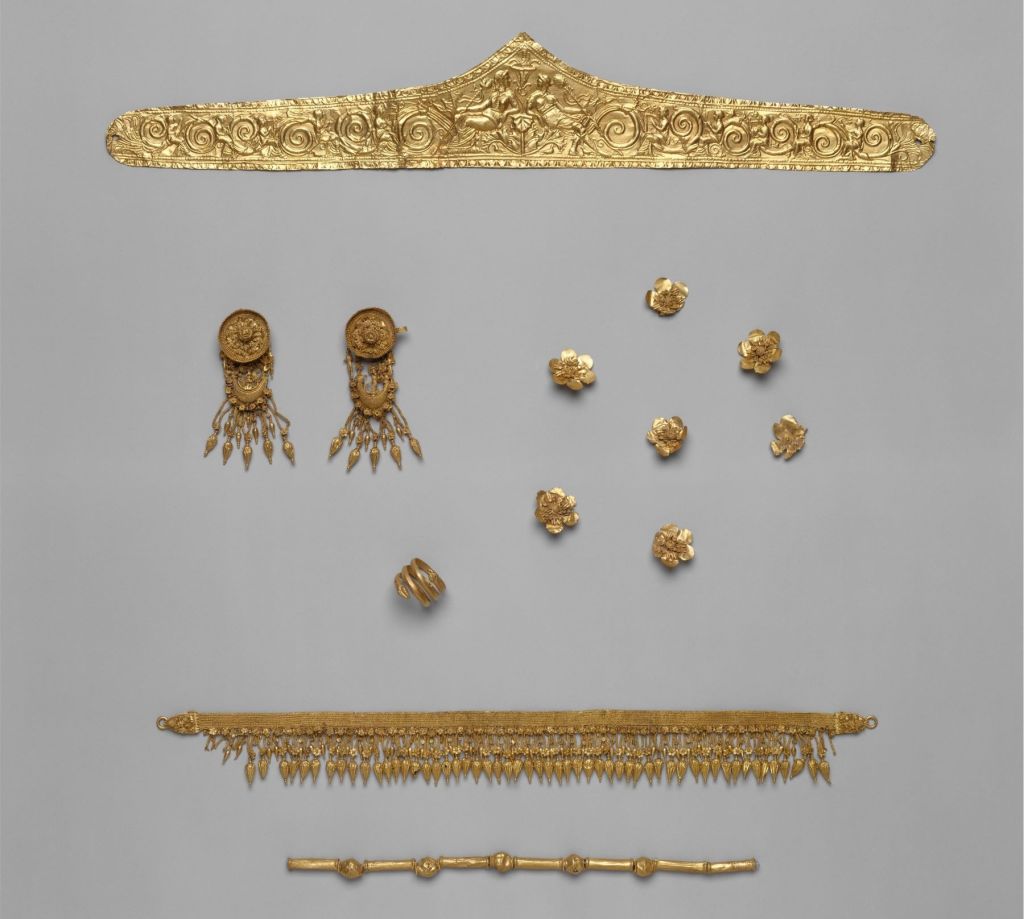
A collection of intricate ancient gold jewelry featuring earrings, pendants, and rings.
While the exact makers of these pieces remain anonymous, distinctive workshop styles survive. Itinerant Greek craftsmen and settled local artisans turned cities like Taranto, Metaponto, and Crotone into major hubs for metallurgical innovation.
By the second half of the 4th century BCE, Taranto had developed a highly recognizable aesthetic. Goldsmiths there relied heavily on fine filigree and complex botanical compositions.
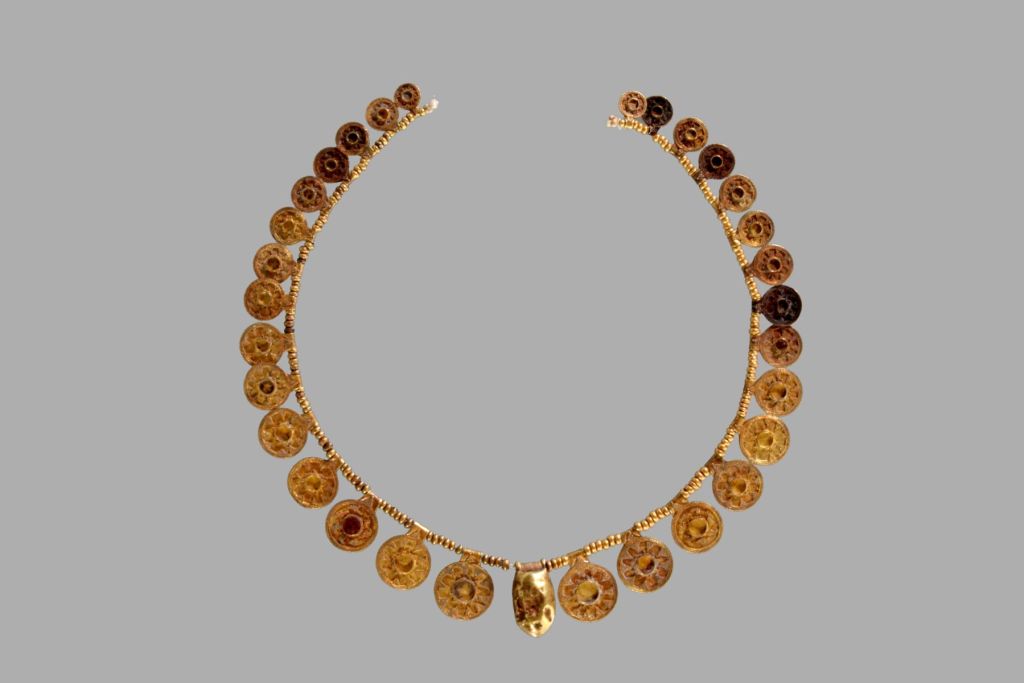
An elaborate gold necklace made of detailed woven wire and dropping pendants.
These ancient jewelers mastered specialized techniques like repoussé, granulation, beaded filigree, engraving, and colored enameling. Gold was always the preferred material, though pieces utilizing gilded silver or copper cores occasionally appeared.
Status, Gender, and Ritual Symbolism
Excavations show both men and women were buried with gold goods. However, elaborate headdresses, diadems, and specific earring types belonged exclusively to female graves.
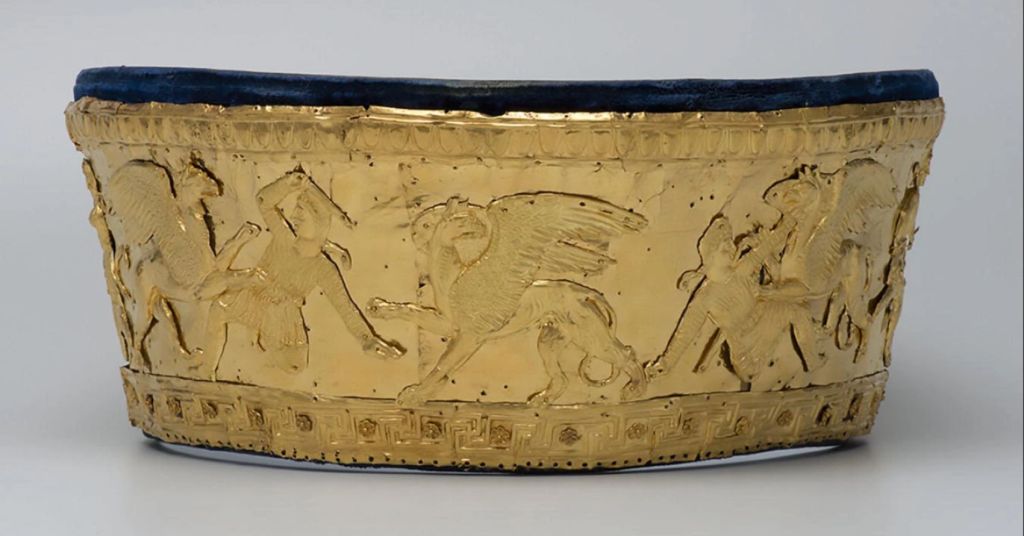
A stunning pedimental gold tiara featuring repoussé figures and intricate wirework.
Owning these pieces signaled immense wealth, but the style crossed ethnic boundaries. Both Greek settlers and indigenous Italian elites wore Hellenic-inspired fashion. Beyond vanity, many of these ornaments served as protective amulets or denoted high-ranking religious roles like priesthoods.
Diadems: Crowning the Elite
Head ornaments were the most exclusive items in the colonial jewelry box. Though rare in the archaeological record, surviving pieces show incredible formal variety.
Southern Italian artisans crafted band-shaped, tubular, and pedimented diadems. They decorated them with floral motifs, rosettes, and occasionally figurative heads.
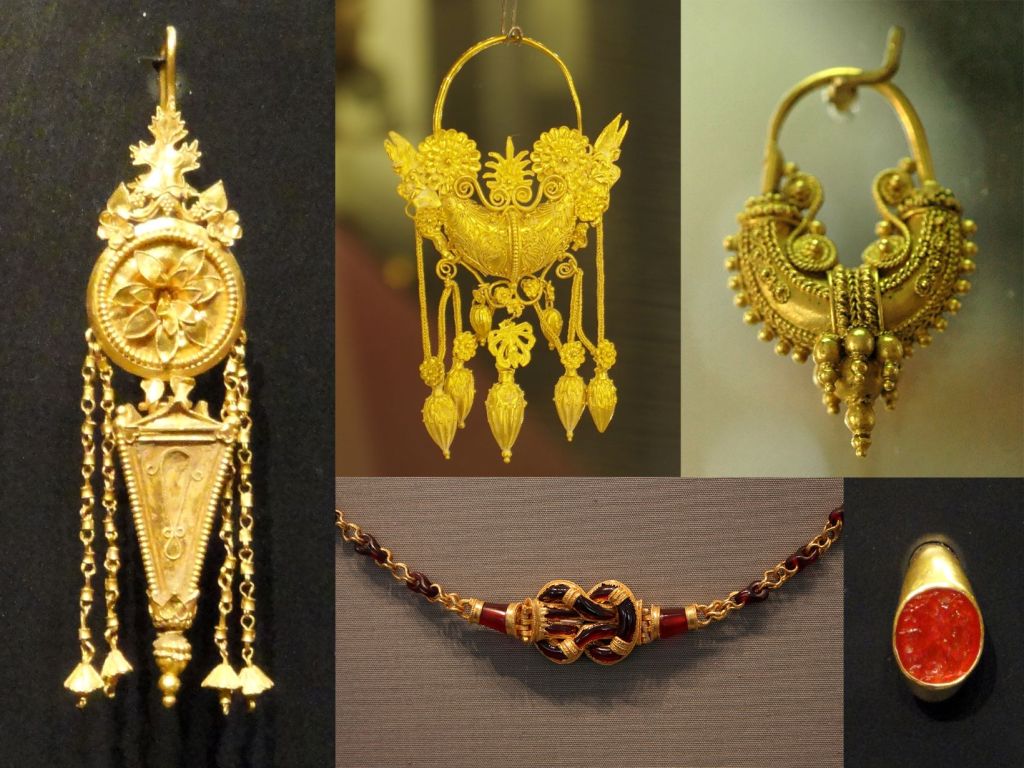
A display of gold artifacts from Taranto, including detailed leafy crowns and large rings.
Around the mid-4th century BCE, Taranto workshops produced remarkably complex diadems. By incorporating acanthus leaves, tendrils, and palmettes, artisans tailored these ceremonial pieces to perfectly fit the human anatomy.
Miniature Gold Sculptures
Earrings form the largest and most diverse category of colonial female jewelry. Styles ranged from spirals and discs to boat-shaped (navicular) designs and figurative shapes.
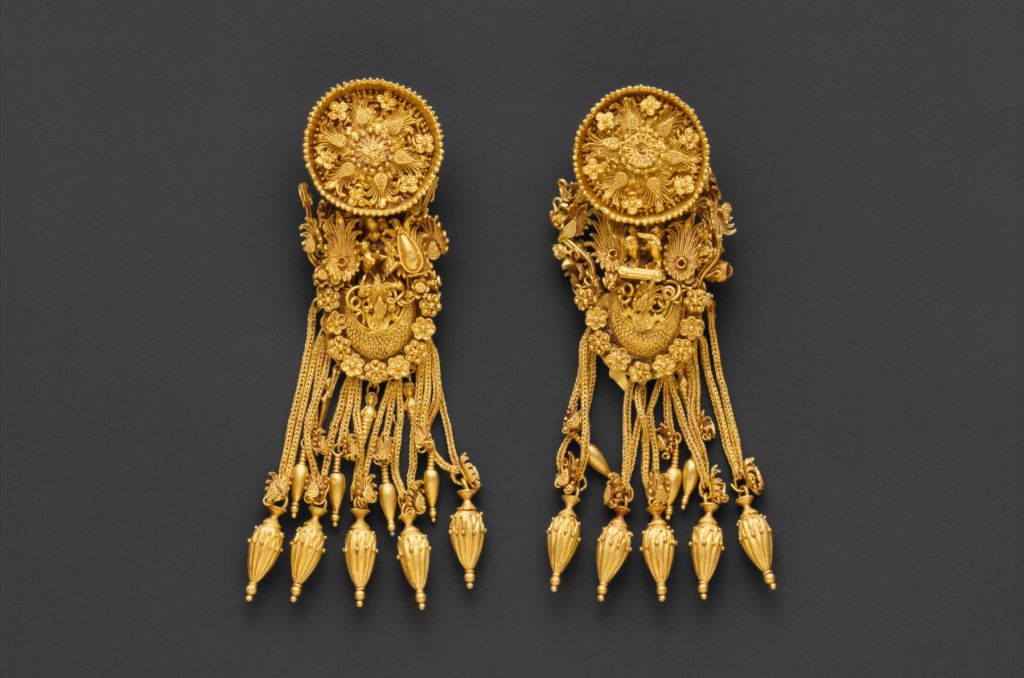
A pair of highly ornate boat-shaped gold earrings featuring intricate wirework and dangling elements.
In Taranto, boat-shaped earrings reached extraordinary levels of complexity. Craftsmen embedded winged figures, such as Nikes, alongside filigree plants and intricate pendant systems.
Other designs merged large central discs with mythological scenes. Rather than simple accessories, these pieces functioned as wearable miniature sculptures designed to command attention.
A Bold Hybrid Aesthetic
The jewelry of Magna Graecia thrived on cultural collision. Eastern influences, particularly Assyrian rosettes, appeared alongside Etruscan and Greek designs. Indigenous elites took these imported concepts and morphed them into a distinctly local aesthetic.
This hybrid style favored volume and visual impact. While mainland Greek jewelry often prized sobriety and delicate balance, the communities of Magna Graecia demanded larger, bolder, and more complex pieces to reflect their wealthy, diverse cultural landscape.