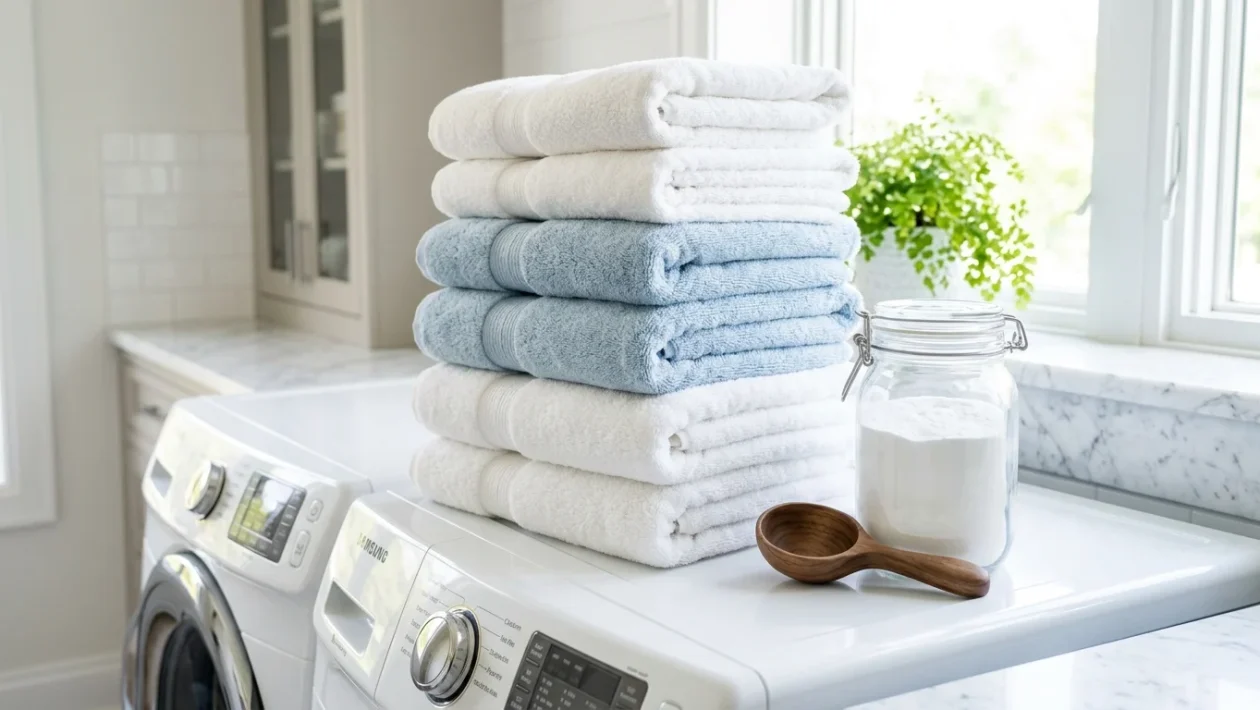
A stack of perfectly clean and soft folded towels next to a washing machine.
In domestic cleaning, selecting the correct washing machine program dictates whether your laundry actually gets clean. Every fabric requires specific care to preserve its quality and ensure deep sanitation. Yet, when it comes to washing towels, most people select the wrong temperature.
Modern washing machines offer a vast array of cycles tailored for everything from silk to synthetics. However, many users default to low-temperature, eco-friendly programs to save energy. While useful for lightly soiled clothes, these cold cycles fail to properly clean heavy, moisture-absorbing fabrics.
Why 30 and 40 Degrees Fall Short
Because of their daily use and constant exposure to moisture, towels are prime breeding grounds for bacteria and bodily residues. Washing them at temperatures below 60 degrees Celsius (such as 30 or 40 degrees) is a major hygiene mistake.
At 30 or 40 degrees, bacteria simply survive the wash. This leaves the fabric unhygienic and often results in a permanent, musty odor. Using these contaminated towels daily can even lead to unexpected skin irritation.
The 60-Degree Rule
To achieve a genuine, deep clean, towels must be washed at 60 degrees Celsius. This level of heat effectively eradicates trapped bacteria and breaks down stubborn residues.
While dark or brightly colored towels might lose a slight amount of vibrancy during their first few hot washes, this temperature is non-negotiable for proper sanitation. It ensures the fabric is completely disinfected and safe to use.
Rules for Fluffier, Odor-Free Towels
Temperature is only one part of the equation. You should never mix towels with standard clothing. Washing them entirely on their own prevents friction damage to other garments and stops lint transfer. Always separate white towels from colored ones to prevent bleeding.
Choose a mild but highly effective detergent. For an added boost, add a scoop of baking soda to the wash. Baking soda naturally neutralizes odors and prevents limescale buildup, which is the primary culprit behind stiff, scratchy towels.
Once the wash is done, transferring the towels to a dryer on a dedicated setting helps fluff the fibers. This removes any lingering moisture and restores the fabric’s natural softness.