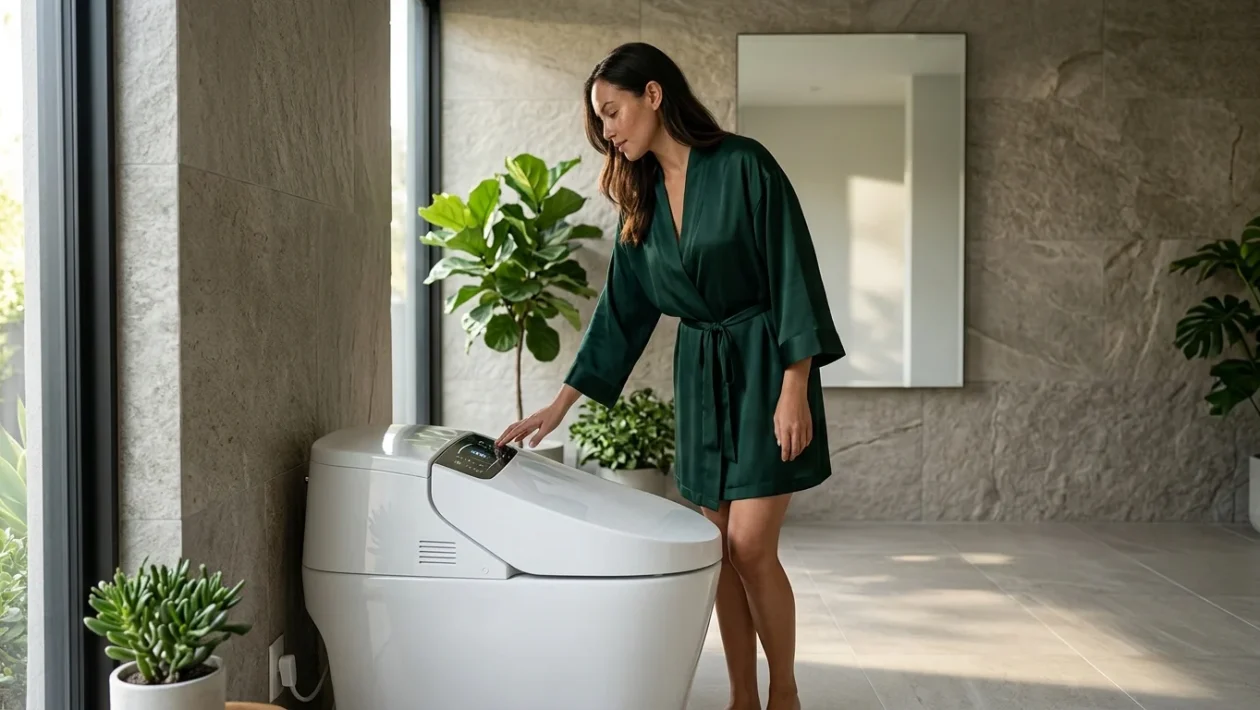
A modern, high-tech smart toilet featuring integrated bidet functions in a contemporary bathroom setting.
The traditional bathroom is undergoing a high-tech overhaul. Heading into 2026, smart toilets have transitioned from luxury hotel novelties to global household standards.
This rapid shift is driven by consumer demand to maximize daily hygiene, comfort, and environmental efficiency.
How Japanese Washlets Went Global
Originating in Japan, washlets seamlessly combine standard toilet functions with an integrated bidet. Their international adoption is currently skyrocketing across residential markets.
These devices utilize targeted water streams to handle personal hygiene. Users can easily customize the water temperature, spray pressure, and exact direction.
Modern units also feature warm-air dryers, heated seats, and motion sensors that open or close the lid automatically. Architects and designers now frequently include them as baseline fixtures in new home projects.
The Push to Eliminate Toilet Paper
The most disruptive impact of smart toilets is the realistic phase-out of toilet paper. Water cleansing simply provides a superior clean compared to traditional dry paper.
This technology is much gentler on the skin and significantly reduces direct physical contact, lowering the potential spread of bacteria. Top-tier models even include advanced self-cleaning programs and antibacterial materials to elevate sanitation.
The environmental benefits are undeniable. Cutting global toilet paper consumption directly reduces deforestation and the massive water usage tied to paper manufacturing, making washlets a highly sustainable choice.
Maintenance and Future Integration
While these smart fixtures boast automated cleaning cycles, they are not completely maintenance-free. Regular manual disinfection remains necessary to prevent odors and bacterial buildup over time.
Despite the required upkeep, the automation of the bathroom experience represents a permanent shift in residential design. The smart toilet stands at the forefront of a movement prioritizing a frictionless, hygienic daily routine.