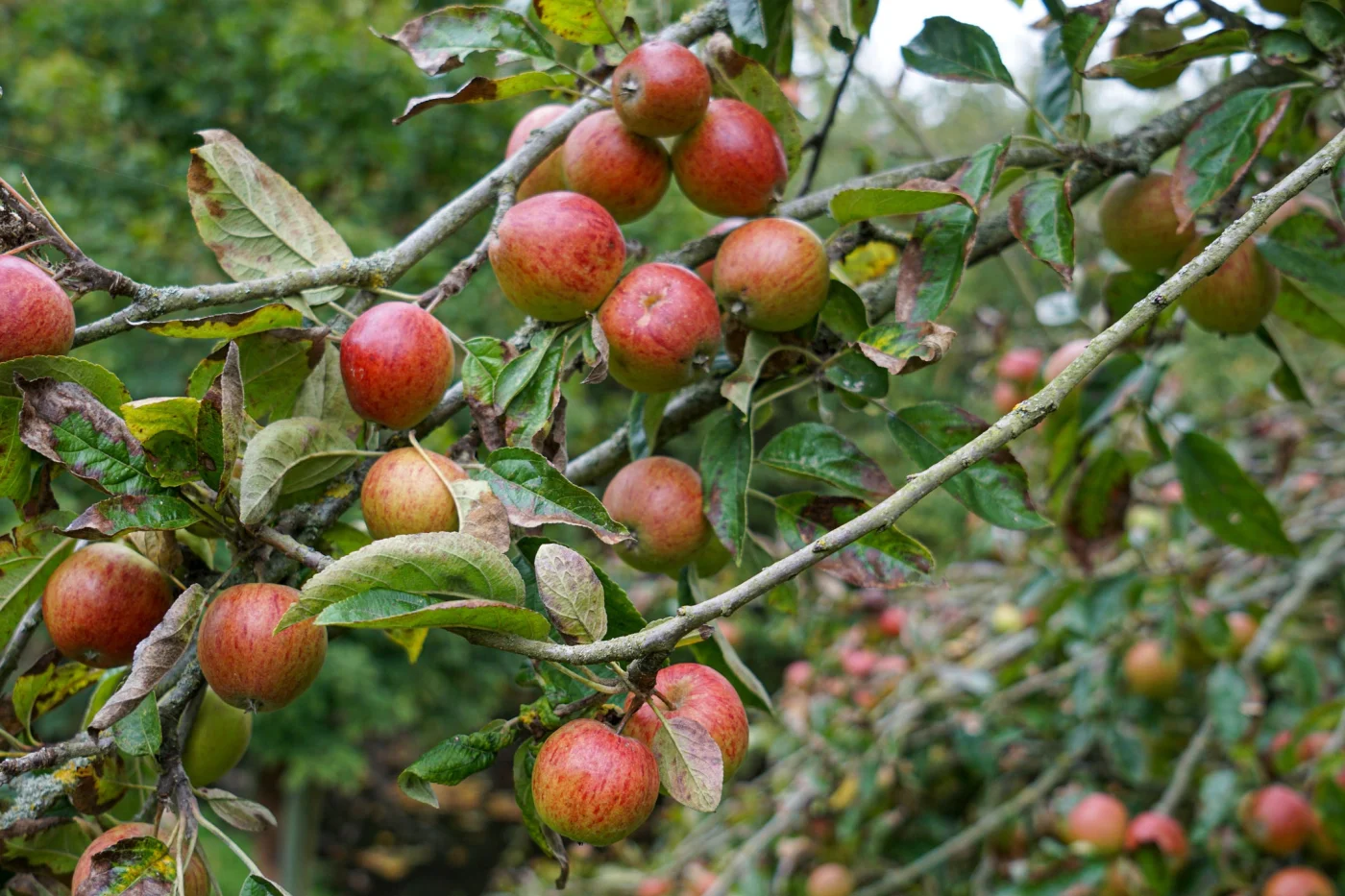
Beautiful ripe red and pink apples hanging on tree branches in an apple orchard.
Trimming branches isn’t just about shaping the tree for aesthetic appeal. It is the primary way to optimize structural integrity, allow sunlight to penetrate the canopy, and force the tree to focus its energy on growing high-quality fruit.
The “Wine Goblet” Strategy
“Pruning is not solely about appearance; there are also health benefits,” explains Ali Lijee, gardener and founder of TreeMend. Removing dead, damaged, or diseased stems prevents infections from spreading while vastly improving necessary air circulation.
Lijee recommends visualizing a “wine goblet” shape when tackling the canopy. Opening up the center of the structure allows direct sunlight to reach the inner branches, which is a critical factor in ripening fruit.
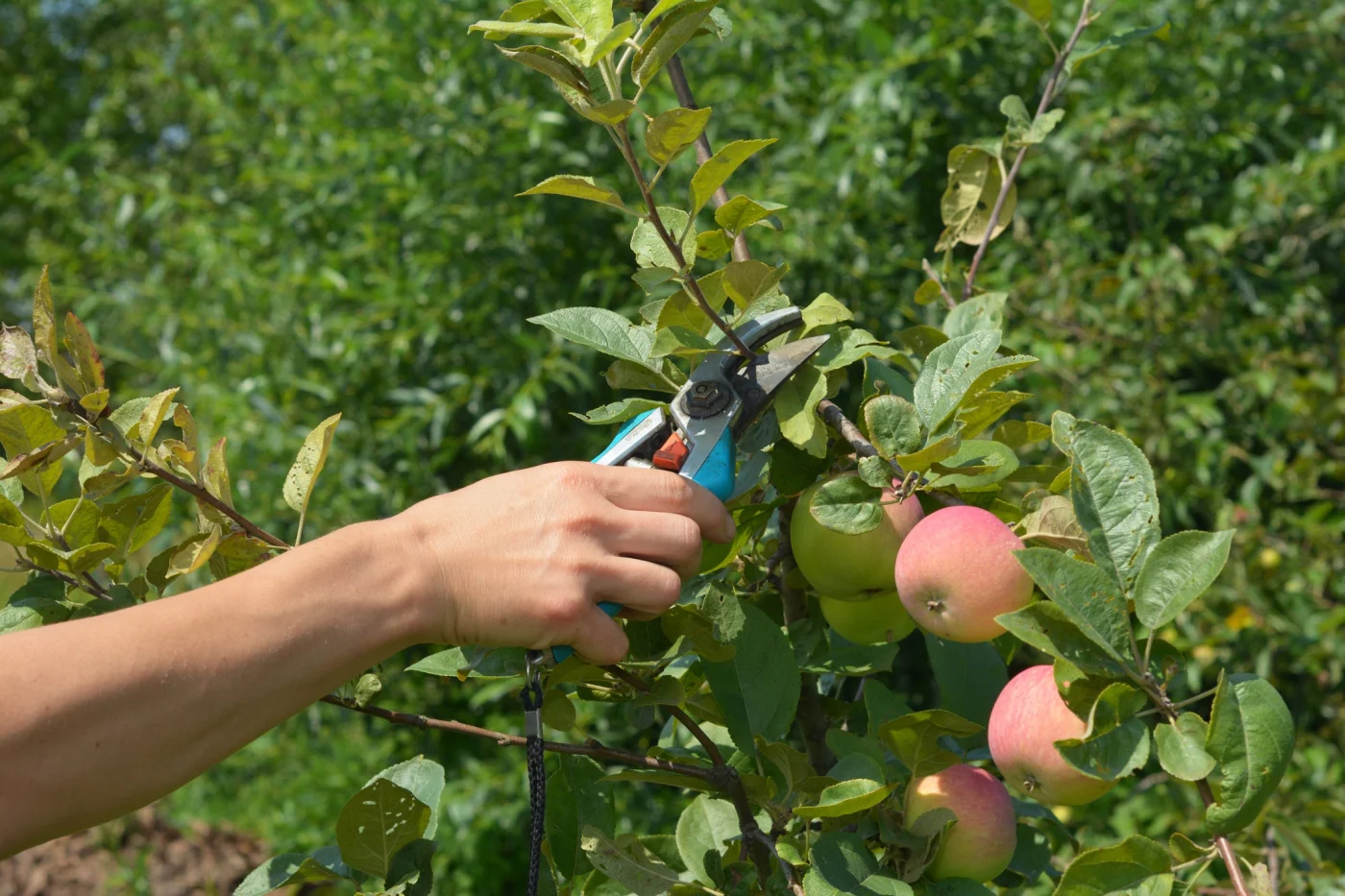
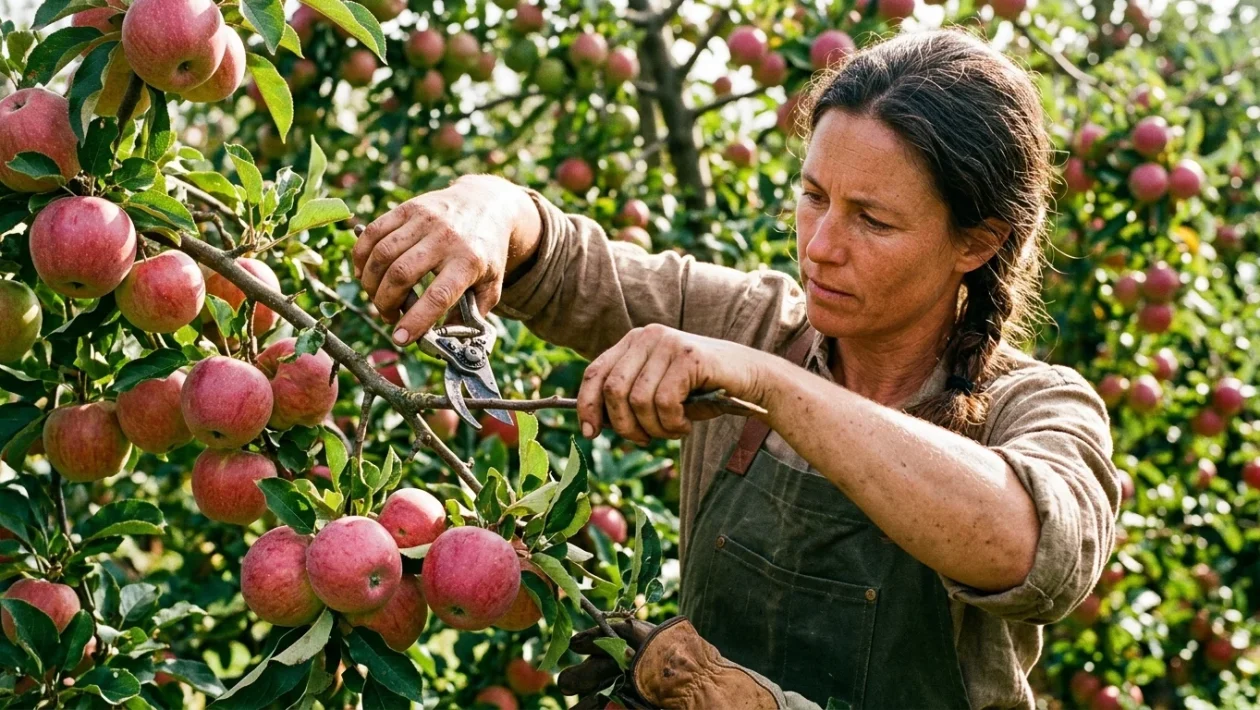
A gardener pruning apple trees in summer to ensure a good crop.
To execute this structure effectively, keep four strict rules in mind:
- Leave outward-facing shoots intact unless they are heavily damaged. Completely remove any crossing shoots that rub against each other.
- Cut away low, downward-growing branches that block light or create spatial obstructions.
- Leave young side shoots—known as laterals—entirely unpruned. They require a second year of growth to develop fruit buds.
- For larger, mature trees, safely reduce excess height by up to one-third.
Three Essential Pruning Cuts
Smallholder and orchard owner Sally Coulthard relies on three distinct pruning techniques to prepare her Yorkshire plot for the growing season. Using the correct cut ensures clean healing and prevents long-term trunk damage.
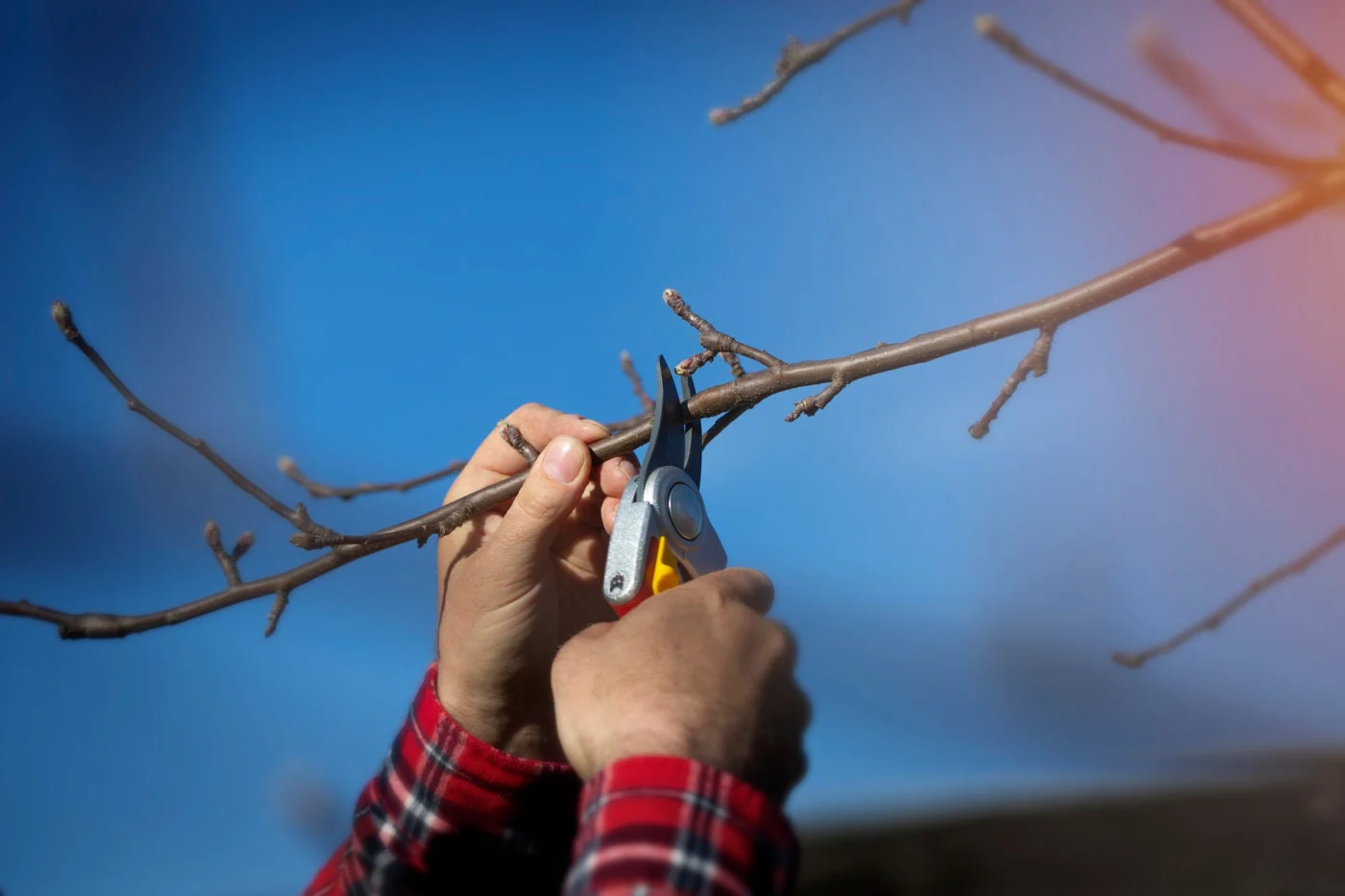
A gardener cutting trees by hand during spring garden work.
The Snip
Use sharp bypass secateurs for standard shoots. Make a clean cut roughly 0.5cm above a bud. Angle the cut on a steep slant facing away from the bud so rainwater rolls off effortlessly, preventing rot.
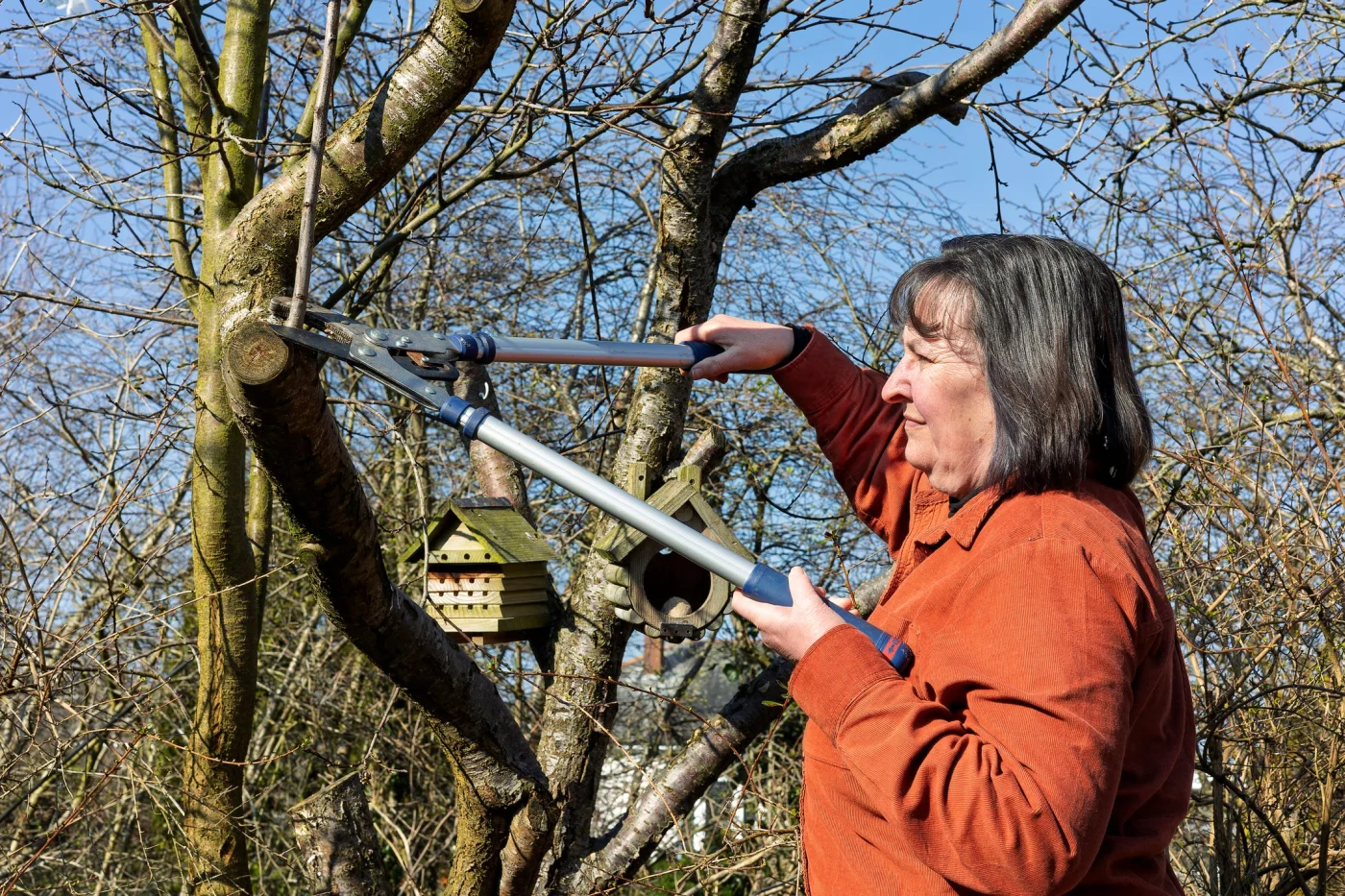
A gardener pruning a bare fruit tree branch with long-handled garden loppers.
The Lop
For branches thicker than 2cm, upgrade to heavy-duty loppers. Open the tool wide, seat the branch deeply between the blades, and chop through in one decisive motion. Never twist the blades while cutting.
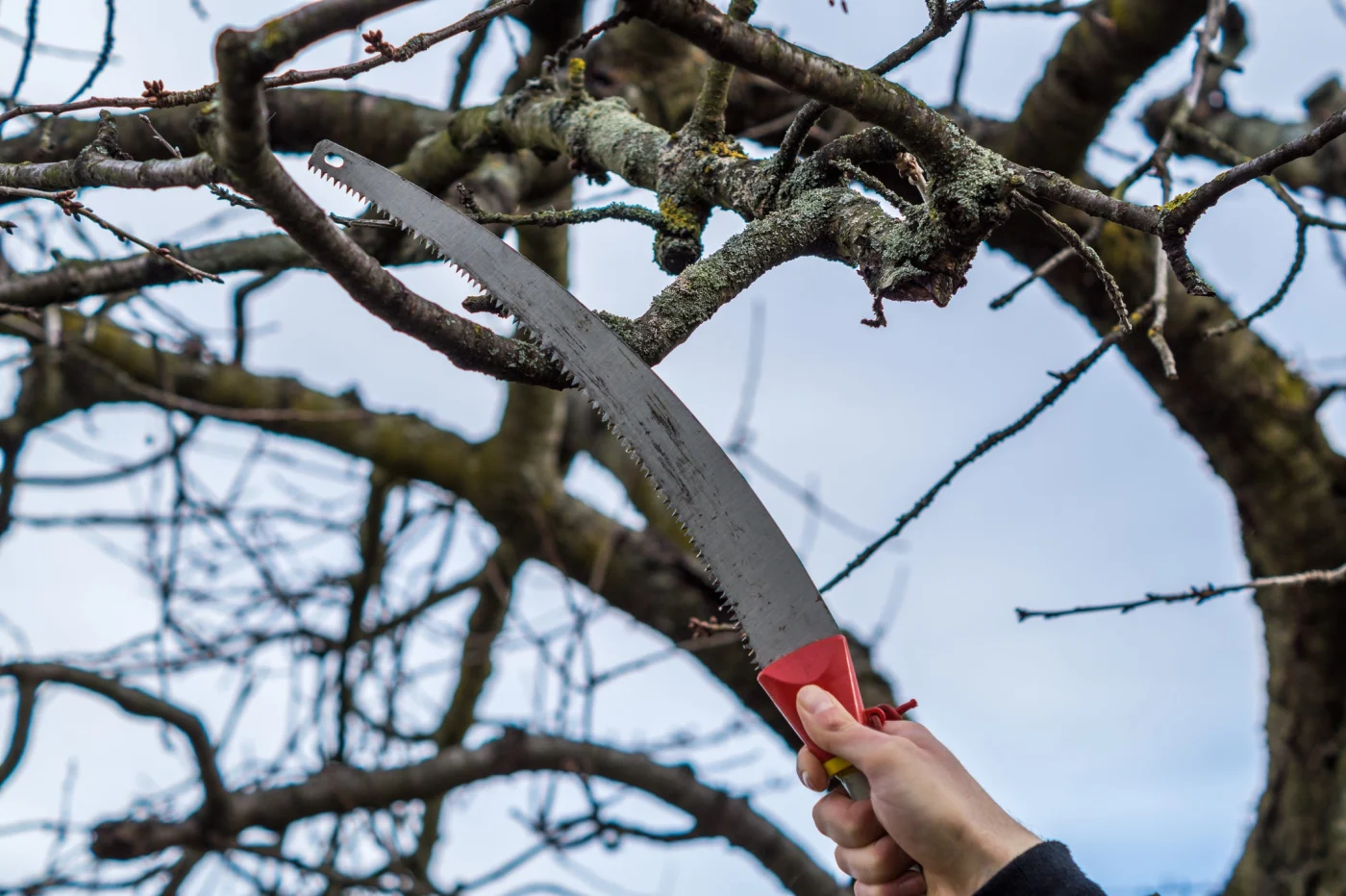
A specialized tree saw being used on branches in the autumn.
The Saw
When removing limbs too massive for loppers, a pruning saw is mandatory. Start by making a small undercut on the bottom of the branch, about 5-10cm away from the main trunk. Then, saw downward from the top side to seamlessly sever the branch. Finish by sawing the remaining stub completely flush against the trunk.
The Ideal Time to Prune
The standard recommendation from the Royal Horticultural Society (RHS) is to prune during the dormant phase. This optimal window stretches from post-leaf fall in November until bud burst in early March.
Lijee echoes this timeline. He notes that while apple trees can technically be maintained year-round, winter pruning significantly lowers the risk of disease and primes the tree for robust spring growth.
Summer pruning, however, carries its own unique advantages. Ben Branson, expert tree coppicer and founder of Sylva, prefers a late-summer trim and has documented proven results on historical trees.
“I swear by a late summer apple tree prune,” Branson says. “We did it last year with a small cutting of Isaac Newton’s famous tree, ‘Flower of Kent’, and this year we have a bumper crop.”
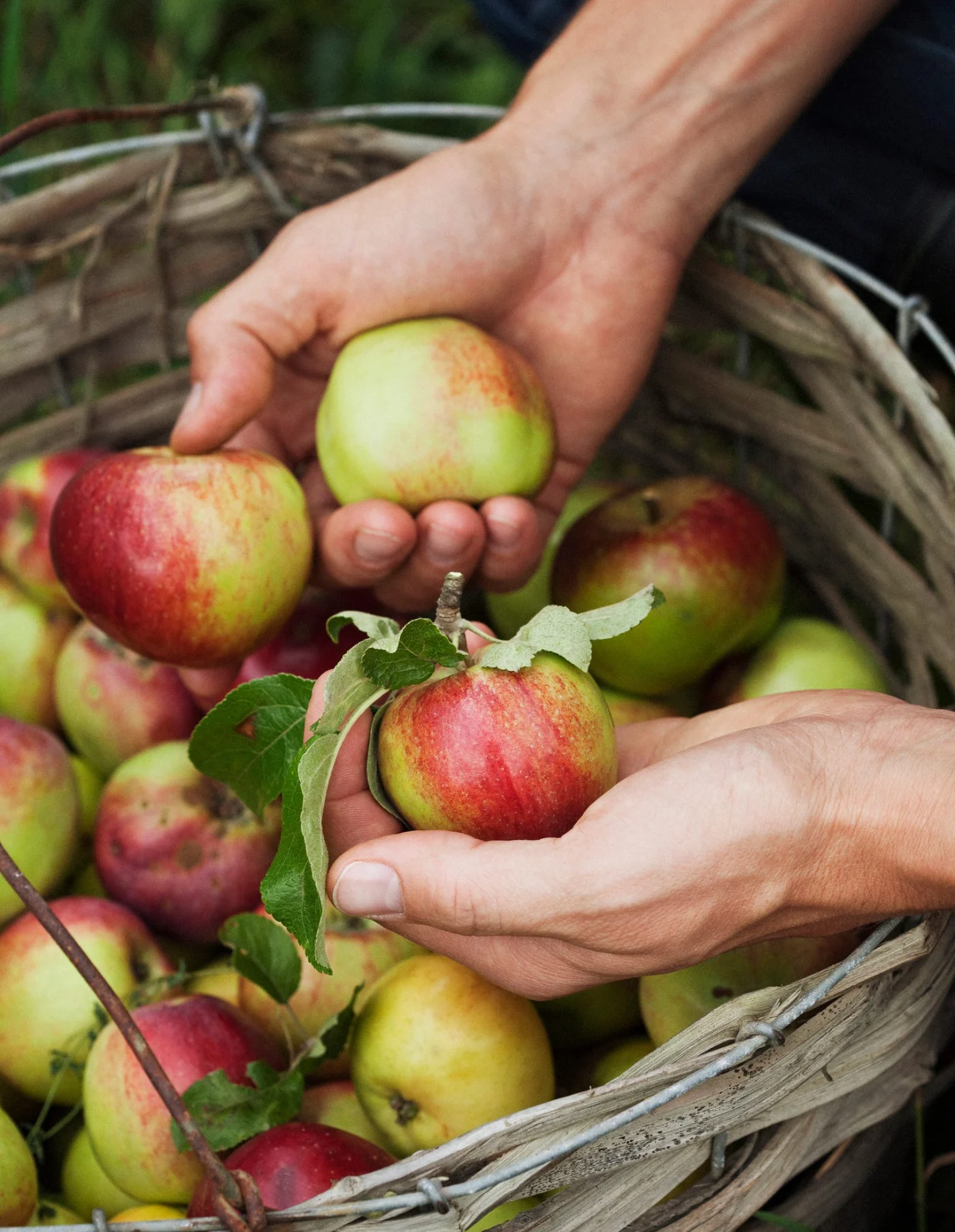
Hands holding apples over a basket filled with a fresh harvest.
Branson explains that pruning only the long lateral shoots in summer allows maximum light and air to reach the current year’s fruit. This targeted exposure actively encourages more fruit buds to form for the following season.
Essential Garden Gear
Proper maintenance requires the right equipment. Here are a few notable tools and accessories utilized by gardeners managing home orchards.
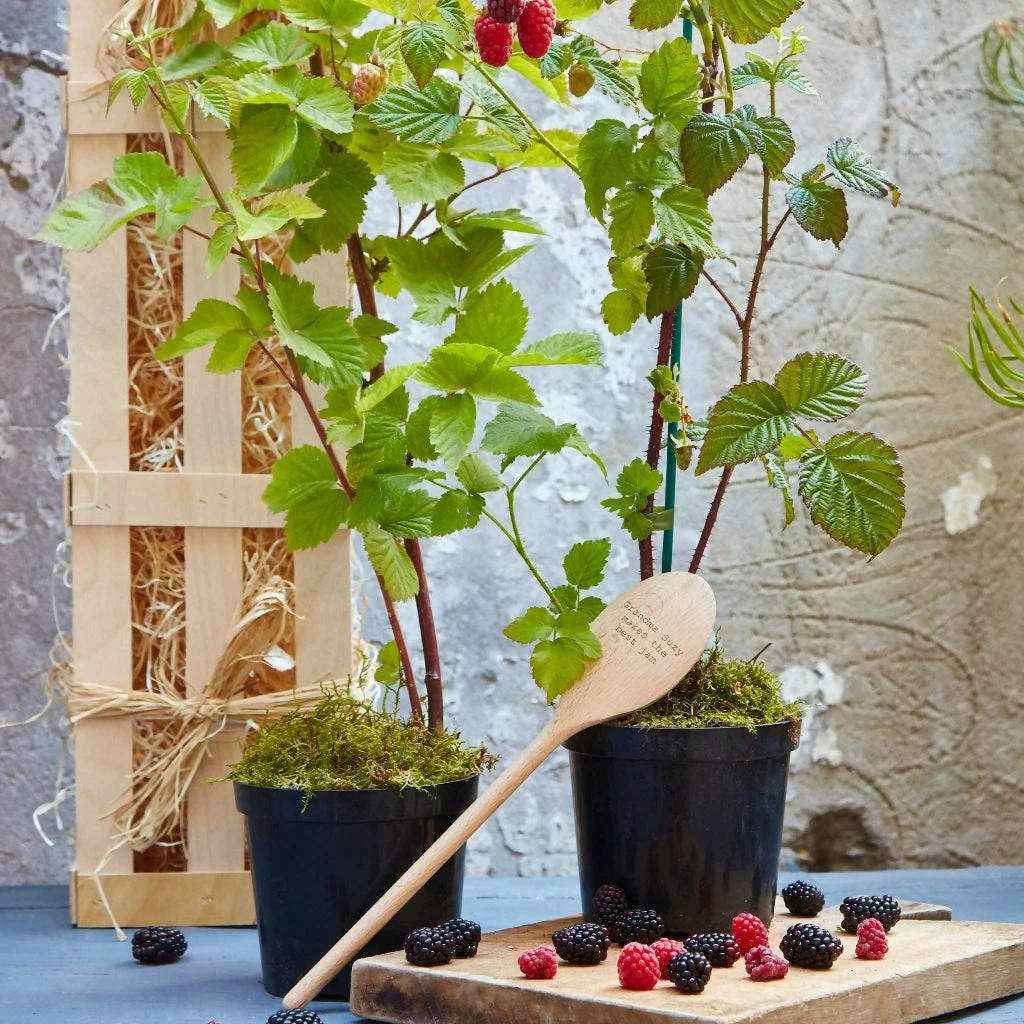
The Jam Makers Garden plant collection.
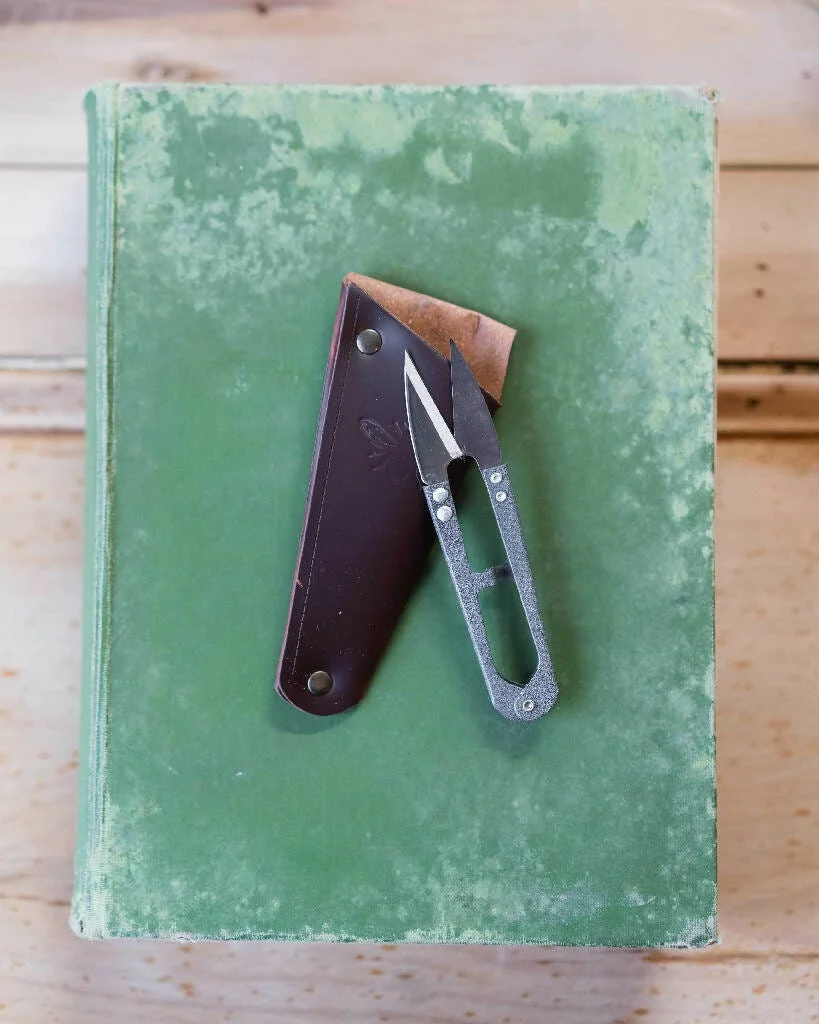
Garden snips stored inside a protective leather pouch.
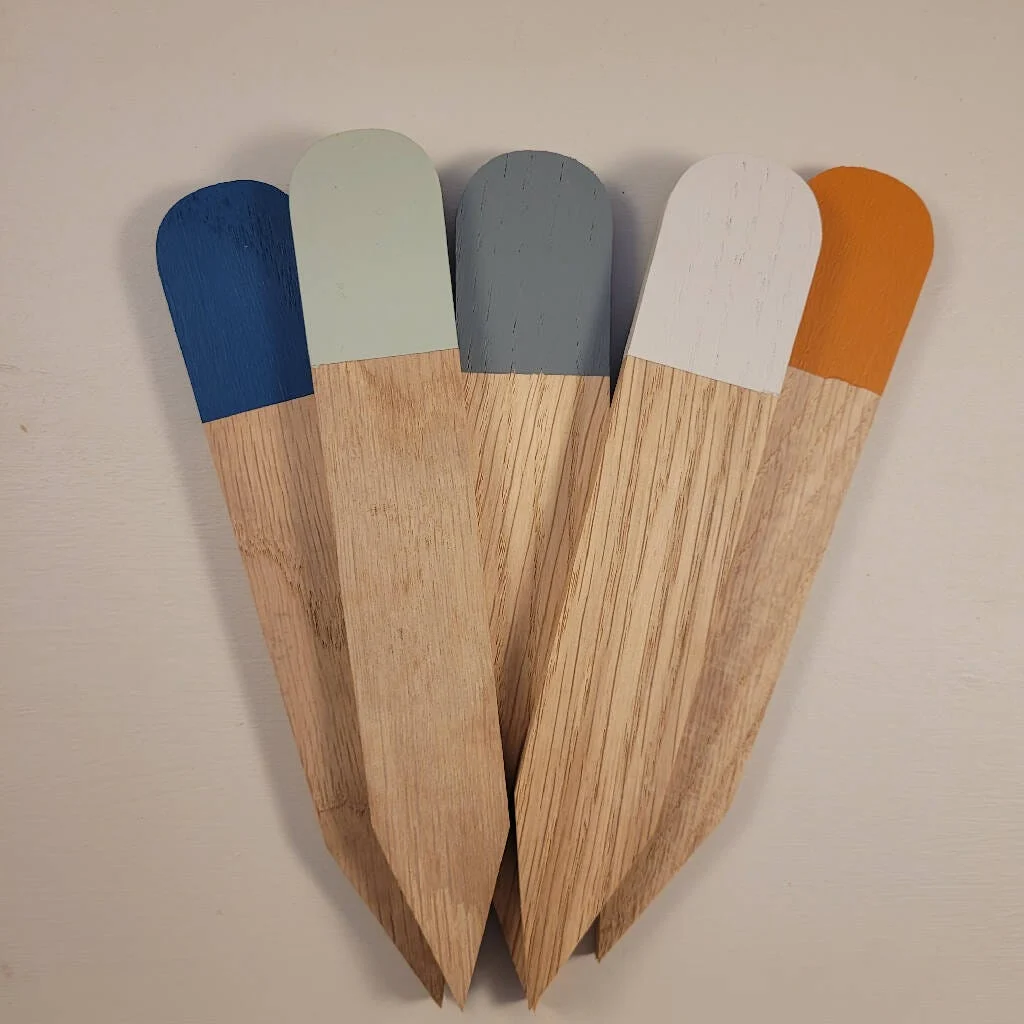
A painted wooden garden label and plant marker.
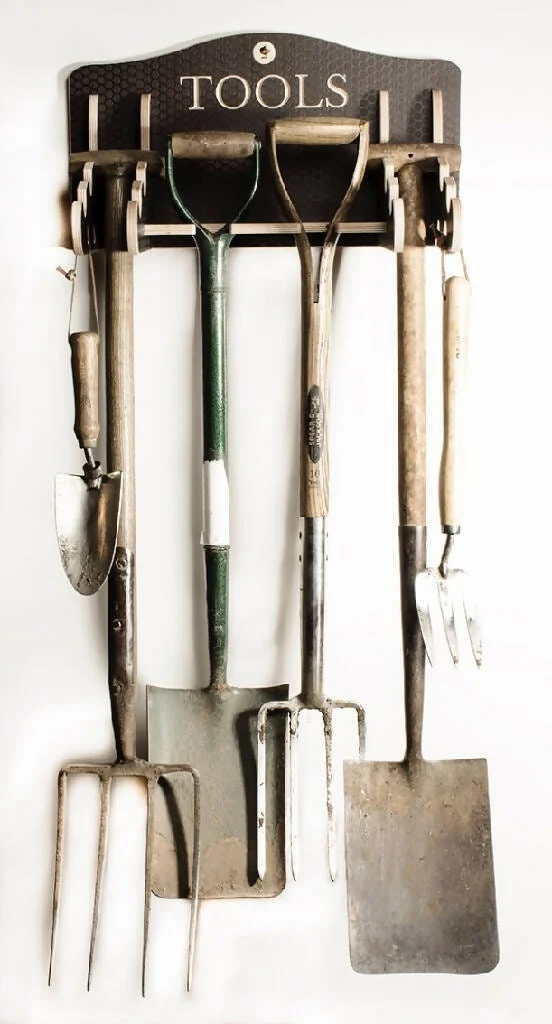
A wooden garden tool rack built for easy storage.
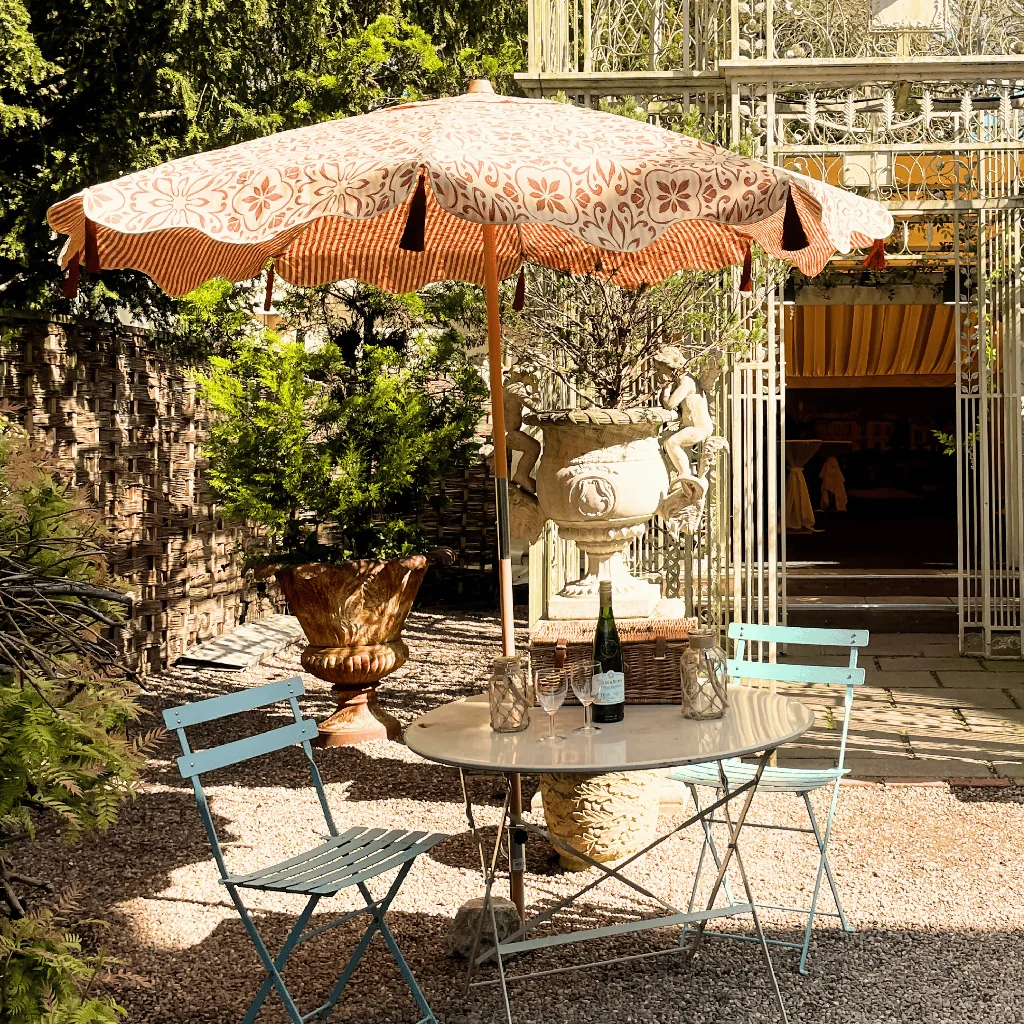
The Sienna premium solid wood outdoor parasol umbrella.
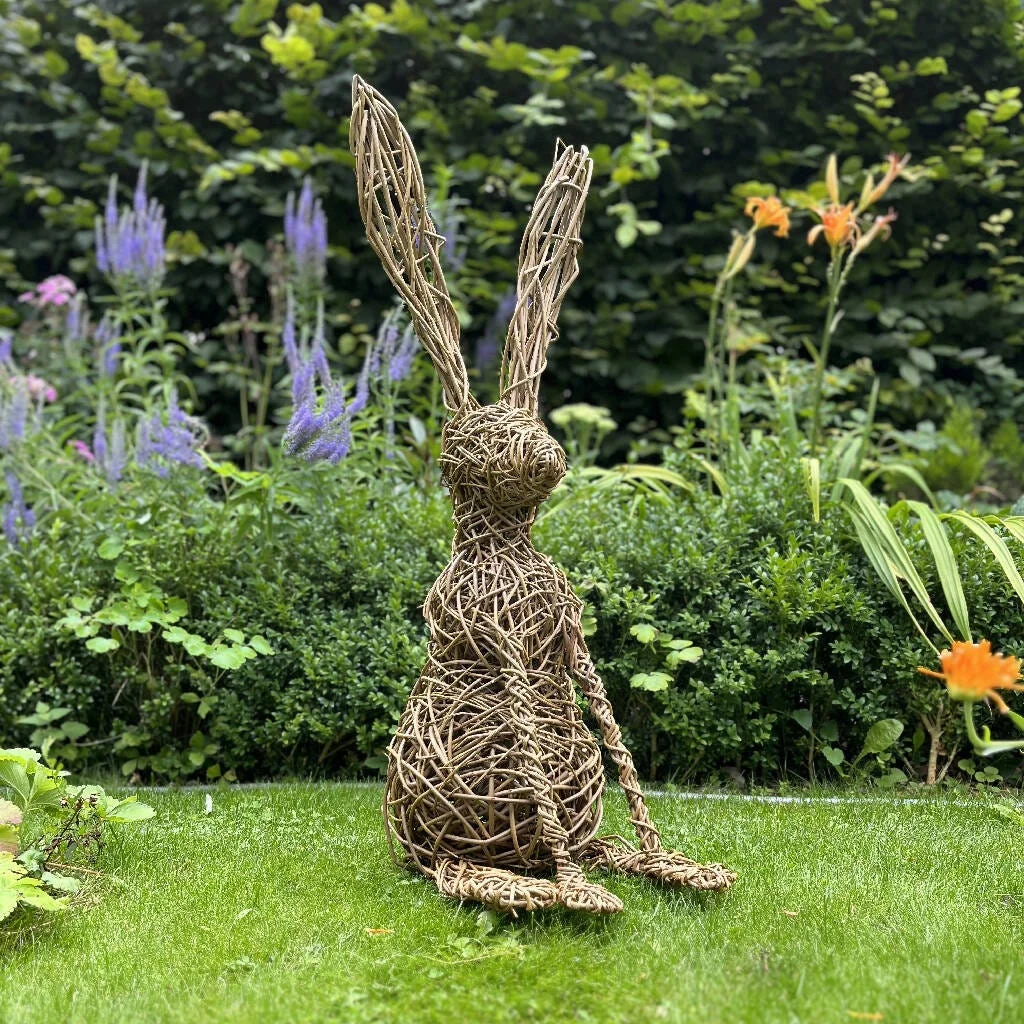
A handmade willow hare garden ornament.