Most homeowners ignore the inside of their toilet tank until something breaks. By the time a flush becomes sluggish or a foul odor permeates the bathroom, the tank is often coated in a layer of biofilm, mold, and mineral deposits. There is a simple, inexpensive way to mitigate these issues before they turn into plumbing emergencies.
Understanding the Tank Environment
The interior of a toilet tank is a perfect incubator for unwanted growth. It is damp, dark, and holds standing water for long periods, creating an ideal environment for bacteria, mildew, and black slime to flourish. Over time, these organic materials can coat the fill valve, the overflow tube, and the flapper, eventually interfering with the mechanics of your toilet.
Beyond organic growth, hard water is a primary culprit for poor performance. Minerals in the water supply leave behind calcified deposits that can clog the small jets under the rim of the bowl, weakening your flush. Left unchecked, this buildup necessitates harsh chemical cleaners that can eventually degrade rubber gaskets and plastic components.
Why Hydrogen Peroxide is the Preferred Choice
Hydrogen peroxide is an effective, non-toxic alternative to corrosive bleach or heavy-duty caustic cleaners. Unlike bleach, which can damage the rubber seals and flapper inside your tank, hydrogen peroxide acts as a mild oxidizing agent. It breaks down into water and oxygen, making it safe for your plumbing system and septic tanks.
When introduced to the tank, it works to lift and neutralize mold, bacteria, and biofilm. Regular maintenance with this solution helps keep internal components clean, which ensures the flapper maintains a tight seal and the fill valve operates without being hampered by mineral crust.
How to Safely Maintain Your Toilet Tank
Incorporating hydrogen peroxide into your cleaning routine is straightforward. It is not an overnight “magic fix” for a broken pipe, but rather a consistent preventative measure.
- Drain the tank: Turn off the water supply valve located behind the toilet and flush to drain the water from the tank.
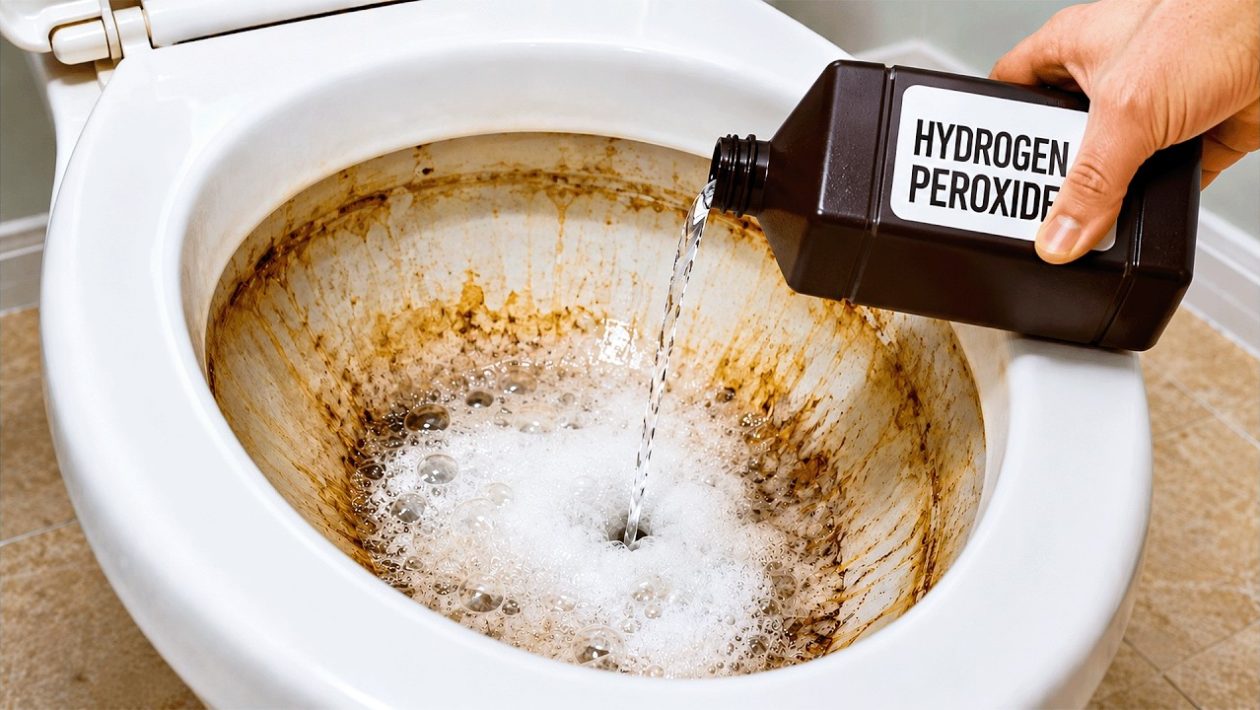
- The Application: Pour a standard bottle of 3% hydrogen peroxide into the tank.
- Scrub the interior: Use a long-handled, soft-bristled brush to reach the walls of the tank and the underside of the lid. Gently scrub the fill valve and the overflow tube to dislodge existing biofilm.
- Let it sit: Allow the solution to dwell for approximately 30 to 60 minutes. This gives the oxygenation process time to break down organic buildup.
- Rinse and refill: Turn the water supply back on. As the tank refills, the solution will naturally cycle through the flush valve, helping to clean the internal mechanisms as it flows into the bowl.
Avoiding Common Plumbing Mistakes
While maintenance is vital, avoid common mistakes that lead to long-term damage. Many store-bought “drop-in” tablets contain high concentrations of bleach or other harsh chemicals. These tablets sit in the bottom of the tank, where the chemical concentration remains dangerously high, eventually eating away at the rubber flapper and plastic seals.
If you notice persistent clogs or slow-flushing issues that cleaning does not resolve, the problem may be deeper than surface-level buildup. Mineral deposits inside the actual plumbing lines or a failing fill valve often require manual replacement rather than chemical cleaning. Stick to consistent, mild cleaning agents to protect the longevity of your plumbing system and avoid the high costs associated with replacing corroded internal components.