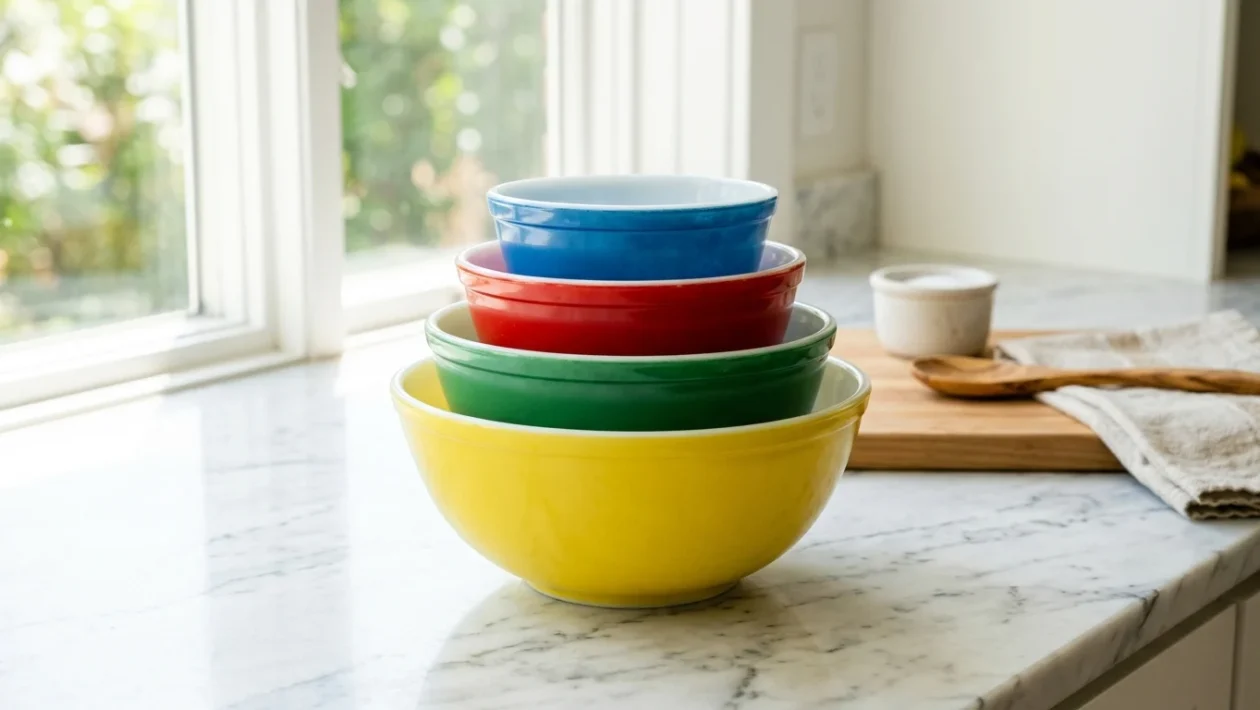
Pyrex is widely known for its nostalgic garlands and whimsical patterns, but the brand’s most valuable collectors’ item stems from a World War II military contract.
When Pyrex debuted its first baking dishes in 1915, the company relied exclusively on clear glass. The defining shift came in 1945 when the U.S. government partnered with Corning Glass Works.
The goal was to produce a lightweight, highly durable dish for soldiers. This military project quickly evolved into the brand’s first consumer line of colored cookware.
The $800 Primary Color Set
The resulting opal ware glass featured a milky white interior coated with a solid colored overlay.
Marketed as the “world’s most famous mixing bowl set,” the original primary line included four distinct bowls: yellow, green, red, and blue.
Today, these early primary color sets command serious money on the secondhand market. A complete, unused set can easily fetch over $800 on platforms like Etsy.
Thanks to the legendary durability of early Corning glass, even well-used sets survive in excellent condition. These typically retail between $100 and $500.
How to Identify Early Production Runs
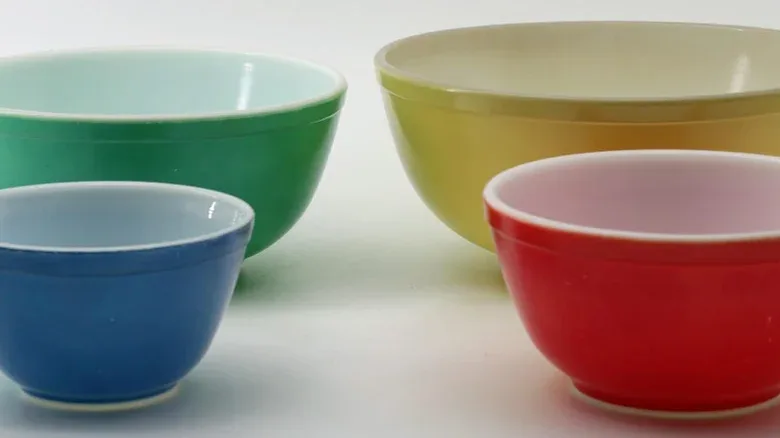
A set of vintage Pyrex mixing bowls in primary colors.
Because the primary line was discontinued decades ago, buyers are limited to thrift stores, estate sales, and vintage auctions. Identifying authentic early pieces requires flipping the bowls over.
Bowls manufactured in the 1940s and 1950s lack the standard model numbers that Corning later used to catalog its product runs.
Genuine early pieces feature a simple “Pyrex” imprint on the base. Later iterations display “Pyrex,” “Made in the U.S.A.,” and a three-digit lot number, typically in the 400s.
Preserving Your Vintage Glassware
Despite their age, these midcentury bowls were built for heavy kitchen duty. They function perfectly as modern salad servers or holiday serving dishes.
The 1940s glass remains oven-safe up to 425 degrees Fahrenheit, allowing cooks to bake and serve in the same dish.
However, vintage glass is susceptible to thermal shock. Never place a cold Pyrex bowl directly from the fridge or freezer into a hot oven.
To preserve the colored overlay and maintain the set’s resale value, wash the bowls strictly by hand using mild soap. The high heat and abrasive detergents of modern dishwashers will permanently strip the color from the glass.