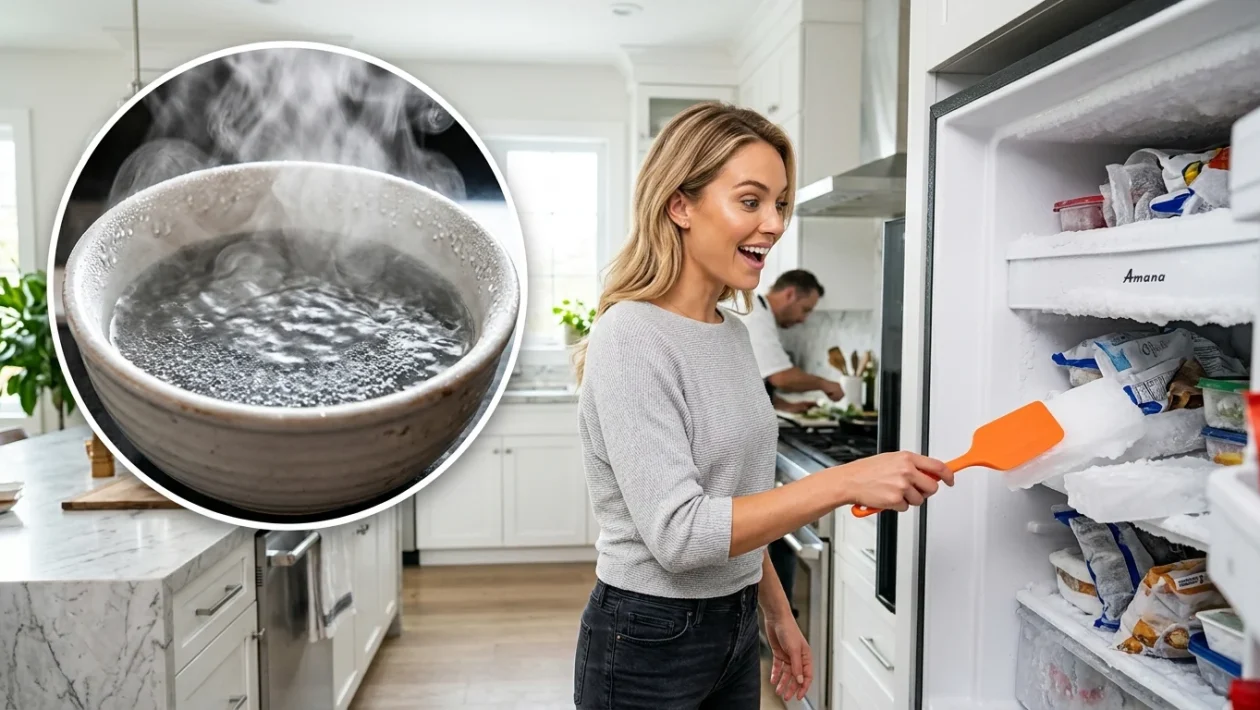
The Hidden Cost of Ice Buildup
Over time, freezers inevitably develop a stubborn layer of ice along their inner walls.
This frost buildup does more than steal valuable storage space. It forces the appliance to work harder, severely impacting performance and driving up your monthly energy bills.
The 15-Minute Steam Hack
When faced with a glacier in the kitchen, many homeowners grab a knife or pour boiling water directly onto the shelves. Appliance technicians warn that both habits are a recipe for disaster.
The most effective method is entirely hands-off and relies on a simple scientific principle: steam.
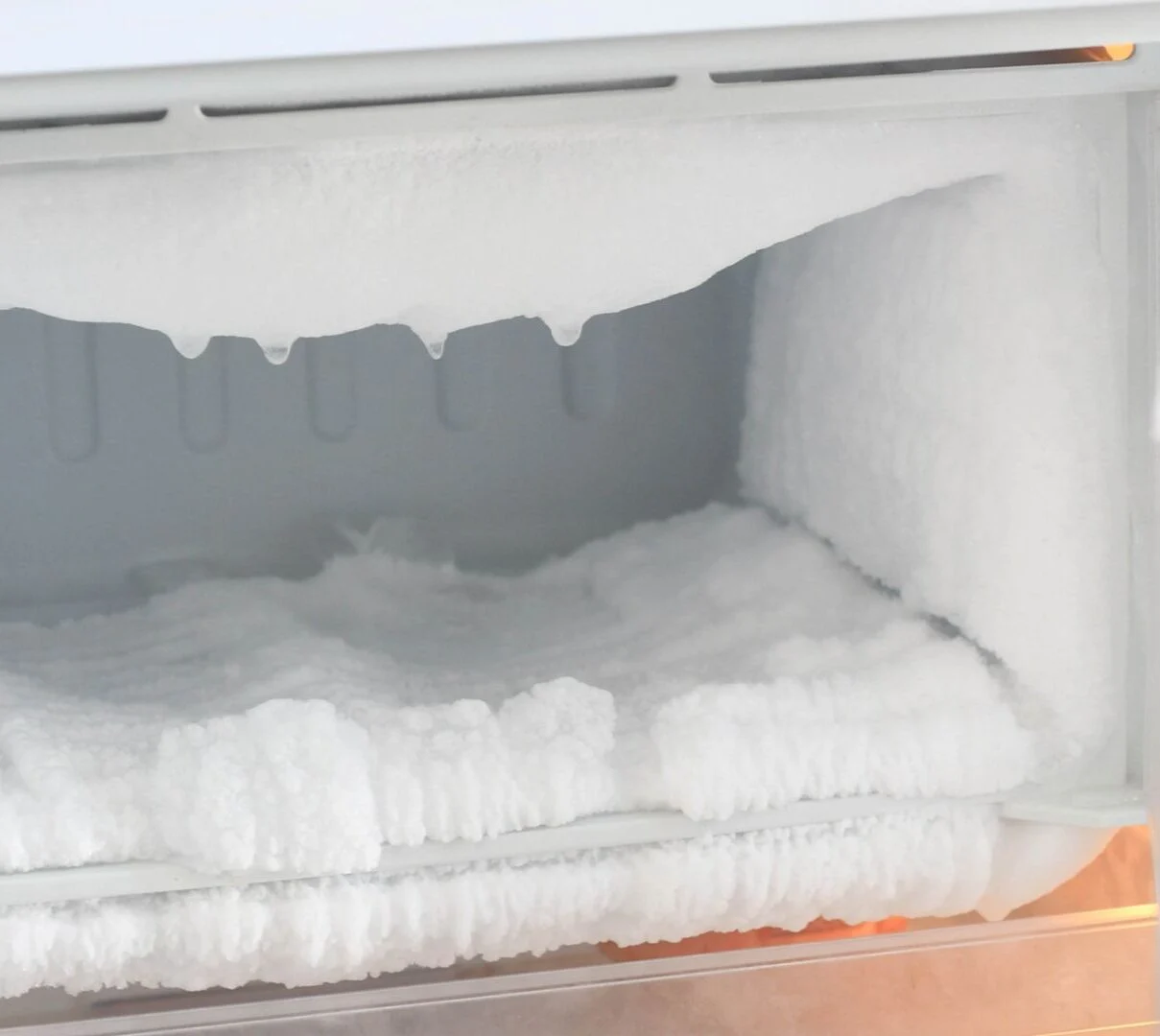
Thick layers of ice accumulation inside a standard freezer unit.
Start by unplugging the freezer and completely emptying it of all food.
Next, place a heat-resistant pot or bowl filled with very hot water directly into the compartment. Close the door and walk away for 10 to 15 minutes.
The trapped vapor will safely loosen the ice from the walls. Once the blocks begin to detach, you can easily slide them out using a plastic spatula or your bare hands.
Why Knives and Boiling Water Spell Disaster
Technicians stress that metal utensils like knives and screwdrivers should never enter your freezer.
A single puncture to the internal cooling ducts can trigger a refrigerant gas leak. This simple mistake often results in a massive repair bill or forces you to replace the entire appliance.
Pouring boiling water directly over the ice is equally destructive.
The sudden and extreme temperature shift can warp plastic components and cause deep cracks in the freezer’s internal lining. Because of this, experts recommend only utilizing the ambient steam produced by hot water.
How to Stop the Frost Before It Starts
Defrosting doesn’t have to be a frequent chore if you maintain the appliance properly.
Routinely inspect the rubber door seal to ensure it maintains a tight vacuum. Avoid leaving the freezer door open for extended periods, and never store hot food inside.
Finally, always tackle the defrosting process before the ice layer becomes thick and unmanageable.