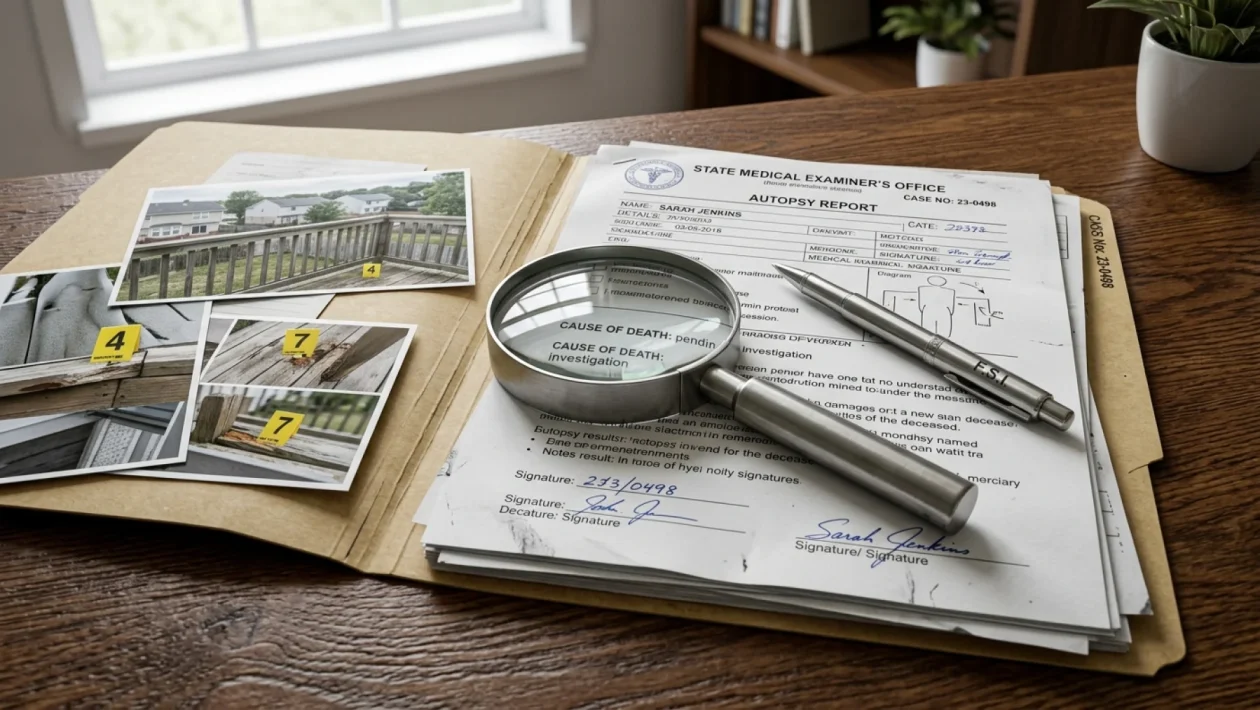
A 40-year-old mother of five attends a suburban sleepover and never makes it home. The Tamla Horsford autopsy was supposed to provide undeniable closure for her grieving family, but instead, it ignited a firestorm of suspicion. We are bypassing the wild internet theories to break down the actual medical documents, the physical evidence, and the undeniable red flags that keep this 2018 cold case in the headlines today, nearly eight years later.
If you are trying to figure out what really happened on that Georgia balcony, you need to understand the science first. Here is the unvarnished truth about the forensic findings and why independent experts are still fighting to get this case re-examined.
Tamla Horsford Autopsy: The Official Narrative
When the initial medical examiner’s report was released, local authorities quickly closed the book on the case. The official cause of death was ruled as multiple blunt force injuries resulting from an accidental fall. The report cited acute ethanol intoxication, painting a picture of a tragic, alcohol-fueled stumble over a backyard balcony railing.
But anyone who has spent time analyzing crime scenes knows that first glances can be deceiving. The official narrative relied heavily on witness statements from the other partygoers, rather than letting the physical evidence take the lead. According to the National Institute of Justice, nearly 20% of medical examiner rulings in complex, unwitnessed trauma cases are later challenged and scrutinized by independent pathologists.
In this case, the family immediately sensed something was wrong. They requested a second opinion, leaning on standard North American forensic protocols to demand a deeper look.
The Unsettling Truth: Discrepancies in the Medical Report
This is where the story shifts from a tragic accident to a glaring investigative failure. When independent forensic experts reviewed the Tamla Horsford autopsy files, the red flags were impossible to ignore. The injury patterns simply did not align with a standard vertical fall.
There were severe lacerations to her right atrium and extensive bruising that suggested a physical struggle rather than a passive drop. Furthermore, the absence of severe injuries to her lower extremities baffled bio-mechanic experts. If you fall head-first from a balcony, your body reacts in predictable ways—ways that were completely absent from Tamla’s autopsy photos.
| Official Medical Finding | Independent Expert Concern |
|---|---|
| Accidental fall from balcony | Complete lack of lower body trauma typical of falls |
| Severe internal injuries from impact | Lacerated right atrium suggests localized blunt force |
| Intoxication as primary factor | Ignored potential defensive wounds on wrists and arms |
Behind the 2018 Forsyth County Tragedy: Re-evaluating the Evidence
The pushback was not just a grieving family refusing to accept reality. It was a methodical, science-backed campaign to expose a botched investigation. True crime investigative teams, operating with the same rigor you would see on CBC’s The Fifth Estate, began systematically poking holes in the timeline.
When a case is challenged, forensic pathologists follow a strict blueprint to uncover the truth. Here is exactly how a secondary medical review works:
- Document Review: Experts pore over the initial field notes, toxicology screens, and first-responder reports to spot timeline and situational inconsistencies.
- Photographic Analysis: High-resolution autopsy photos are digitized and analyzed for overlooked defensive wounds, scratch marks, or lividity patterns.
- Biomechanical Modeling: Specialists recreate the alleged accident scene to see if the physics of the fall match the internal injuries found on the body.
- Final Synthesis: A new, independent medical report is generated and submitted to state bureaus to demand a reinvestigation.
This rigorous process is exactly what led to the Georgia Bureau of Investigation (GBI) eventually taking a second look at the case files. It takes serious, unrelenting pressure to move the needle on a closed case.
“When injury patterns contradict the laws of physics and the layout of the scene, you aren’t looking at an accident. You are looking at an incomplete investigation.”
Frequently Asked Questions
Was the Tamla Horsford case ever officially reopened?
Yes, due to immense public pressure and discrepancies in the initial findings, the Forsyth County Sheriff requested the Georgia Bureau of Investigation (GBI) to formally review the case in 2020. However, definitive new charges have remained elusive, which continues to frustrate advocates.
Why is the toxicology report controversial?
While the report showed alcohol and prescription medication in her system, independent experts argue the levels were not high enough to completely incapacitate her or cause the catastrophic lack of physical reflex during a fall.
Can an autopsy conclusion be changed years later?
Absolutely. A medical examiner can amend a death certificate from “accidental” to “undetermined” or “homicide” if new biomechanical evidence or witness testimony fundamentally alters the understanding of the fatal injuries.
The Final Word
🤝 Thank you for digging into the facts with me. Getting to the bottom of the Tamla Horsford autopsy isn’t just about satisfying true crime curiosity; it is about holding investigative bodies accountable for every single life lost.
💡 Never take the first report at face value. Whether you are dealing with a local neighborhood safety issue or following a major national headline, asking the hard, evidence-based questions is the only way we get to the truth.
📱 Share your thoughts on this case with your community online, and keep demanding transparency from the justice system. The fight for answers is a marathon, not a sprint.
👇 Stay curious, stay safe, and always keep looking beyond the headlines.