Hey folks, great to have you here. I am always eager to share some hard-earned homeowner wisdom with you.
Let’s cut straight to it. Ignoring the tall grass bylaw in your city is not just an eyesore; it is a fast track to hefty fines and property liens. If your yard resembles a wild jungle, municipal inspectors will notice. Today, I will show you exactly how these property codes work, why they exist, and how to rapidly bring a yard into compliance before the city sends their own expensive contractors to do it for you.
Understanding the Tall Grass Bylaw and How Enforcement Works
As a homeowner, dealing with property maintenance is just part of the gig. Whether you live in a Canadian hub like Toronto or Calgary, or a midwestern city like Fort Wayne, Indiana, municipalities enforce a strict tall grass bylaw to maintain public safety. Typically, the legal height limit for weeds and grass is capped at eight to nine inches. But why does the city care so much about your lawn?
The logic is rooted in biology and public health. Overgrown vegetation creates an ideal microclimate for unwanted pests. According to wildlife experts and organizations like Health Canada, tall weeds are prime breeding grounds for ticks, rodents, and mosquitoes. Furthermore, noxious weeds like ragweed produce massive amounts of pollen, aggravating respiratory issues across the neighborhood. During the dry season, an unkempt lawn also becomes a severe fire hazard.
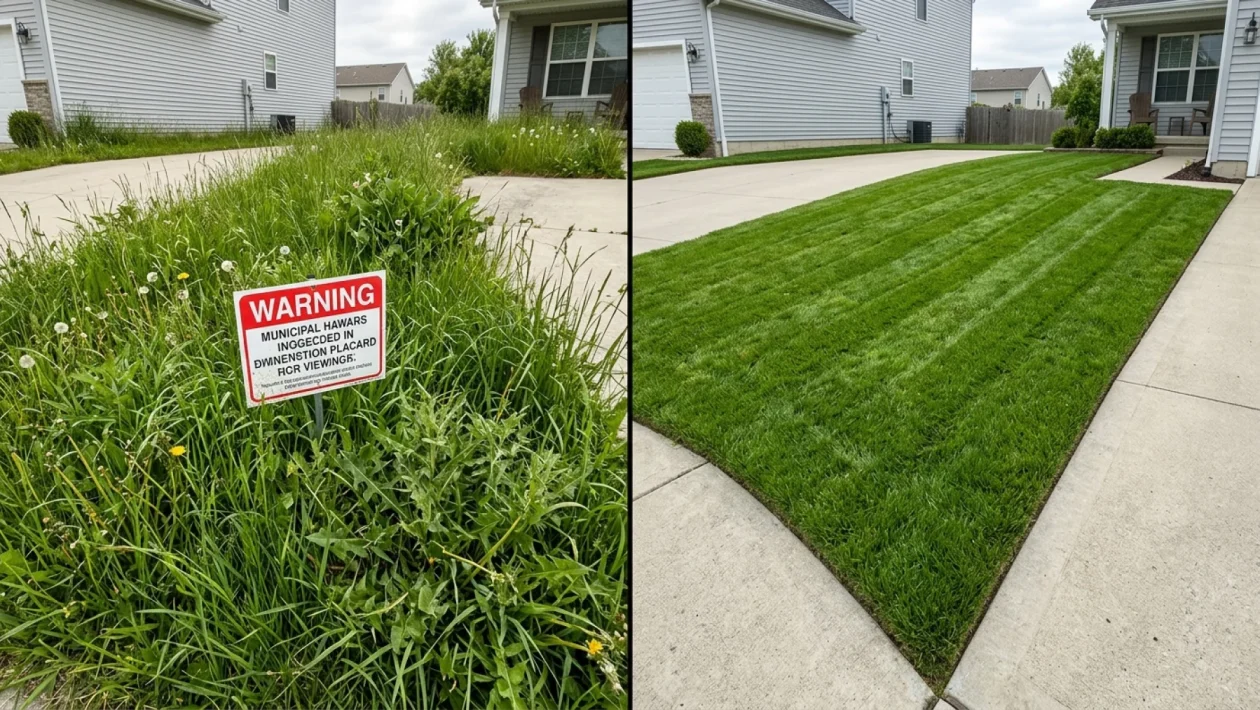
Enforcement is heavily driven by community reporting. Residents can dial their local 311 system or log a complaint via smart city portals. Once a complaint is filed, municipalities dispatch neighborhood code compliance inspectors. These officials look for clear violations, snap date-stamped photos, and post a warning placard directly on the property. As of this May 2026 enforcement season, cities are acting faster than ever to clean up high-traffic corridors and residential streets.
| Enforcement Stage | Municipal Action & Consequence |
|---|---|
| Initial Inspection | Code officer verifies grass is over 9 inches, takes photos, and leaves a placard. |
| Notice Period | Homeowner receives a mailed notice granting exactly 5 days to cut the lawn. |
| City Intervention | If uncorrected, private mowing contractors are dispatched to cut the property. |
| Financial Penalty | Owner is billed for contractor labor. Unpaid invoices result in a property lien within 30 days. |
“We always encourage residents to talk with their neighbors first and see if there is a way to resolve the issue without reporting it. When that isn’t successful, the Tall Grass/Weed Program helps ensure our neighborhoods remain safe, clean, and well cared for.” – Chris Blauvelt, Neighborhood Code Compliance Director
Step-by-Step: Reclaiming an Overgrown Lawn
If you have received a notice, or you just want to avoid one, tackling a foot-high lawn requires strategy. You cannot simply push a standard rotary mower into a jungle; you will stall the engine and destroy the drive belt. Here is the professional, mechanical way to tackle an overgrown yard using gear you can find at The Home Depot or your local hardware store.
- Clear the debris: Walk the entire property and remove hidden rocks, thick branches, and trash. Striking a hidden object with a blade can warp the crankshaft of your mower.
- Break out the heavy artillery: Before mowing, use a high-powered gas weed eater (like an Echo or Husqvarna). Hold the trimmer at a slight angle so only the tip of the heavy-duty trimmer line makes contact. Cut the grass down to a manageable five or six inches.
- Set the mower high: Adjust the deck of your Toro or Honda lawnmower to its highest possible setting. Do not attempt to mulch tall grass; use the side-discharge chute so the engine does not bog down.
- Perform a second pass: Wait two days to let the grass recover from the initial shock. Lower the mower deck to about three inches and do a final finishing cut. Bag the clippings to prevent a thick layer of thatch from suffocating the soil.
Frequently Asked Questions
Can I report a tall grass bylaw violation anonymously?
Yes. When using a municipal 311 portal, you are typically only required to provide the exact street address of the offending property. Most city code compliance offices do not disclose the identity of the person who filed the complaint.
How long do I have to fix the issue after getting a warning?
In most North American jurisdictions, property owners are given a strict five-day grace period from the date the notice is issued to correct the violation before municipal contractors are mobilized.
What happens if I cannot afford the city’s mowing invoice?
Ignoring the invoice is the worst thing you can do. If the bill remains unpaid after 30 days, the municipality will place a legal lien on your property. This means you will not be able to sell or refinance your home until the debt, plus accumulating interest, is settled.
🤝 Thanks for stopping by to read this guide. I truly hope it helps you avoid those pesky municipal fines and keeps your property looking sharp!
💡 Remember, investing a little time in regular maintenance is always significantly cheaper than a city-issued invoice. Good luck with your weekend yard work!
📱 If you found this breakdown useful, please share on Facebook or Pinterest to help out fellow homeowners in your community.
👇 Be sure to check out my other exciting articles on DIY lawn care and property management. Catch you on the next one!