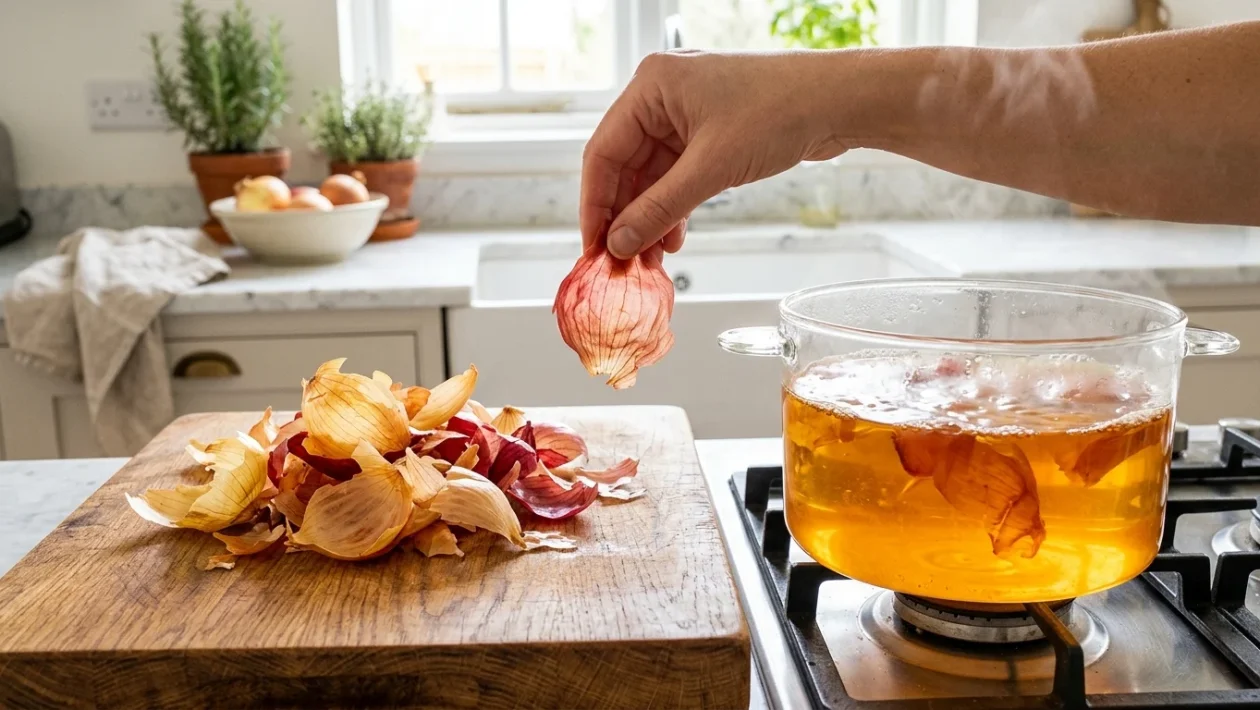
Dry yellow and red onion skins piled on a wooden cutting board.
The Hidden Value of Kitchen Scraps
After chopping an onion, most people toss the papery skins straight into the trash without a second thought. Yet, this overlooked vegetable byproduct is actually a versatile household resource.
Yellow and red onion skins are packed with natural pigments. For generations, these discarded layers have served as a reliable, chemical-free colorant.
Practical Uses for Onion Skins
The most popular way to repurpose onion skins is by creating a natural dye. Boiling a large handful of skins in water transforms the liquid into rich shades ranging from yellow and orange to deep red and brown.
Once the water takes on this intense color, you can use it to naturally dye fabrics or craft papers.
Beyond crafts, onion skins are an excellent addition to your garden. They break down progressively in a compost bin, enriching the organic matter used to nourish plants.
Here are the most effective ways to use them:
- Prepare natural dyes: Boiling them releases rich yellow, orange, and red pigments.
- Dye eggs naturally: Toss them into the pot to color eggs during the boiling process.
- Crafting materials: The colored water acts as an excellent natural stain for specific papers and fabrics.
- Boost your compost: Mix them with other organic kitchen waste to enrich your soil.
- Enhance homemade broths: A few clean outer layers give soups and stocks a deeper, richer color. Just remove the skins before serving.
How to Store Onion Skins Properly
If you want to save onion skins for future projects, moisture is your biggest enemy. They must remain completely dry to prevent rot.
Store your collected skins in a paper bag, an open bowl, or a highly ventilated area until you are ready to use them.
When repurposing skins for culinary use, inspect them carefully. Only use skins from healthy onions, ensuring they are free of dirt, mold, or damp spots. Any damaged or rotting layers should go straight to the compost pile.