You’re swimming through a vibrant coral reef, looking for apex predators, when you spot a tiny clump of orange-brown algae. Look closer, because that floating debris might actually be a cold-blooded killer. As we dive into the spring of 2026, the marine biology world is absolutely buzzing about a newly classified species that proves Mother Nature has a wild sense of humour. It looks exactly like a beloved Sesame Street character, fits in the palm of your hand, and packs a surprisingly lethal punch.
If you thought the ocean couldn’t surprise us anymore, think again. Scientists have finally pinned down the elusive Snuffleupagus fish, and it’s forcing us to rethink everything we know about reef camouflage and micro-predators. Let’s break down exactly what makes this bizarre little creature the most fascinating discovery of the year.
The Snuffleupagus Fish Unveiled
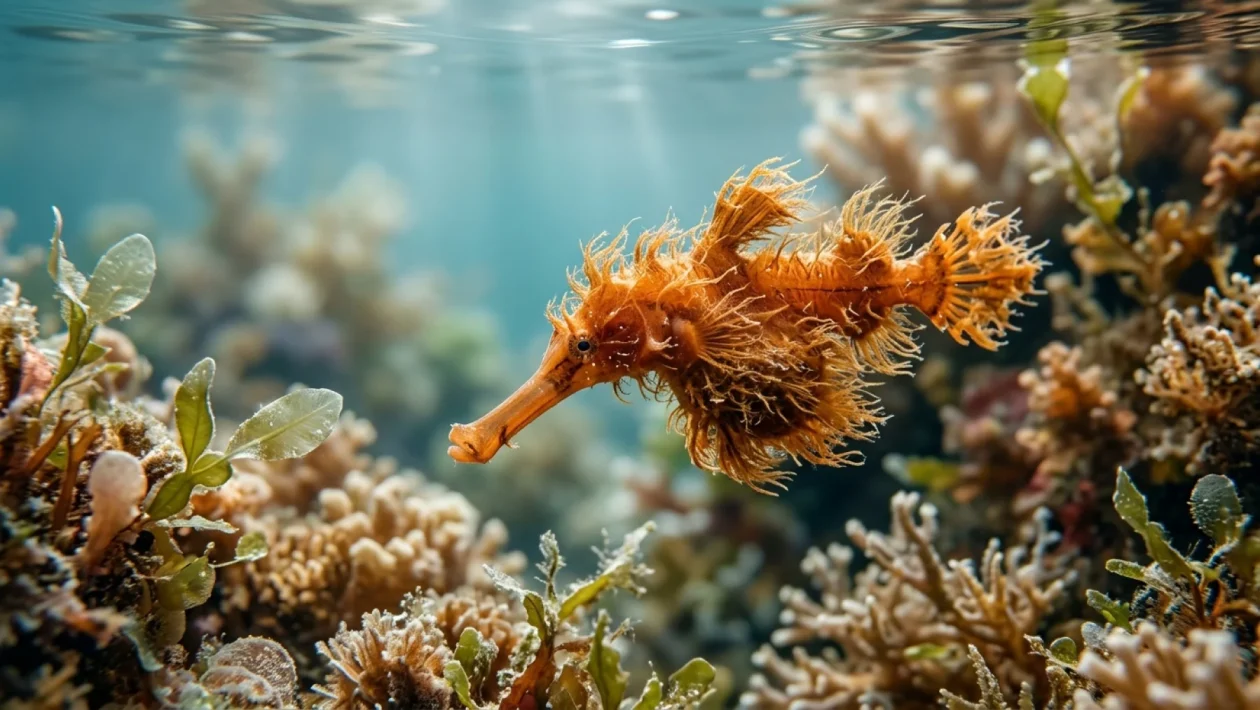
There is no mistaking the uncanny resemblance. Solenostomus snuffleupagus earned its hilarious moniker because it looks like a shrunken, aquatic version of Big Bird’s famous best friend. It rocks an orange-brown complexion, shaggy hair-like filaments, and a distinct, elephant-like snout.
When you’re outfitting yourself with premium dive gear from a spot like Mountain Equipment Company (MEC), you’re usually hoping to spot a sea turtle or a massive ray. But spotting “Snuffy” is the ultimate diver’s bragging right. This species of ghost pipefish is a bizarre, fascinating cousin of the seahorse that relies entirely on looking absolutely ridiculous to survive.
Why This “Cute” Creature Wears A Disguise
Don’t let the Muppet association fool you; the “cute” factor is strictly a survival mechanism. The Snuffleupagus fish is incredibly tiny, measuring just four to five centimetres long. To put that in perspective, this fish is roughly the size of a standard Apple AirPod.
Because it is so small, delicate, and slow-moving, it acts as a master of disguise. It spends its days hanging around coral reefs, blending in perfectly with floating red algae. This brilliant camouflage protects it from larger predators while allowing it to drift unnoticed through the bustling aquatic neighborhood.
The Carnivorous Pipefish Plot Twist
Here is where the story takes a dark, fascinating turn. While the television Mr. Snuffleupagus wouldn’t hurt a fly, his aquatic namesake is a natural-born killer. For years, scientists assumed that delicate ghost pipefish only nibbled on microscopic crustaceans or tiny shrimp.
They were wrong. When researchers finally got their hands on preserved specimens, the hard facts told a different story. High-tech CT scans revealed a shocking truth: intact, tiny fish skeletons were resting right inside their stomachs. The Snuffleupagus fish is an apex micro-predator, actively hunting and swallowing other fish whole.
Baffling Marine Biologists For Two Decades
The real magic of the Snuffleupagus fish is how long it managed to ghost the scientific community. Scientist David Harasti first laid eyes on this oddity in Papua New Guinea back in 2003. But just like the early seasons of Sesame Street where only Big Bird could see Snuffy, nobody could find the fish again.
It took nearly 20 years of frustrating dead ends before scuba diving buddies spotted them on the Great Barrier Reef in 2021. This incredible two-decade gap baffled marine biologists and proved just how vast and unexplored our oceans truly are.
“It’s an understatement to say that we screamed under water. We high-fived, gave each other a hug, and we were just so excited.” — Graham Short, Ichthyologist at the California Academy of Sciences
How A “Muppet” Becomes An Official Species
You can’t just point at a funny-looking fish and name it after a TV character. The process of officially describing a new species is rigorous and requires serious detective work.
- The Initial Sighting: Divers spot an undocumented creature and log it on citizen science platforms like iNaturalist.
- The Historical Dig: Scientists scour archives for old specimens. In this case, researchers found preserved fish from a 1993 expedition tucked away in storage.
- Medical-Grade Scanning: Using advanced CT scans, researchers analyze the skeletal structure and stomach contents without destroying the rare specimen.
- Peer Review Publication: The findings, along with the proposed name, are officially published in a respected journal like Fish Biology.
Tale of the Tape: Muppet vs. Marine Predator
Curious how the namesake stacks up against the real-life reef dweller? Here is a quick breakdown.
| Feature | Muppet Snuffleupagus | Snuffleupagus Fish |
|---|---|---|
| Size | Larger than an adult human | Size of an AirPod (4-5 cm) |
| Diet | Cabbage and spaghetti | Strictly carnivorous (other fish) |
| Habitat | Sesame Street | Southwestern Pacific Coral Reefs |
Frequently Asked Questions
Where exactly can I find the Snuffleupagus fish?
If you’re looking to book a dive trip, you’ll need to head to the southwestern Pacific. Confirmed sightings have been recorded in Papua New Guinea, Tonga, New Caledonia, and Australia’s Great Barrier Reef.
Are ghost pipefish actually related to seahorses?
Yes! Ghost pipefish belong to the same biological order as seahorses and sea dragons. They share similar elongated snouts and fused jaw structures, though ghost pipefish don’t have a prehensile tail for gripping.
Will scientists name more fish after Muppets?
It’s highly likely! The researchers already have their sights set on another undocumented ghost pipefish in the Pacific. They are currently seeking approval to name it after yet another famous Muppet.
Wrapping Up the Reef’s Best Kept Secret
🤝 Thank you for diving into this aquatic mystery with me! Discoveries like this remind us that you don’t need to look to outer space to find mind-blowing aliens; they are swimming right right here in our own oceans.
💡 Nature always keeps a few tricks up her sleeve. Who would have thought that an adorable, tiny creature mimicking red algae could turn out to be a stealthy, bone-crunching predator?
📱 I want to hear from you! Have you ever spotted a ghost pipefish while snorkeling, or do you have a favourite weird ocean creature? Drop a comment below and share your thoughts!
👇 Good luck on your next ocean adventure, keep your eyes peeled for the little things, and don’t forget to share this wild story with the nature lovers in your life!