The world is starving for battery power, and until now, North America has been virtually held hostage by overseas monopolies just to keep our vehicles moving. If you drive an electric truck, run off-grid solar, or even just rely on heavy-duty cordless tools in your garage, your power source depends on one critically overlooked material: graphite. The incredible news is that a massive Quebec graphite mine is gearing up to completely disrupt the global supply chain, unearthing the exact resource the whole world is desperately trying to buy. Best of all, it all started with a single Canadian geologist who knew exactly where to swing his hammer.
Quebec Graphite Mine: Unearthing the EV Revolution’s Secret Sauce
When most guys pop the hood on the electric vehicle conversation, all they talk about is lithium. But that is only half the story. Graphite is the unsung hero of the energy transition, acting as the crucial anode material in almost every modern rechargeable battery.
Here is a hard fact that surprises most people: graphite actually makes up nearly 50 percent of the volume of a standard lithium-ion battery. Without a massive, reliable supply of it, the entire electric vehicle revolution stops dead in its tracks.
For years, China has dominated this market, refining the vast majority of the world’s battery-grade graphite. This massive discovery in Quebec changes the math entirely, putting a reliable, ethically sourced supply right in our own backyard.
How One Geologist Struck the Motherlode
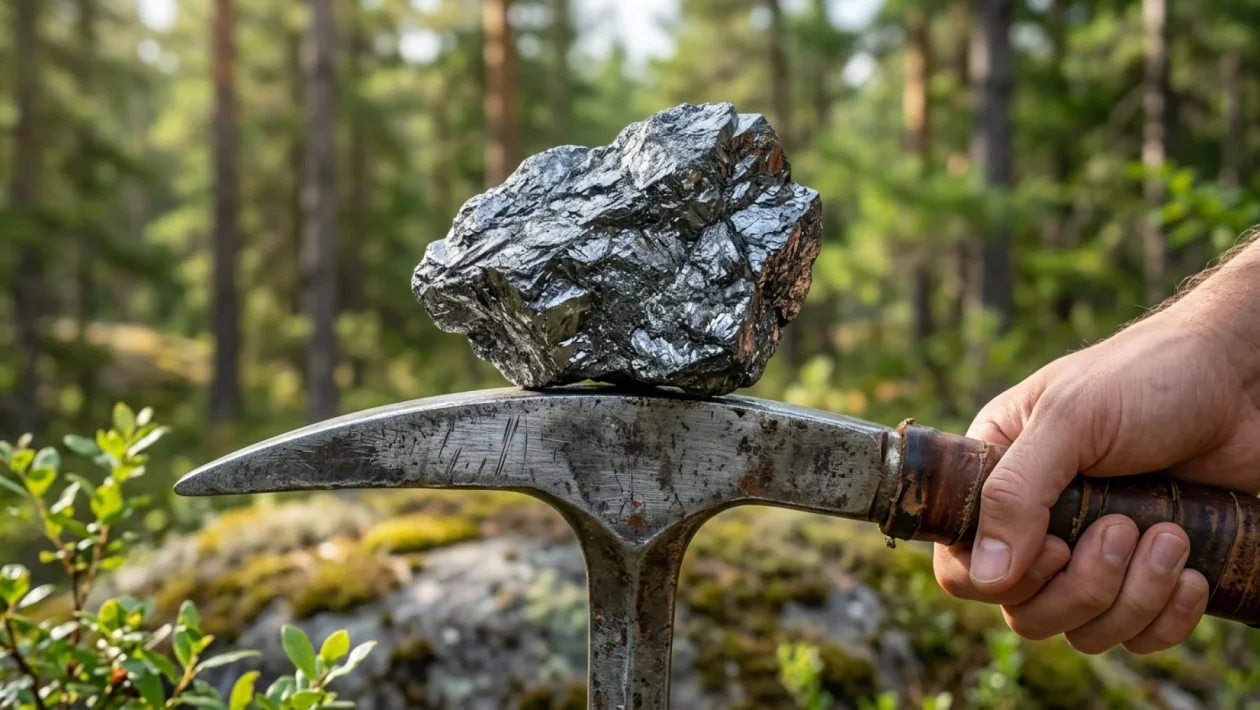
Great discoveries rarely happen in comfortable boardrooms. They happen in the mud, the blackflies, and the rugged terrain of the Canadian Shield. The story of this massive deposit comes down to the stubborn persistence of a geologist who saw what others walked right over.
While the rest of the industry was frantically chasing gold or copper, this team recognized the unique geological markers of high-grade flake graphite. They realized they were sitting on a mountain of the exact material that global tech giants were begging to purchase.
It is the ultimate Canadian sweat-equity success story. One smart play in the Quebec wilderness is now blossoming into what is projected to be the largest graphite operation in the entire G7.
The G7’s Largest Deposit: Securing North American Manufacturing
Scale matters when you are trying to build millions of vehicles. Having the G7’s largest graphite deposit just a short train ride from major manufacturing hubs is an absolute logistical dream.
Major Canadian players like Lion Electric in Quebec and heavy-duty parts manufacturers like Magna International in Ontario have been crying out for localized supply chains. As we push through the spring of 2026, relying on shipping containers from halfway across the globe just doesn’t cut it anymore.
“For decades, we shipped our raw potential overseas, only to buy it back at a premium. This Quebec discovery proves Canada isn’t just a resource hub; we are the foundation of the next industrial age.”
The Path to Production: How We Go From Dirt to Battery
Pulling rock out of the ground and putting it into a high-performance EV battery isn’t magic. It requires a brutally efficient, highly technical process. Here is how the magic actually happens out in the field:
- Exploration and Drilling: Crews pull core samples deep from the bedrock to map out the richest veins of flake graphite.
- Extraction and Crushing: The raw ore is mined and sent through massive industrial crushers to separate the graphite-bearing rock from the waste material.
- Flotation and Purification: The crushed material is mixed with water and safe chemical agents. The graphite naturally floats to the top to be skimmed off and purified to over 99 percent carbon.
- Shaping and Coating: The purified flakes are milled into microscopic spheres and coated, making them ready to be packed into the battery cells powering your next truck.
Weighing the Impact: Local Economy vs. Global Demand
A project of this magnitude sends shockwaves through the economy. It is not just about digging a hole; it is about building a sustainable future. Here is a quick breakdown of what this means on the ground:
| What It Means For Canada | What It Means Globally |
|---|---|
| Thousands of high-paying trades and engineering jobs. | A secure, non-overseas supply of critical battery materials. |
| Massive boost to Quebec’s regional infrastructure. | Lower carbon footprint due to cleaner Canadian extraction grids. |
| Attracts more battery manufacturing plants to our borders. | Breaks the global monopoly on anode production. |
Frequently Asked Questions
Why is graphite so important for electric vehicles?
Graphite serves as the anode (the negative side) in a lithium-ion battery. It physically stores the lithium ions when the battery is charged and releases them to generate power, making it entirely non-negotiable for battery performance.
Will this mine lower the cost of EVs in Canada?
Absolutely. By cutting out expensive overseas shipping and avoiding foreign tariffs, domestic automakers can source their materials cheaper. That savings eventually trickles down to the sticker price on the dealership lot.
Is mining graphite bad for the environment?
Older mining methods were incredibly dirty, but Canada operates under some of the strictest environmental regulations on the planet. Furthermore, Quebec’s power grid is predominantly hydroelectric, meaning the carbon footprint of refining this graphite is drastically lower than the global average.
🤝 Let’s be honest, Canada has always been a country built on raw materials and hard work. But this Quebec graphite mine isn’t just another resource extraction project; it is our ticket to owning the future of transportation.
💡 The next time you fire up your battery-powered drill or see a new electric pickup roll quietly down the street, remember that the heart of that machine was likely pulled straight from the Canadian Shield.
📱 We want to hear from you as we watch this massive project unfold through 2026. Do you think Canada is doing enough to secure our critical minerals?
👇 Drop a comment below and share your thoughts with the community. Good luck on your own projects this week, and keep your batteries charged!