You open that monthly utility bill and immediately feel a familiar knot in your stomach. We are midway through July 2026, your A/C is working overtime, and you are quite literally paying to cool completely empty rooms.
It feels like you are bleeding cash just to keep the lights on and the house livable. But you do not need to sit in the dark or sweat out the summer just to keep your bank account intact.
By leveraging smart home automation, you can turn your house into a highly efficient, self-managing machine. It is time to let your house do the heavy lifting and keep that hard-earned cash in your wallet where it belongs.
Smart Home Automation Systems You Need Right Now
The days of clapping to turn off a living room lamp are long gone. Today’s connected home is a robust network designed to monitor, adjust, and optimize your power usage in real time without you lifting a finger.
When I talk to homeowners, they often think smart tech is overly complicated or exclusively for computer geeks. The truth is, modern automation is incredibly user-friendly and practically runs itself once you complete the initial setup.
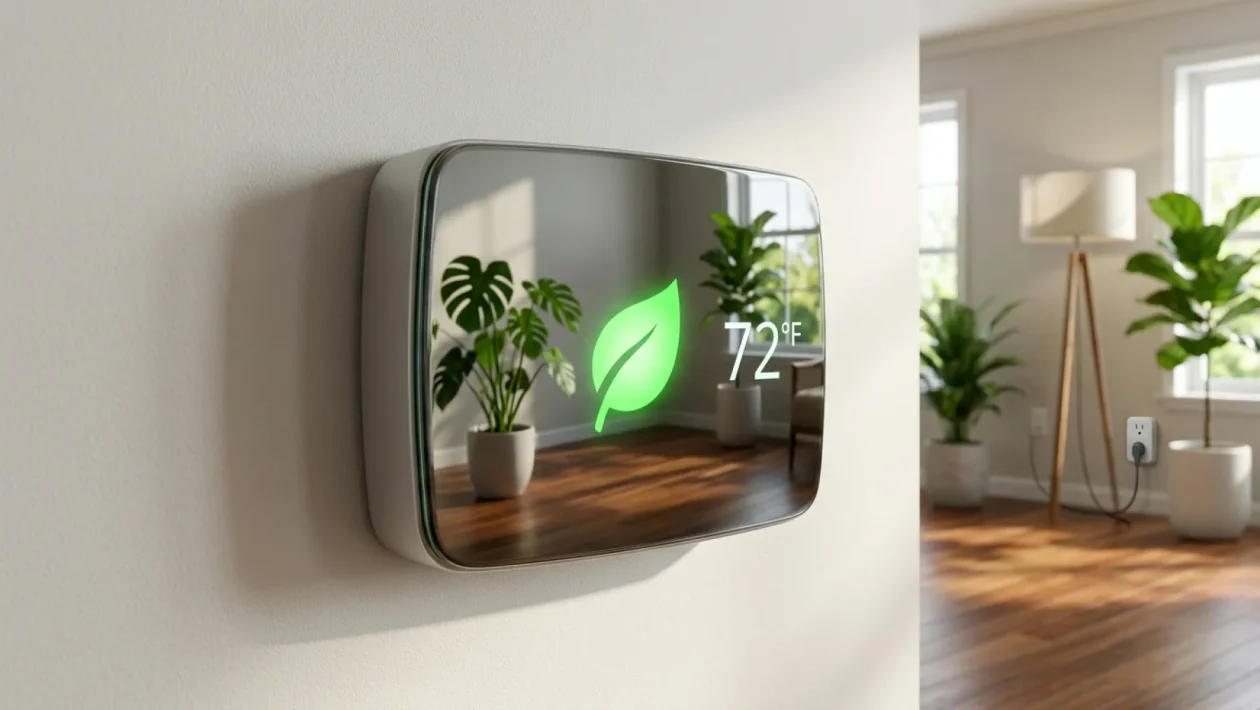
Take the Toronto-born brand Ecobee, for example. Their smart thermostats use remote sensors to detect exactly which rooms are occupied, ensuring you never waste energy conditioning a space nobody is using.
“Smart tech used to be about showing off flashy gadgets to your buddies. Today, it is an invisible utility manager that actively fights inflation on your behalf,” says Dave Mitchell, a senior energy auditor at the North American Green Building Council.
How To Actually Slash Your Hydro Bill
Knowing your home is smart is a nice feeling, but seeing that dollar amount instantly drop on your hydro bill is the real prize. The secret lies in killing “vampire draw” and optimizing your major appliances for off-peak hours.
A staggering 20% of your home’s electricity usage comes from appliances that are turned off but still plugged in. Smart plugs and automated power strips completely eliminate that hidden phantom load.
Here is a quick look at where you are actively losing money and how automation fixes the problem immediately:
| Everyday Energy Waster | The Smart Home Fix |
|---|---|
| A/C blasting while you are at work | Geofencing thermostat schedules |
| Outdoor porch lights left on all day | Smart bulbs linked to local sunrise/sunset |
| Vampire draw from TVs and consoles | Smart plugs with auto-shutoff timers |
| Running the dishwasher at 5 PM | App-delayed starts during off-peak hours |
By shifting your heavy power loads to late at night, you dodge those brutal peak pricing hours entirely. That is an instant win for your household budget.
Automating Ways To Maximize Your Comfort
Nobody wants to walk into a sweltering, stuffy house after a long, exhausting day at the job site. The absolute beauty of a connected home is that you never have to sacrifice your personal comfort for the sake of saving a few bucks.
Your system should intuitively know when you are heading home. It should perfectly prepare the indoor environment before you even pull your truck into the driveway.
Here is exactly how you build a foolproof, automated comfort routine:
- Enable geofencing: Link your smart thermostat directly to your smartphone’s location services.
- Set the perimeter boundary: Program the system to automatically switch off the A/C when your phone is more than five kilometers away.
- Trigger the return home: Have the HVAC system kick back into high gear the second you cross back over that five-kilometer line.
- Automate the blinds: Install smart motorized window shades to drop automatically during the hottest part of the afternoon, blocking out passive solar heat.
You simply walk through the front door, and the house is already perfectly chilled. It feels like magic, but it is just brilliant planning.
Frequently Asked Questions
Does smart home automation require an expensive central hub?
Not anymore. While dedicated hubs used to be absolutely mandatory, most modern smart plugs, bulbs, and thermostats connect directly to your existing home Wi-Fi network. You can control everything seamlessly through free, intuitive apps on your phone.
Will this smart technology actually pay for itself?
Absolutely. Most Canadian and North American homeowners see a total return on investment within the first 12 to 18 months. When you factor in the generous utility rebates available across many provinces and states right now, the upfront cost is significantly lower than you think.
What happens to my smart home if the Wi-Fi suddenly goes down?
Do not panic. Your expensive devices will not brick themselves. Smart thermostats will simply continue to follow their last programmed daily schedule, and smart switches still work exactly like regular, old-school physical switches until the internet connection returns.
💡 Upgrading your home does not have to be an overwhelming, expensive weekend project. Start small with a single smart thermostat or a handful of automated plugs, and watch your hydro bill steadily shrink month after month.
📱 Take control of your energy today, and let the technology do the hard work in the background. You work incredibly hard for your paycheck; there is zero sense in letting that money leak out the windows.
🤝 Good luck on your smart home journey! If you found this breakdown helpful, share your thoughts or send this article to a buddy who is constantly complaining about overpaying the local utility company.
👇 Drop a comment below and let me know which automated smart device you are planning on installing first!