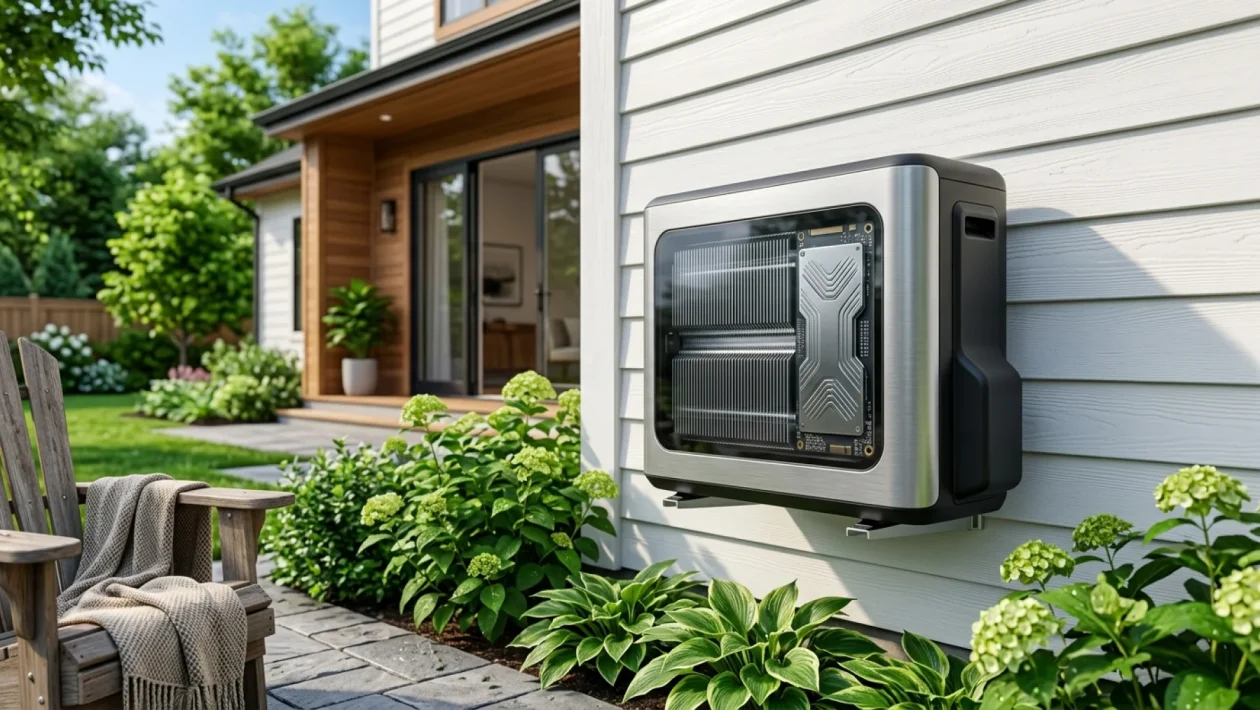
Your current air conditioner is a ticking time bomb of expensive leaks, noisy compressors, and outdated chemistry. Right now, as another scorching summer bakes the pavement outside, that metal box in your backyard is struggling to keep up. But a massive shift in home hardware is happening right under our noses. Engineers across Europe and North America are rolling out a radical new way to chill our living spaces without a single drop of liquid coolant. The era of the traditional AC is ending, and the replacement is brilliant, silent, and nearly maintenance-free.
The secret? Refrigerant-Free AC. We are talking about completely ditching the chemical liquids that phase into gases, and instead relying on solid metals, magnetic fields, and raw physics to pull the heat out of your living room. It sounds like science fiction, but it is currently being tested in real-world apartments and supermarkets. If you are sick of paying for Freon top-ups or listening to your compressor rattle every time the thermostat clicks on, you need to understand what is coming down the pipeline.
Refrigerant-Free AC: The End Of Toxic Chemicals
Traditional air conditioning relies heavily on fluorinated gases (F-gases). They do a decent job of making cold air, but they are an absolute nightmare if they leak. In fact, these chemicals have a global warming impact thousands of times worse than carbon dioxide. The European Union has already seen enough and passed laws to aggressively phase them out.
North America is not far behind. As regulations tighten, the old way of cooling our homes is becoming financially and legally unsustainable. We need a cleaner way to beat the heat, especially since global cooling currently accounts for roughly 3% of all greenhouse gas emissions.
“In the next few years, air conditioners and heat pumps using these gases won’t even be able to be sold here,” says Fabian Voswinkel, an energy-efficiency policy analyst at the International Energy Agency.
This hard deadline is forcing the HVAC industry to innovate fast. Instead of trying to invent slightly less toxic liquids, the smartest minds in the business decided to throw out the liquids entirely. The result is a mechanical system that is infinitely safer for your home and the environment.
Why Solid-State Tech Is The Ultimate Game-Changer
The term “solid-state” means exactly what it sounds like: no sloshing liquids, no complicated phase changes from liquid to gas, and incredibly few moving parts. Think about the jump from old spinning computer hard drives to lightning-fast solid-state drives (SSDs). That exact same leap in reliability is happening to your home cooling.
Because there are no refrigerants to compress, solid-state units are remarkably quiet and energy-efficient. And the technology isn’t just trapped in a European lab. Right here in Canada, a company called Mimic Systems has already installed a working semiconductor-based heat pump prototype in a Vancouver apartment. They are proving that this gear can handle real-world demands.
This is a massive deal for our power grids. With the International Energy Agency predicting that electricity demand for cooling will more than triple by 2050, we simply cannot afford to keep running inefficient, power-hungry compressors. Solid-state technology drops the energy load significantly, saving you a fortune on your summer hydro bills.
Magnetic Cooling (And Bending Metals): How The Magic Happens
So, if there is no cold liquid pumping through copper pipes, how exactly does the air get cold? It all comes down to cutting-edge materials science. Researchers are using things like magnetic fields, electrical currents, and even mechanical stress to force materials to drop in temperature.
One of the most mind-blowing methods is called elastocaloric cooling, which uses nickel-titanium alloys. Here is the step-by-step breakdown of how stretching metal cools your house:
- The Mechanical Stretch: A specialized machine physically stretches the nickel-titanium metal wires. This stress forces the metal to heat up, and that heat is immediately vented outside your house.
- The Release and Chill: The tension is suddenly released. As the metal snaps back to its original shape, its internal temperature plummets, becoming freezing cold to the touch.
- The Air Delivery: Your home’s interior air is blown across these freezing cold metal wires, instantly dropping the room temperature by 5 to 10 degrees Celsius before the cycle repeats.
Other companies are using high-powered magnets to achieve the exact same effect. When certain metals pass through a magnetic field, they heat up; when they exit the field, they become freezing cold. It is pure, reliable physics doing the heavy lifting.
How This Will Change Your Home (And Your Hydro Bill)
Upgrading to a solid-state system is going to completely alter how you maintain your home. You will no longer need to call an HVAC technician just because your system is “blowing warm air” due to a chemical leak. Without pressurized refrigerant lines, the lifespan of your cooling system will skyrocket.
Let’s look at a quick breakdown of how these new systems stack up against the unit currently sitting outside your window:
| Traditional AC Systems | Solid-State Cooling Tech |
|---|---|
| Requires toxic, pressurized refrigerants. | 100% refrigerant-free. |
| High maintenance costs (leaks, compressors). | Extremely low maintenance (fewer moving parts). |
| Loud outdoor compressors. | Whisper-quiet operation. |
| High electricity consumption. | Massive reduction in hydro grid strain. |
While the initial purchase price of solid-state units might be higher when they first hit commercial shelves, the total cost of ownership will be vastly lower. You are buying a machine built to last decades, not years.
Frequently Asked Questions
When can I buy a solid-state AC in Canada or the US?
While prototypes are currently running in places like Vancouver and Germany, large-scale commercial availability is still a few years out. Industry experts expect these systems to start hitting the high-end residential market toward the end of the decade as manufacturing scales up and costs come down.
Will these new units work with my existing furnace ducts?
Yes. Just like upgrading from a standard AC to a modern heat pump, solid-state cooling units are designed to integrate with standard forced-air ductwork. The cooling happens inside the unit, and your existing blower motor will push that chilled air through your vents.
Are solid-state cooling systems safe for my family?
They are incredibly safe. In fact, they are significantly safer than traditional AC units. By eliminating flammable, toxic, and highly pressurized chemical refrigerants, you completely remove the risk of hazardous leaks inside your home.
🤝 The way we build and maintain our homes is evolving faster than ever. As extreme summer heat becomes the new normal, relying on 100-year-old chemical cooling concepts just doesn’t cut it anymore.
💡 Solid-state technology is the ultimate upgrade. It is cleaner, quieter, and fundamentally better designed to handle the heavy lifting without breaking the bank on maintenance or destroying the environment.
📱 I want to hear from you. Would you be an early adopter of magnetic or solid-state cooling in your home, or are you holding onto your traditional AC until the bitter end?
👇 Share your thoughts in the comments below and let me know how your current setup is handling this brutal summer heat. Good luck with your home projects, and stay cool out there!