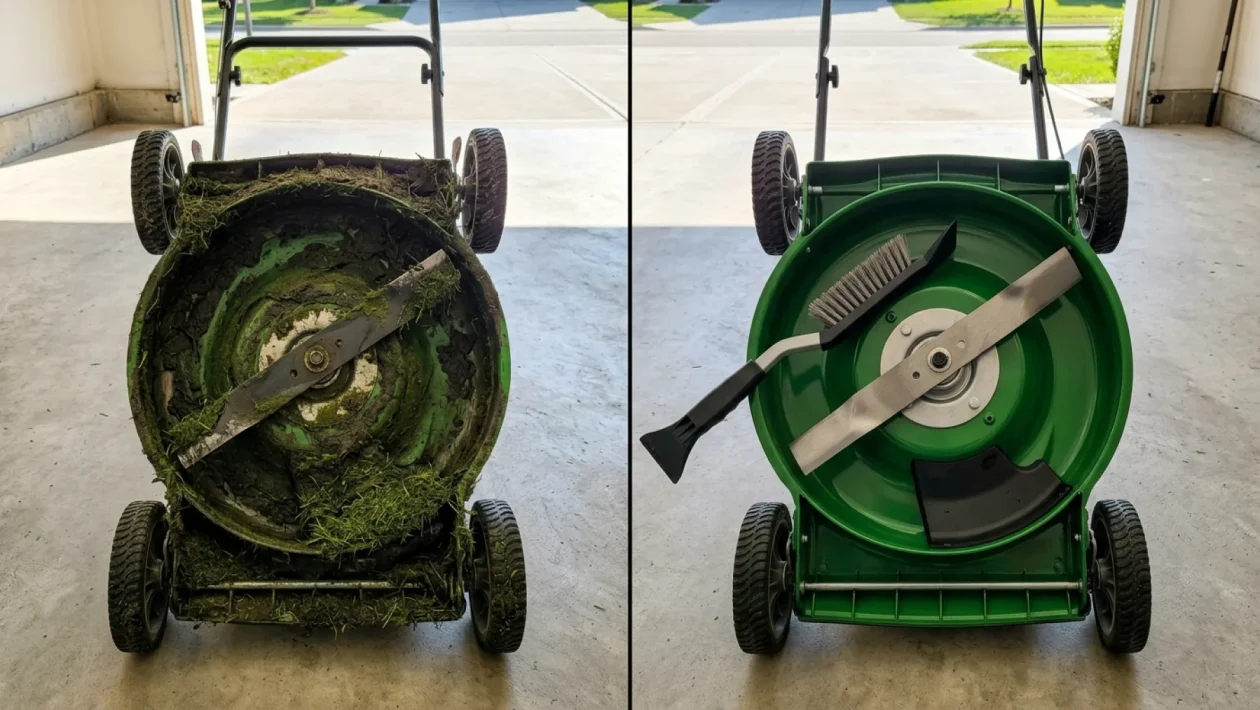
It is July 2026, and we are right in the thick of peak mowing season. You rush out to cut the yard while the morning dew is still heavy, push your damp machine back into the shed, and walk away without a second thought. Congratulations—you are slowly killing your equipment. Leaving wet, compacted turf stuck to the underside of your deck is a guaranteed fast track to rust, dull blades, and an unsightly yard. Today, we are putting a stop to this mechanical abuse with a dead-simple piece of gear that costs less than a decent six-pack of beer.
Lawn Mower Cleaning: Why You Can’t Ignore The Underside
Most folks obsess over oil changes and blade sharpening, entirely neglecting the dark underbelly of their machine. When you mow damp turf, those clippings transform into a dense, glue-like paste that clings to every bolt and crevice. Over time, this thick layer of organic matter restricts airflow, forcing your engine to work twice as hard to discharge the clippings.
Here is a brutal reality check for you: Small engine mechanics estimate that neglecting routine under-deck maintenance reduces a mower’s functional lifespan by a staggering 30 percent. That is years of life stripped from your investment simply because you skipped a two-minute wipe down.
The Amazon Tool: Inside The Walensee Scraper Brush
Instead of chipping away at your deck with an old rusty flathead screwdriver—which absolutely destroys your paint job—there is a smarter way. Amazon is currently flooded with a highly specific gadget built exactly for this chore: the Walensee lawn mower scraper brush. It is a dual-headed lifesaver designed to make post-mow maintenance completely painless.
One end features a stiff-bristled brush small enough to snake into tight crevices, while the opposite end sports an angled scraper. It is brilliant for knocking off fresh, loose debris the moment you finish your yard work.
| Tool Feature | Practical Takeaway |
|---|---|
| Stiff Bristle Brush | Excellent for sweeping out fresh, damp clippings before they harden into a crust. |
| Plastic Scraper | Great for protecting your deck’s paint, but can snap if forced against concrete-hard, dried mud. |
Saving Your Deck: How Basic Maintenance Prevents Costly Rust
Whether you are pushing a heavy-duty gas-powered Toro or a sleek new battery-operated model from Canadian Tire, the metal housing is highly vulnerable to trapped moisture. Wet grass resting against steel accelerates oxidation, eventually eating holes straight through your equipment.
Executing a safe, effective cleaning routine takes less time than drinking your morning coffee. Just follow these essential steps to protect your investment safely:
- Kill the power: For gas mowers, always disconnect the spark plug first to prevent accidental starts. If you run electric, pop the battery out entirely.
- Tilt it right: Always tip a gas mower with the carburetor and air filter facing UP. Tipping it the wrong way floods the engine with oil, resulting in a smoking, sputtering mess.
- Scrape and brush: Use the scraper end of your tool to dislodge the heavy green clumps, then flip it over and use the stiff bristles to sweep the remaining residue away from the blades.
Destructive Wet Grass Clumps: The Hidden Spreader Of Lawn Disease
Rust is bad, but ruining your actual turf is arguably worse. Destructive wet grass clumps act like a petri dish for lawn diseases. If you are currently treating your property for brown patch or dollar spot, dragging a filthy mower deck across your grass guarantees you will spread those fungal spores to the healthy sections of your yard.
“A clogged mower deck doesn’t just bog down your engine; it acts as a mechanical spreader for fungal infections. Keeping the underside clean is the single most overlooked step in integrated pest and disease management.”
That is the bottom line: a clean deck equals a healthy, thriving summer lawn. If you want that golf-course green, you have to treat your tools with a bit of respect.
Frequently Asked Questions
How often should I really clean the underside of my mower?
If you have the time, running a scraper brush under the deck after every single use is the gold standard. At the absolute bare minimum, you need to be doing a thorough scrape-down once a month during the active growing season.
Is it safe to use a garden hose to wash the mower deck?
While many modern mowers come with a “washout port” specifically for a hose, using excessive water can sometimes introduce moisture into bearings and pulleys. A manual dry scrape using a specialized brush is often safer and far more effective at preventing long-term rust.
🤝 Good luck getting your equipment into fighting shape this season. Taking care of your tools is the easiest way to ensure they take care of you when the weekend chores pile up.
💡 Remember to always prioritize safety before putting your hands anywhere near those cutting blades. A disconnected spark plug or removed battery is your best friend in the garage.
📱 If you found this breakdown helpful or have your own shop tricks, share your thoughts with us on social media.
👇 Now get out there, scrape that deck, and enjoy your pristine summer yard!