Building an Off-Grid Life in the Mountains
Move away from the romanticized idea of homesteading. True off-grid forest living requires immense physical labor and strategic agricultural planning.
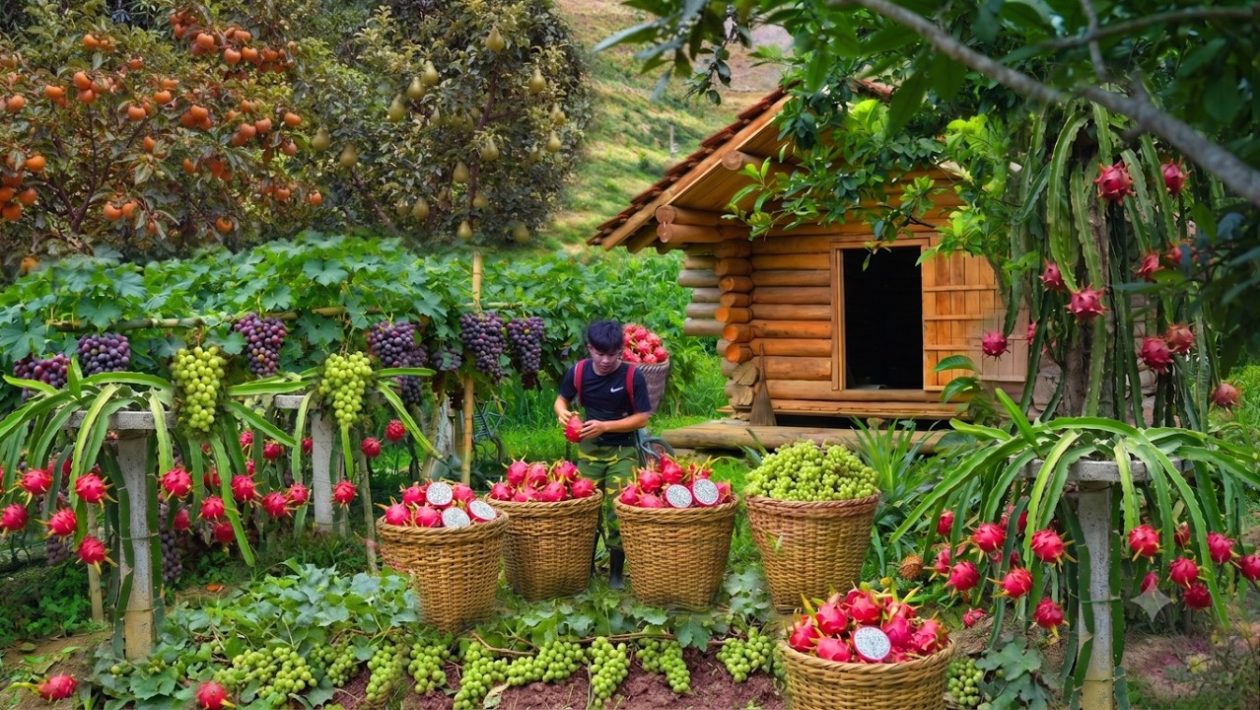
In the mountainous northern province of Vietnam, a homesteader named Thanh is proving that a remote patch of woods can operate as a viable micro-farm. His daily reality involves clearing land, managing soil health, and cultivating high-value crops for local markets.
Cultivating a Diverse Forest Canopy
Forest gardening is not about planting neat rows in an open field. It relies on utilizing the natural environment, managing light, and maximizing vertical space.
Growing dragon fruit requires sturdy trellises to support the heavy, sprawling cacti. These plants thrive in well-draining soil and need intense sunlight, meaning forest clearings must be carefully positioned and maintained.
Green grapes and pink apples add complexity to the operation. Grapes demand meticulous pruning and airflow management to prevent fungal diseases in humid mountain climates.
Pink apples require specific cold hours to set fruit. This makes the higher elevations of northern Vietnam a suitable, yet challenging, environment for diverse orchard management.
From Remote Woods to the Local Market
Harvesting is only half the battle. Turning a forest garden into a sustainable livelihood means getting perishable goods to market efficiently.
Dragon fruit must be clipped at the exact moment of ripeness to prevent bruising during transport. Green grapes and pink apples are carefully inspected for uniform color, size, and firmness before packing.
Once boxed, these fruits make the difficult journey from the remote cabin down to rural market stalls. Selling directly to consumers maximizes profit margins, allowing a solo operator to fund their off-grid construction and essential supplies.
The Reality of Solo Homesteading
Building a life in the woods is a long-term, grueling commitment. It requires mastering off-grid construction, advanced agriculture, and logistics simultaneously.
Every piece of infrastructure, from the primary cabin walls to the grape trellises, is built by hand. For those undertaking this journey alone, the margin for error is razor-thin.
The combination of relentless physical labor and strategic market selling separates a sustainable off-grid farm from a temporary wilderness experiment. The daily focus remains strictly on soil health, the next harvest, and the continual expansion of the forest garden.