Spring riding season is in full swing this May 2026, which means more bikes on the road and, unfortunately, more hazards after sundown. Another night, another devastating headline—just this week, a fellow rider lost their life in a tragic overnight collision at Bayview Avenue and Pottery Road in East York. It is a brutal wake-up call reminding us exactly how unforgiving the asphalt becomes when the streetlights flick on. If you want to ride the city grid after dark and make it home to your driveway, you need a radical shift in how you operate your machine.
Night Motorcycle Safety: Why The Dark Changes Everything
Riding at night is not just day riding with your headlights on. Your depth perception plummets, surrounding drivers are exhausted, and your overall visibility is drastically compromised. The urban landscape transforms into a chaotic blend of harsh glares and deep shadows.
The numbers do not lie. Historical data from Transport Canada consistently shows that nearly half of all fatal motorcycle collisions occur after dark, despite a significantly lower volume of riders being out. Night motorcycle safety demands a state of absolute paranoia.
You have to ride as if you are completely invisible. Assuming every single car is about to pull out in front of you is not pessimism; it is a vital survival mechanism.
Essential Gear: Illuminating Your Presence On The Asphalt
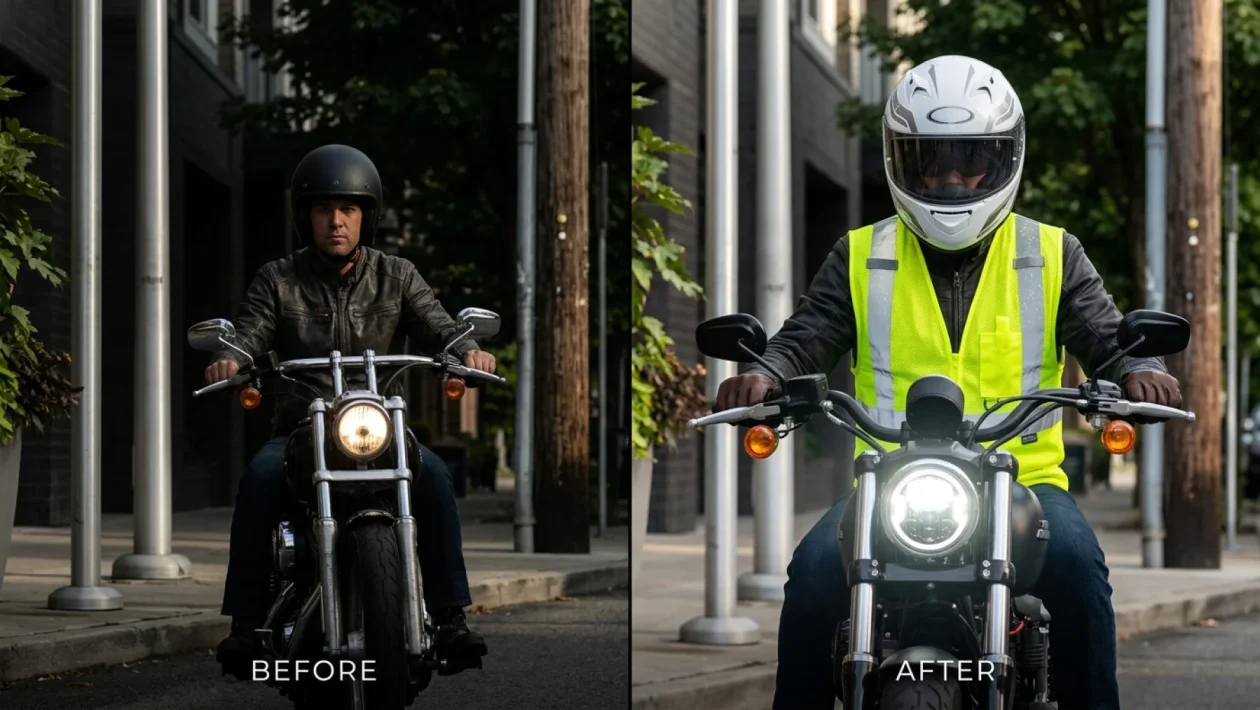
Matte black leather looks incredibly sharp on a sunny afternoon. At 1:00 AM on a dimly lit street, it simply turns you into a ghost. To survive, you must command attention.
I always recommend upgrading to retro-reflective gear from reliable Canadian brands like Joe Rocket Canada. Their high-visibility mesh jackets or simple reflective over-vests will catch headlights from a quarter-mile away. You do not have to sacrifice comfort or style to stay alive.
| Standard Gear | Night Riding Upgrade |
|---|---|
| Dark Leather Jacket | Hi-Viz Over-vest or Retro-reflective piping |
| Stock Halogen Headlight | DOT-approved LED replacement |
| Matte Black Helmet | White helmet with reflective decals |
Proven Tactics: Upgrading Your Defensive Riding Arsenal
Having the right gear is only half the battle. Knowing how to corner perfectly is great, but knowing how to anticipate danger is what actually keeps your heart beating.
“At night, a motorcyclist’s brain is their primary headlight. If you outride your vision, your brakes become useless.” – Ryan F9, Canadian Motorcycle Safety Advocate.
The streets are incredibly unpredictable after midnight. You need to implement strict tactical habits every single time you throw a leg over the saddle.
- Scan the shadows: Look actively beyond the direct beam of your headlight for subtle movement, reflections, or the glowing eyes of urban wildlife.
- Flash to pass: Never assume a tired driver sees you in their mirrors. Give a very quick high-beam flash before overtaking on the highway.
- Ride the tire tracks: Position your motorcycle in the left or right wheel track of the vehicle ahead to maximize your visibility in their side mirrors.
- Cover your brakes: Keep two fingers resting lightly on the front brake lever when approaching any intersection or blind corner.
Survive Urban Riding After Dark: Conquering City Intersections
The recent East York tragedy happened right at a major intersection. That is exactly where the vehicular chaos multiplies. Conflicting traffic patterns and confusing light signals are a lethal combination.
Left-turning vehicles are the apex predators of the urban grid. When you approach a green light at night, roll off the throttle slightly and cover your brakes.
Scan aggressively to the left, scan to the right, and try to make physical eye contact with drivers waiting to turn. If you cannot see their eyes through their windshield, they definitely cannot see you.
Frequently Asked Questions About Night Riding
Does a louder exhaust make me safer at night?
Honestly, no. The Doppler effect dictates that the sound travels backward, doing very little to warn drivers ahead of you. Focus your budget on visual lighting upgrades instead.
Should I ride with my high beams on constantly?
Absolutely not. Blinding oncoming traffic drastically increases the chance they will become disoriented and drift into your lane. Use them only on empty roads and switch them off immediately when approaching other vehicles.
Is a tinted visor dangerous for night riding?
Yes, incredibly dangerous. Swapping a dark smoke visor for a clear one is mandatory after dusk. If you hate carrying two visors, invest in a photochromic visor that adapts to the lighting conditions.
Conclusion
🤝 Staying safe on two wheels is not about riding in fear; it is about uncompromising preparation and having massive respect for the road.
💡 Upgrading your visibility gear and sharpening your defensive habits takes minimal effort, but it pays out massive dividends with every safe ride home.
📱 I want to hear how you handle the midnight shift. Hit the comments below and share your thoughts on your absolute must-have night riding tactics.
👇 Keep the rubber side down, stay highly visible, and Good luck out there on the midnight asphalt!