When mid-summer temperatures skyrocket, maintaining a thriving vegetable garden requires strategy. Trimming your tomato plants now is a proven way to guarantee a continuous, heavy harvest without exhausting yourself in the heat.
Mary Marlowe Leverette, a renowned fabric care expert and master gardener, brings over 50 years of agricultural experience to the table. From home gardens to commercial apple orchards, she understands exactly how plants respond to strategic pruning.
Why Cut Back Healthy Plants?
Pruning strikes a necessary balance between vegetative expansion and fruit production. Removing extraneous growth forces the plant to channel its energy into developing stronger main stems and larger tomatoes.
It also serves as a crucial defense mechanism against disease. Proper thinning drastically improves airflow and limits the risk of soil-borne pathogens infecting the foliage.
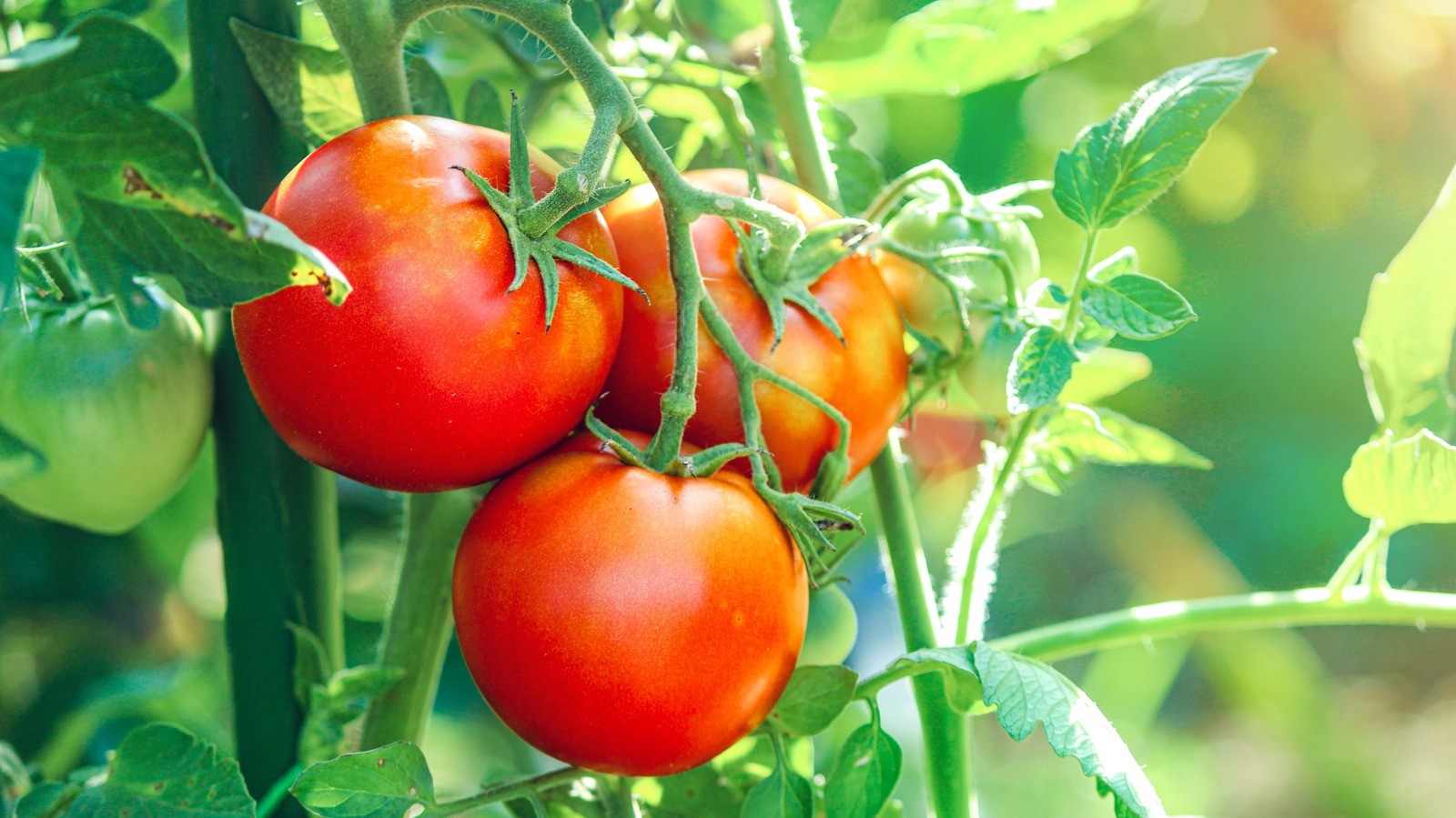
Lush green tomato leaves growing on a thick, healthy stem.
The 12-Inch Rule
Effective disease prevention starts at the soil line. Gardeners should clear all leaves from the lower 6 to 12 inches of the plant.
This bare gap prevents soil-borne pathogens from splashing onto the leaves during heavy rainfall or irrigation. How you proceed from there depends entirely on the specific variety of tomato you planted.
Handling Determinate Varieties
Determinate tomatoes are genetically bred to reach a compact height, usually stopping before they hit 4 feet. Once fruit sets on the terminal top bud, vertical growth ceases.
The entire crop will ripen within a brief two-week window before the plant naturally dies off. Because their growth is capped early, these plants funnel all their energy directly into blooms and fruit rather than excessive stems.
Determinate plants require almost zero mid-summer pruning. Trimming these compact varieties can actually severely diminish your overall crop yield.
Taming Indeterminate Vines
Indeterminate tomatoes are aggressive growers, often producing wild vines that stretch up to 8 feet long. To build a sturdy root system and main stem, gardeners should pinch off early flowers until the plant reaches 12 to 18 inches tall.
Once established, target the leafy suckers that sprout beneath the first true blooms. Suckers emerge in the “axil”—the exact junction where a leaf stem meets the primary growing stalk.
Removing these shoots prevents the plant from becoming unwieldy and dangerously heavy on its stakes or trellises.
The Mid-Summer Pruning Strategy
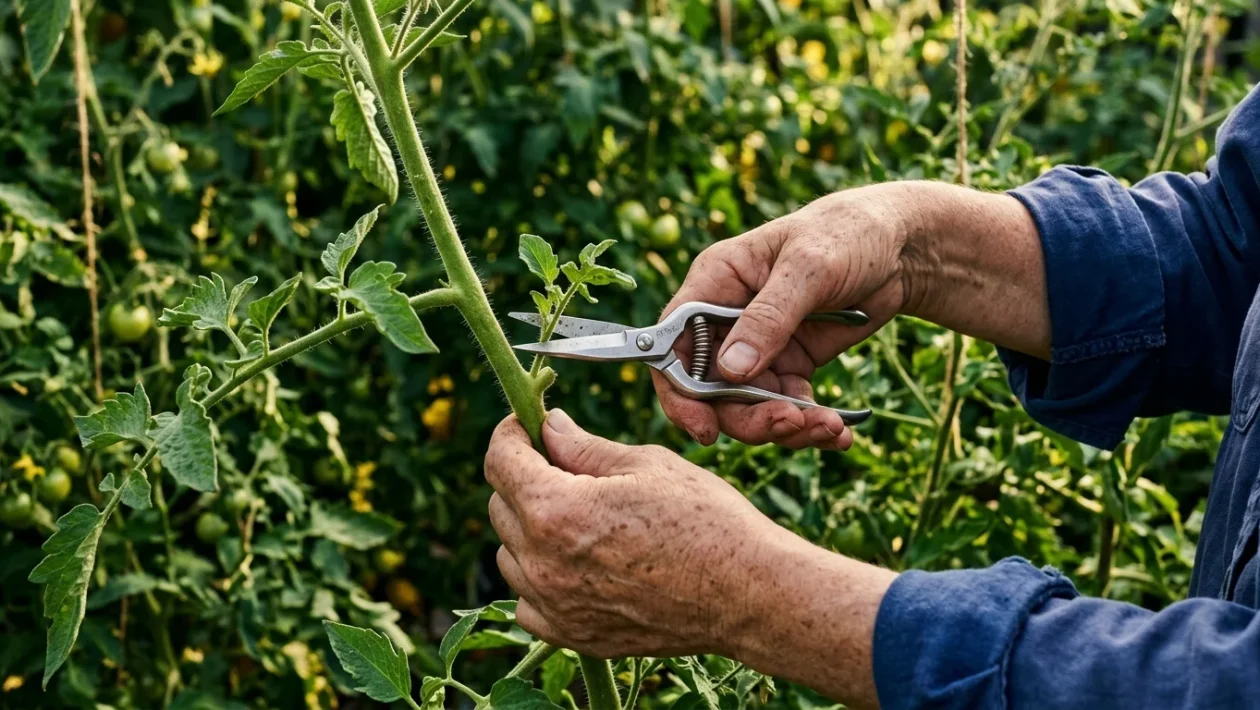
Intense summer sun requires a modified approach to removing suckers. Instead of ripping the entire offshoot out, simply pinch or snip off the ends.
Leave two base leaflets behind on the stem. As these remaining leaves mature, they provide essential shade to protect developing fruit from intense heat and sunscald.
Always use razor-sharp snips or pruners to ensure a clean cut. Wipe your blades down with rubbing alcohol between plants to prevent transmitting diseases into the wounded stem tissue.
Maximizing Airflow in Cages
If you grow tomatoes in wire cages during humid weather, clear out a few leaves directly in the center of the structure. This creates an open channel for vital air circulation.
However, never remove the foliage directly above or below a bloom cluster. These specific leaves are responsible for shielding the fruit and funneling natural sugars directly into the tomatoes.