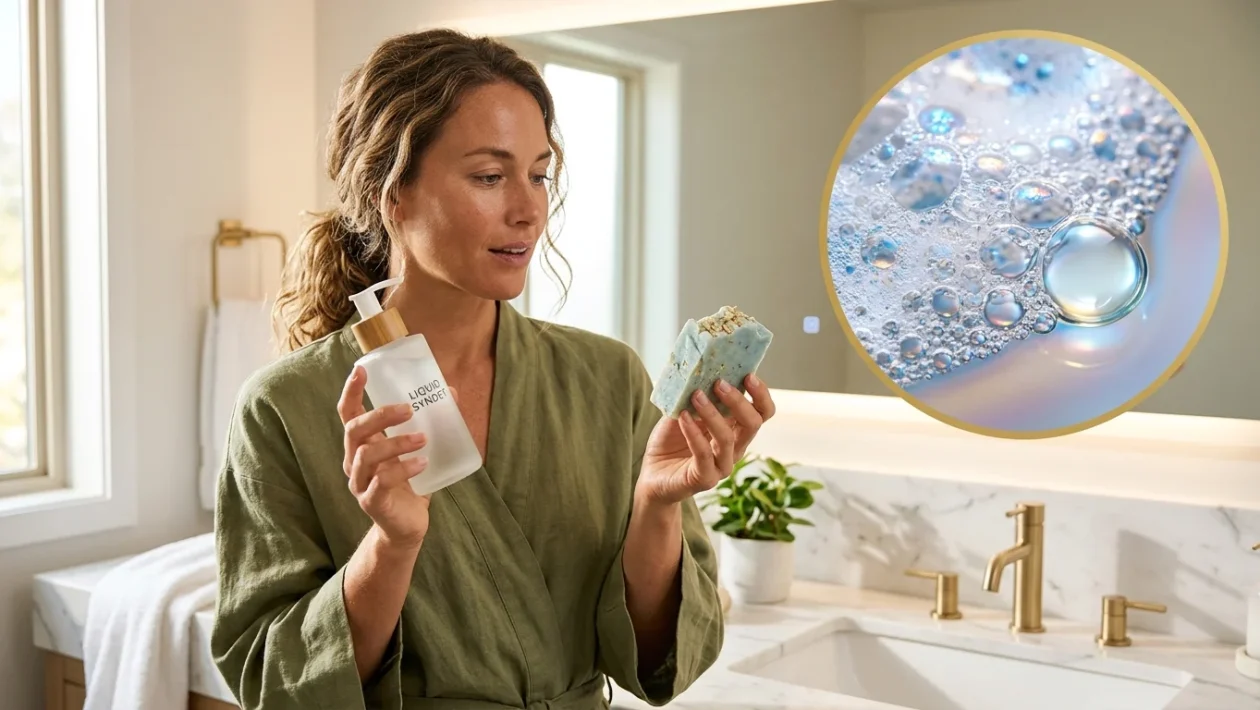
It is the ultimate bathroom sink dilemma: liquid soap or the classic bar. For years, rumors suggested solid soap harbored germs, pushing households toward sleek pump bottles.
Dermatologists say that is simply untrue. When used correctly, both liquid and solid soaps are perfectly safe and highly effective at stripping away dirt, excess oil, and microorganisms.
Liquid Soap: The Shared Space Champion
Liquid soap dominates public restrooms, busy offices, and shared households. Its pump design minimizes direct physical contact between users, making it a hygienic favorite for high-traffic environments.
The Upside
- Minimizes contact between different users thanks to the mechanical dispenser.
- Locks in hydration by utilizing moisturizing ingredients built directly into the formula.
- Protects sensitive skin and combats dryness, provided the formula is gentle and fragrance-free.
- Offers high practicality for small children and older adults with limited dexterity.
The Downside
- Costs significantly more than traditional solid alternatives.
- Drives up household waste by relying entirely on single-use plastic packaging.
- Triggers irritation in some users due to added preservatives, colorants, or synthetic perfumes.
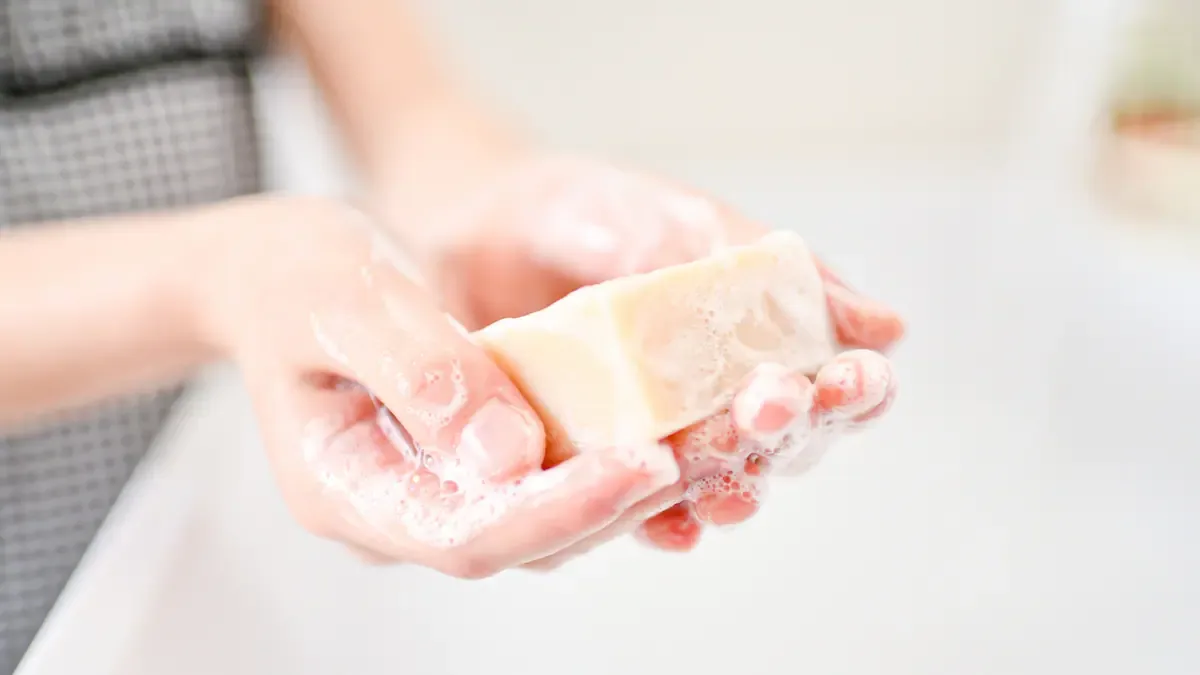
Soap used for daily hygiene.
Bar Soap: The Eco-Friendly Classic
Bar soap refuses to go out of style. It remains a household staple due to its raw cleaning power, sheer affordability, and minimal environmental footprint.
The Upside
- Saves money by routinely outlasting liquid equivalents.
- Slashes plastic waste because it typically arrives wrapped in simple paper or cardboard.
- Cleans effectively without leaving heavy chemical residues behind.
- Adapts to needs with specialized sensitive-skin versions featuring naturally derived ingredients.
The Downside
- Turns to mush and deteriorates quickly if left sitting in standing water.
- Requires a draining soap dish to prevent gross residue buildup in shared bathrooms.
- Strips natural oils because traditional formulas carry a highly alkaline pH, drying out the skin with frequent use.
The Dermatologist Verdict
There is no undisputed champion. Specialists stress that a soap’s physical format does not matter nearly as much as the chemical formula inside it.
If you battle sensitive skin, eczema, or dermatitis, skip the heavy fragrances. Reach for a gentle, unscented cleanser instead.
For chronically dry skin, liquid soaps or “syndets” (synthetic detergents balanced with a milder pH) offer superior relief. However, if your skin is healthy and normal, a quality bar soap will get the job done flawlessly.
Which Actually Cleans Better?
Neither format outshines the other in pure cleansing power. Both aggressively destroy bacteria and wash away viruses when paired with water.
The real secret has nothing to do with the soap itself. Experts agree that vigorous scrubbing for at least 20 seconds, followed by a thorough rinse, is the only metric that truly matters for staying clean.