
Kylie Jenner wearing a pair of dark, oval-framed Meta smart glasses.
Kylie Jenner’s foray into wearable technology is triggering intense public blowback. Late last month, the reality star debuted a custom pair of oval-framed Meta smart glasses.
Close-up of Kylie Jenner wearing dark oval-framed Meta smart glasses.
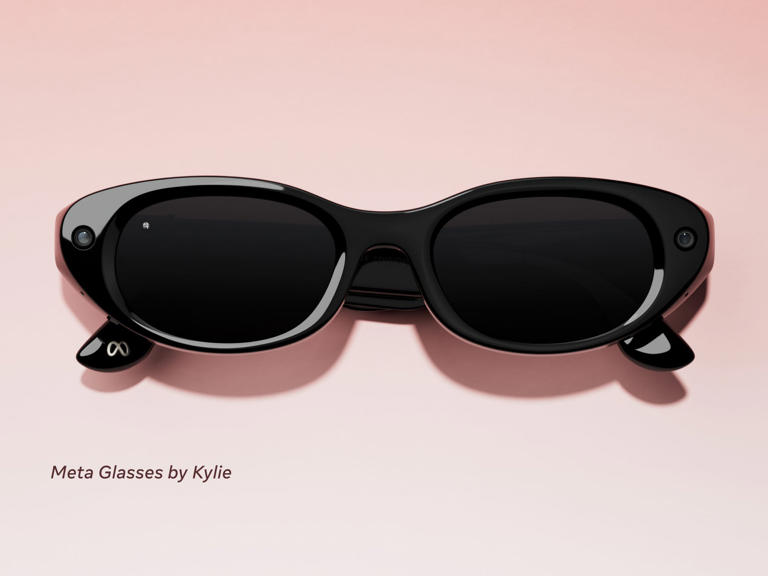
Despite Meta selling over 7 million pairs of their camera-equipped frames last year, Jenner’s new design immediately sparked outrage. Critics flooded her Instagram announcement, labeling the eyewear “Predator glasses” and calling it “a scary product for a WOMAN to be supporting.”
The backlash quickly moved offline. A British advocacy group purchased a bus advertisement featuring Jenner’s face alongside a chilling slogan: “We’re always watching you.”
Pop Stars and Pranksters Push Back
As the glasses become more visible in everyday life, anti-AI sentiment is growing louder. The devices are increasingly tied to a disturbing creep factor in public spaces.
Pick-up artists frequently use them to secretly record interactions. Internet pranksters leverage the hidden cameras to harass service workers for viral TikTok and Reels content.
High-profile figures are also sounding the alarm. At a Madrid music festival last week, pop star Lorde launched into an expletive-laden rant against the devices. “Don’t get the glasses,” she told the crowd. “Not sexy.”

Even Jenner appears hesitant to use her namesake product in the wild. She opted for different tapered sunglasses at the World Cup finals. During a recent Knicks game, she used an old-school point-and-shoot camera—not her Meta frames—to photograph her boyfriend.
She did, however, wear the smart glasses in a recent Instagram post promoting her swimwear line.
The Looming Threat of Facial Recognition
The core of the current controversy lies in artificial intelligence. While recording covert video is inherently invasive, Meta’s next move could fundamentally alter public privacy.
Wired recently reported that a software update for the glasses included dormant code for a feature called NameTag. If activated, this tool would use facial recognition to identify people around the wearer.
Meta CTO Andrew Bosworth defended the concept on Nicholas Thompson’s podcast, describing it as a solution to the “cocktail party problem” of forgetting names. Yet, the public remains deeply skeptical of trading personal anonymity to avoid minor social awkwardness.
Meta spokesman Carl Woog stated that facial recognition is not a done deal. “We haven’t made a decision on the so-called NameTag feature, and it’s not available in glasses people can buy today,” Woog said.
He added that if the feature launches, Meta will use a “thoughtful approach that protects people’s privacy.”
The Disability Defense
To counter privacy concerns, Meta executives frequently highlight the technology’s benefits for disabled communities. Bosworth argued the glasses could assist the blind and individuals with cognitive issues or brain injuries.
Meta’s Reality Labs division traces its roots to CTRL Labs, a company dedicated to building neural interfaces for people unable to type. In June, Meta pledged free smart glasses to any of the 130,000 blind military veterans who request them.
“There are a lot of people working at Reality Labs who have dedicated their professional careers to building frontier technology that can help people who have real needs,” Woog said.
Despite these genuine medical applications, Meta markets the glasses primarily as consumer tech toys. As the backlash to Jenner’s rollout proves, framing privacy concerns as an attack on accessibility may not be enough to win over a skeptical public.