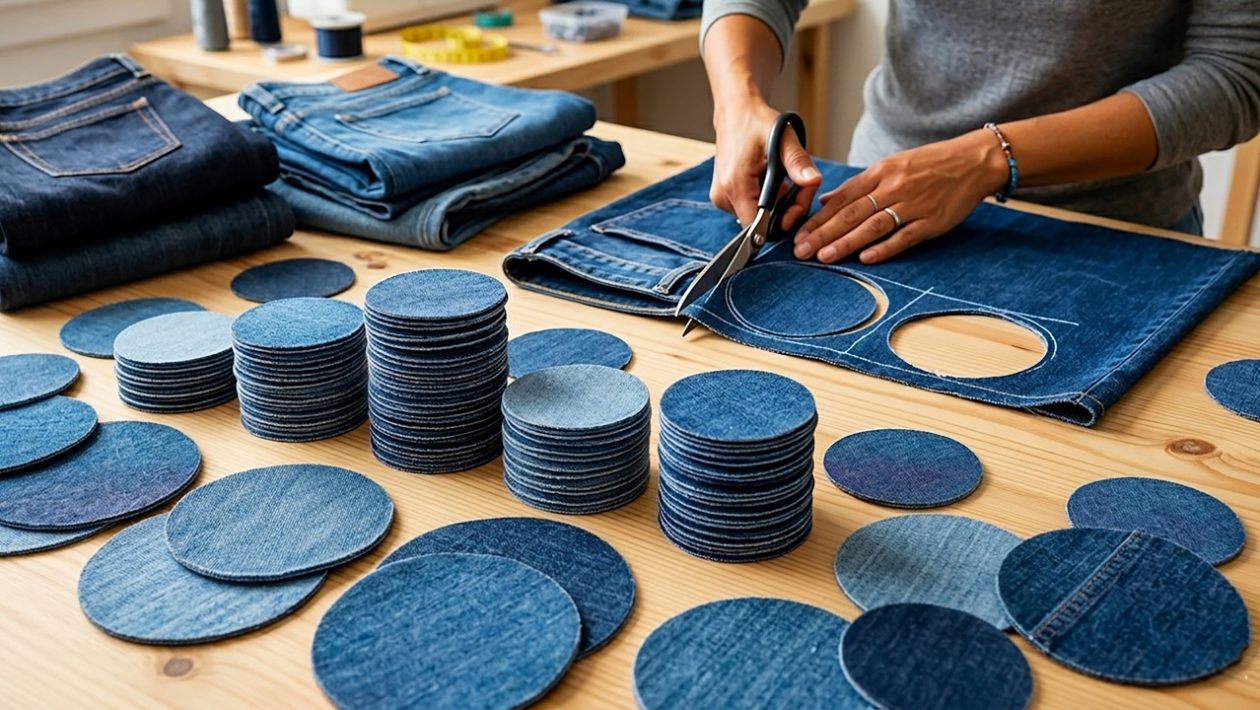
Millions of pairs of jeans end up in landfills every year. Yet, the fabric itself is designed to withstand heavy wear and last for decades.
Denim is exceptionally durable, versatile, and ages with a unique patina. When a pair of jeans blows out at the knee or no longer fits, the remaining fabric is still prime material for creation.
Upcycling denim scraps into functional art is a cornerstone of sustainable fashion. It requires rethinking fabric waste and engineering custom pieces from scraps that would otherwise be discarded.
The Secret: Preparation and Patchwork
The core technique behind transforming random offcuts into a cohesive design is structured patchwork. By treating small denim scraps like mosaic tiles, you can build brand-new yardage out of waste.
Start by harvesting the usable fabric. Cut away the thick seams, zippers, and rivets. Save the large, flat panels of fabric from the legs.
Sort your scraps by color. Grouping different washes—from deep indigo to stonewashed light blue—creates striking geometric contrast when stitched together.
Essential Tools for Heavy Fabric
Standard sewing equipment will struggle with multiple layers of denim. Upgrading your hardware prevents broken needles and jammed machines.
- Heavy-duty needles: Use a size 90/14 or 100/16 denim needle. These feature a sharper point and a stiffer shank designed to pierce dense weaves.
- Polyester thread: Standard cotton thread easily snaps under tension. Heavy-duty polyester or topstitching thread provides the necessary structural strength.
- Walking foot: If you are machine sewing, a walking foot pulls the top and bottom layers of thick fabric evenly, preventing puckering.
Techniques to Elevate Your Scraps
Simply sewing squares together can look amateur. To achieve a premium aesthetic, adopt established textile techniques to manipulate the fabric.
The Boro Method: Inspired by traditional Japanese mending, this process involves layering small, frayed scraps over a base fabric. The pieces are secured with rows of visible, contrasting hand-stitching.
Quilt As You Go: This technique anchors the denim scraps directly to a cotton batting foundation. It is highly efficient and creates a structured, padded material perfect for bags or heavy jackets.
Raw Edge Appliqué: Denim is famous for how beautifully it frays. Stitching shapes onto a base layer and leaving the edges raw adds deep texture to the finished garment.
Maximizing Every Inch of the Jean
True zero-waste fashion means finding a purpose for the difficult components. Hardware-heavy sections have distinct practical uses.
Rear pockets can be removed intact and appliquéd onto the inside of a new tote bag to serve as built-in organizers.
Waistbands and thick flat-felled seams make incredibly sturdy bag straps. Braiding three long, thin strips of denim together also yields a highly durable cord.
High-Impact Denim Projects
Once you have created your patchwork yardage, you can cut and sew it exactly like newly purchased fabric.
Tote bags and oversized weekender duffels are ideal starter projects. The heavy-duty nature of denim gives the bag vital structure, while the patchwork exterior ensures no two pieces are identical.
For home decor, denim scraps make excellent, hard-wearing throw pillows or floor poufs. The varied blue tones fit seamlessly into both modern and rustic interiors.
Wearable art remains the ultimate goal for many upcyclers. Splicing scrap panels into the back of an existing denim jacket or constructing an entirely new corset top turns waste directly into runway-ready fashion.