

Avocado trees face a rapid threat when leaf-eating caterpillars invade. These pests target soft, young leaves first before consuming the entire canopy. This aggressive feeding stops photosynthesis dead in its tracks.
A severe infestation forces the tree to spend energy replacing leaves rather than producing flowers and fruit. Acting at the first sign of leaf damage is critical to saving your avocado crop and keeping pest management simple.
1. Pluck Caterpillars and Destroy Eggs Manually
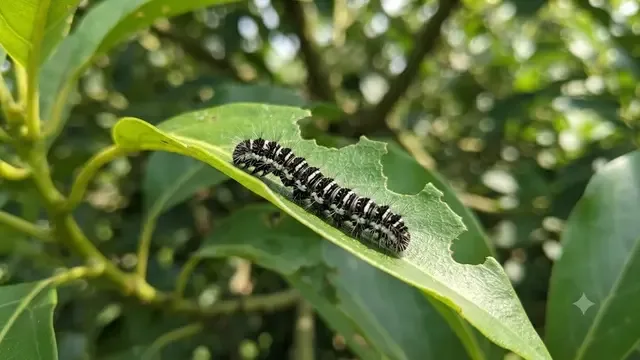
Eradicating caterpillars from avocado trees.
For small infestations, manual removal is highly effective. Grab the caterpillars using gloves or tweezers and drop them into a bucket of soapy water. This ensures they cannot crawl back onto the plant.
Always inspect the undersides of the leaves during this process. Moths lay large egg clusters here, which can hatch simultaneously and trigger a population explosion.
Perform these checks in the morning or evening when caterpillars are sluggish. Repeat this routine every few days until you no longer spot fresh eggs or pests.
2. Prune Heavily Infested Foliage
When branches are completely overrun with caterpillars or eggs, picking them off one by one is useless. Prune these compromised sections immediately to stop the pests from spreading to healthy foliage.
Gather all cut branches and destroy them by burning or burying them deep underground. This stops the larvae from maturing into moths and laying new eggs in your orchard.
Pruning provides an added benefit by increasing airflow within the canopy. Better circulation creates a less hospitable environment for future pests and fungal diseases.
3. Apply Botanical Pesticides
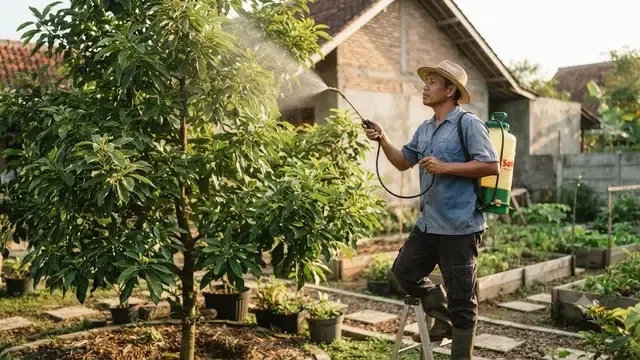
Spraying pesticide.
Natural pesticides offer an environmentally friendly way to control caterpillars in residential gardens. They are relatively safe to use on fruit-bearing trees.
Common organic ingredients for DIY sprays include:
- Neem leaves
- Garlic
- Cayenne pepper
- Lemongrass
- Soursop leaves
Blend these ingredients, soak them for a few hours, and strain the liquid. Add a few drops of liquid soap to help the mixture stick, then spray the solution over the entire leaf surface every five to seven days.
4. Deploy Bacillus thuringiensis (Bt)
Bacillus thuringiensis (Bt) is a highly recommended biological insecticide. It specifically targets leaf-eating caterpillars without harming beneficial insects like pollinating bees or predatory beetles.
Once a caterpillar ingests sprayed foliage, the bacteria destroy its digestive tract. The pest stops eating immediately and dies within a few days.
Apply Bt in the late afternoon for maximum effectiveness. High ultraviolet light from direct midday sun can degrade the bacteria and render the application useless.
5. Use Chemical Insecticides as a Last Resort
If the entire tree canopy is infested and natural methods fail, chemical insecticides are your final option. Always strictly follow the dosage instructions printed on the product label.
Use chemicals sparingly to prevent pest resistance. Overuse will also wipe out the natural predators that naturally keep caterpillar populations in check.
Never spray chemical insecticides while the avocado tree is blooming. Toxic runoff can kill bees and other critical pollinators required for fruit production.
6. Foster Natural Predators
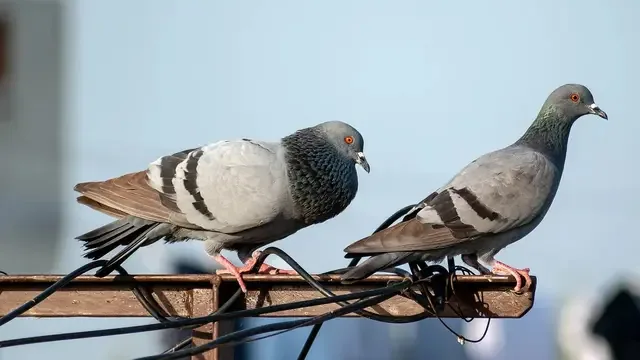
A pigeon in its natural environment.
Maintaining a balanced garden ecosystem is a proven long-term pest control strategy. Natural predators actively hunt caterpillar eggs and larvae, preventing outbreaks before they begin.
Insect-eating birds, spiders, predatory beetles, and parasitoid wasps are highly effective at suppressing pests. Wasps even use live caterpillars as breeding hosts, decimating the population organically.
Protect these beneficial creatures by avoiding unnecessary insecticide use. You can also plant a diverse range of supportive flora to provide them with a reliable habitat.
7. Maintain Strict Orchard Hygiene
A clean yard eliminates breeding grounds for pests. Fallen leaves, thick weeds, and stacked branches provide shelter for caterpillars during different stages of their life cycle.
Regular cleanup improves air circulation and reduces excess moisture around the base of the tree. This proactive step disrupts the caterpillar life cycle and limits fungal growth.
Inspect your avocado trees at least once a week and maintain a balanced fertilizing schedule. Catching the first signs of leaf damage ensures the caterpillar population never gets the chance to expand.
Frequently Asked Questions
Why do caterpillars attack avocado trees?
Moths seek out young, soft leaves to lay their eggs, particularly in humid, unmaintained orchards that offer plenty of cover.
Are natural pesticides actually effective?
Yes. Botanical sprays work well for mild to moderate infestations when they are applied consistently every few days.
When is the best time to spray avocado trees?
Early morning or late afternoon. This timing prevents the solution from evaporating too quickly under direct sunlight.
Is Bacillus thuringiensis safe for fruit trees?
Yes. Bt is safe when used as directed and operates as a targeted strike against caterpillars without contaminating the fruit.
How often should I inspect my trees?
You should check the foliage at least once a week. This allows you to spot fresh eggs and larvae before they multiply and ravage the canopy.




