Growing chili peppers at home offers a rewarding harvest, but the plants quickly attract unwanted guests. Caterpillars and ants frequently invade during crucial growth and fruiting stages.
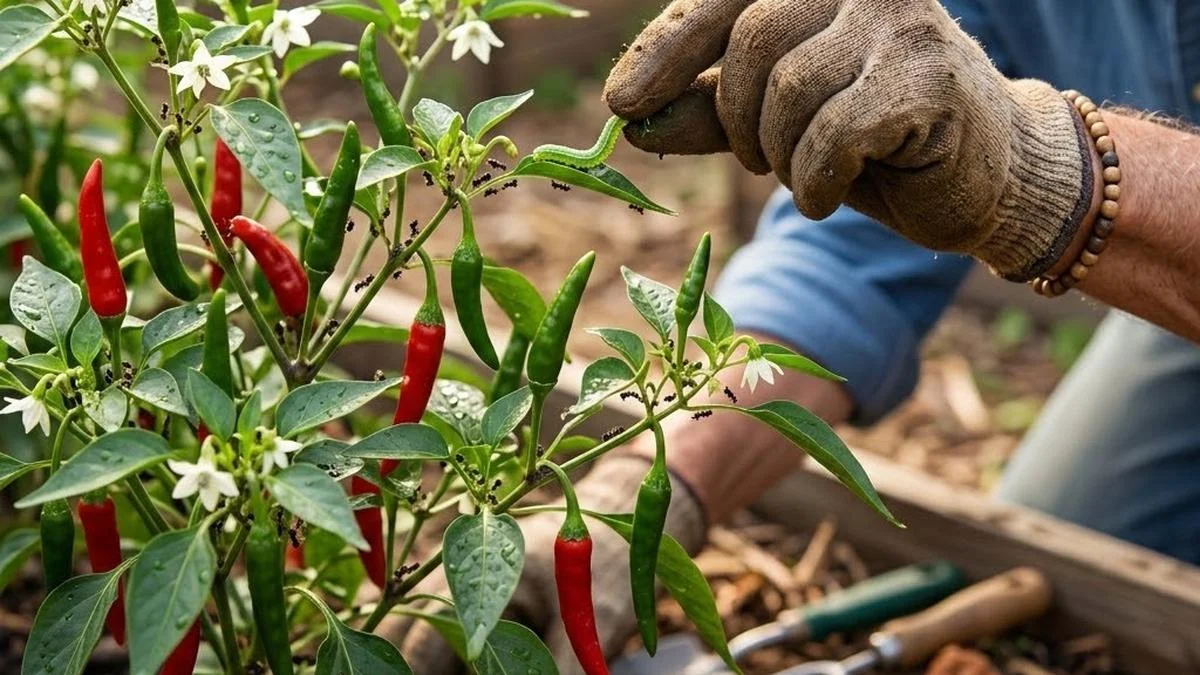
A gardener manually removing a green caterpillar from a pepper plant leaf.
If left untreated, these pests decimate leaves, flowers, and developing peppers, severely shrinking your yield. Fortunately, you can protect your home garden without relying on harsh chemical pesticides.
Understand What Draws Pests to Your Peppers
Before spraying any solution, you need to identify why these insects are targeting your crop. Ants rarely damage pepper plants directly; instead, they are drawn to the sweet honeydew secreted by aphids.
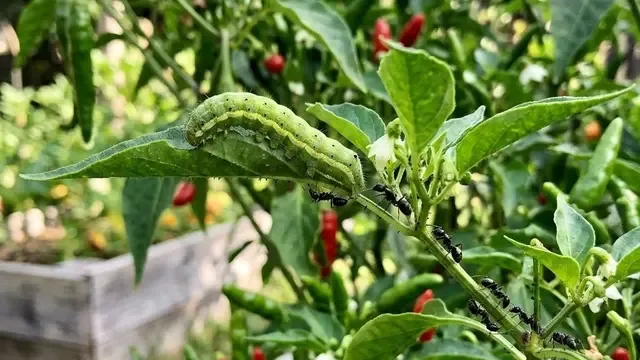
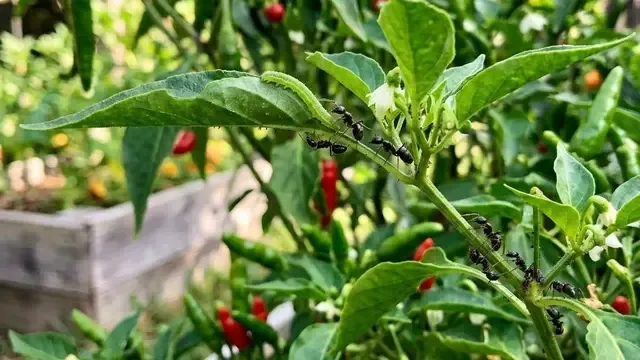
Close-up of ants and caterpillars navigating the stems of a chili plant.
Caterpillars arrive to feed directly on the foliage. Treating the root cause—such as an underlying aphid infestation—will often force the ants to relocate automatically.
Mix a Natural Garlic Deterrent
Garlic serves as a highly effective, natural repellent for both ants and caterpillars. You likely already have the ingredients sitting in your kitchen pantry.
To make this spray, crush fresh garlic cloves and mix them thoroughly with water. Strain the liquid to remove any solid chunks before transferring it to a spray bottle, then mist the solution directly onto the affected leaves and stems.
Apply Mild Soap Water
When pests first appear, a diluted soap mixture can stop them in their tracks. This method requires careful application to avoid harming the plant’s delicate tissues.
Mix a small amount of liquid dish soap with water and spray it on the pests. Only use a light coating, and monitor the plant to ensure the soap does not burn the leaves under direct sunlight.
Maintain Rigorous Garden Hygiene
Damaged chili plant foliage heavily infested with garden pests.
The environment surrounding your pepper plants dictates how easily pests can thrive. Fallen leaves, weeds, and organic debris create perfect hiding spots for insects to breed.
Clear away dead foliage and keep the soil surface around your plants pristine. A clean growing area disrupts the pests’ habitat and naturally reduces their population.
Hand-Pick the Intruders
If the caterpillar population is still small, manual removal remains the most direct solution. Inspect your plants closely and pluck the pests off one by one.
Always wear gardening gloves during this process. Many caterpillar species possess tiny bristles that can cause severe skin irritation and itching upon contact.
Utilize Household Staples
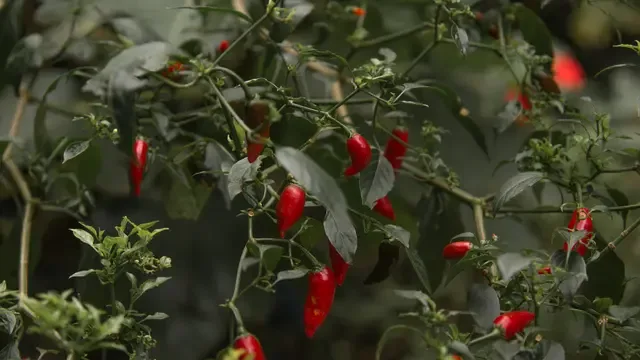
Healthy, vibrant chili peppers thriving on a clean and pest-free plant.
You do not need commercial farming supplies to maintain a healthy backyard garden. Everyday ingredients provide a safe, effective line of defense.
Combining regular garden maintenance with simple household repellents keeps the ecosystem balanced. This prevents unnecessary chemicals from leaching into your soil and homegrown food.
Establish a Consistent Inspection Routine
Eliminating garden pests is rarely a one-time job. Success requires establishing a strict routine to ensure insects do not return to lay new eggs.
Walk through your garden every morning or late afternoon to check the undersides of leaves. Catching eggs or small larvae early prevents a minor nuisance from becoming a full-blown infestation.
Common Questions About Chemical-Free Pest Control
How do you remove caterpillars without pesticides?
The most effective methods include hand-picking them, trimming away heavily damaged leaves, and applying a natural garlic water spray.
Why are ants swarming my chili plants?
Ants are usually farming aphids. The aphids extract sap from the plant and leave behind a sticky substance called honeydew, which the ants harvest for food.
Does garlic actually work on pepper plant pests?
Yes. The strong sulfur compounds in garlic confuse and repel insects. Blending it with water and straining the liquid creates a powerful, non-toxic garden spray.
When is the best time to check for pests?
Early mornings and late afternoons are ideal. Pests are highly active during these cooler hours, making it easier to spot caterpillars, ants, and freshly laid eggs.