The Hidden Dangers in Your Produce Drawer
We have all bought a vibrant bunch of curly kale or a container of baby spinach only to discover it wilted and slimy in the back of the fridge days later.
Keeping leafy greens fresh is a challenge, but preparing them for safe consumption is the real battle. The textured folds of these nutrient-dense vegetables create the ultimate hiding spot for dirt, sand, and dangerous pathogens.
Dark leafy greens like Swiss chard, collard greens, kale, and spinach are essential sources of fiber, potassium, calcium, and iron. However, spinach and kale frequently carry higher amounts of pesticide residues compared to other greens.
Darin Detwiler, a food safety professor at Northeastern University, stresses that despite these risks, all greens can be enjoyed safely if consumers follow strict handling and cleaning protocols.
Why Proper Handling is Non-Negotiable
Leafy greens are often eaten raw, meaning they skip the crucial “kill step” of cooking that eliminates bacteria.
According to Vanessa Coffman, PhD, MS, director of the Alliance to Stop Foodborne Illness, washing your hands thoroughly and keeping raw meats entirely separate from fresh produce is critical to avoid cross-contamination.
“If leafy greens are mishandled—for example, left in a warm room or the trunk of a car—any bacteria present can quickly multiply,” Coffman warns.
Furthermore, the CDC notes that washing alone cannot guarantee the removal of the Cyclospora parasite. This specific parasite resists routine chemical disinfection. The only reliable way to eliminate it is by heating the greens to at least 158°F (70°C).
Stop Washing Your Greens Before Storage
The biggest mistake consumers make is washing produce as soon as they get home from the grocery store. Experts universally advise against this practice.
Washing greens before storing them introduces moisture, which degrades their overall quality and drastically shortens their shelf life.
“Moisture encourages bacterial growth, which can make the greens spoil faster or become unsafe to eat by allowing pathogens to multiply,” says Coffman.
The Right Way to Refrigerate
Refrigeration slows down bacterial growth, but it does not stop it entirely.
Detwiler recommends storing greens in the refrigerator at 40 degrees Fahrenheit or colder. Place them in a clean container lined with dry paper towels to absorb any residual moisture.
Check your produce frequently. If the paper towels become damp, swap them out for dry ones. Discard any greens immediately if they develop an off odor or a slimy texture.
How Culinary Experts Clean Their Greens
Before you begin food prep, always wash your hands with warm water and soap for a minimum of 20 seconds.
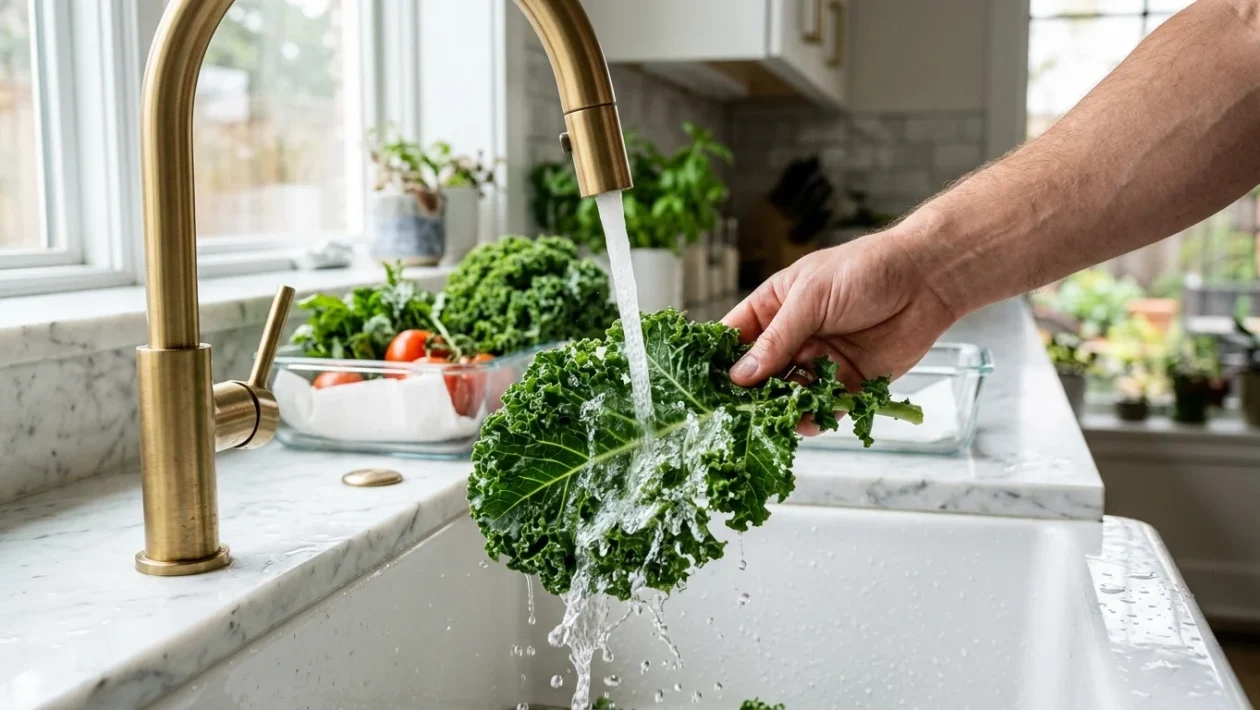
For standard greens, a thorough rinse under cool running water usually suffices. Highly textured varieties like Tuscan or curly kale require a more meticulous approach.
Detwiler suggests separating the leaves to rinse each one individually. Afterward, thoroughly dry the greens to halt bacterial growth.
Olivia Roszkowski, a chef-instructor at the Institute of Culinary Education, utilizes a two-step method for tough greens. “Dark leafy greens such as kale or collard greens will benefit from a preliminary rinse before cutting, followed by a second rinse once cut,” she explains.
For delicate items like bunch spinach, Roszkowski recommends cutting the leaves first using a very sharp knife to minimize bruising. Next, briefly submerge them in water to clean before drying them immediately to prevent rapid wilting.
When to Skip the Salad Spinner
You do not always need bone-dry leaves. If you plan to cook the greens immediately, a little excess moisture can actually be beneficial.
When steaming or executing a quick sauté, simply shake off the wet leaves and toss them directly into the pan. Just ensure you cook and consume them right away for maximum freshness and food safety.