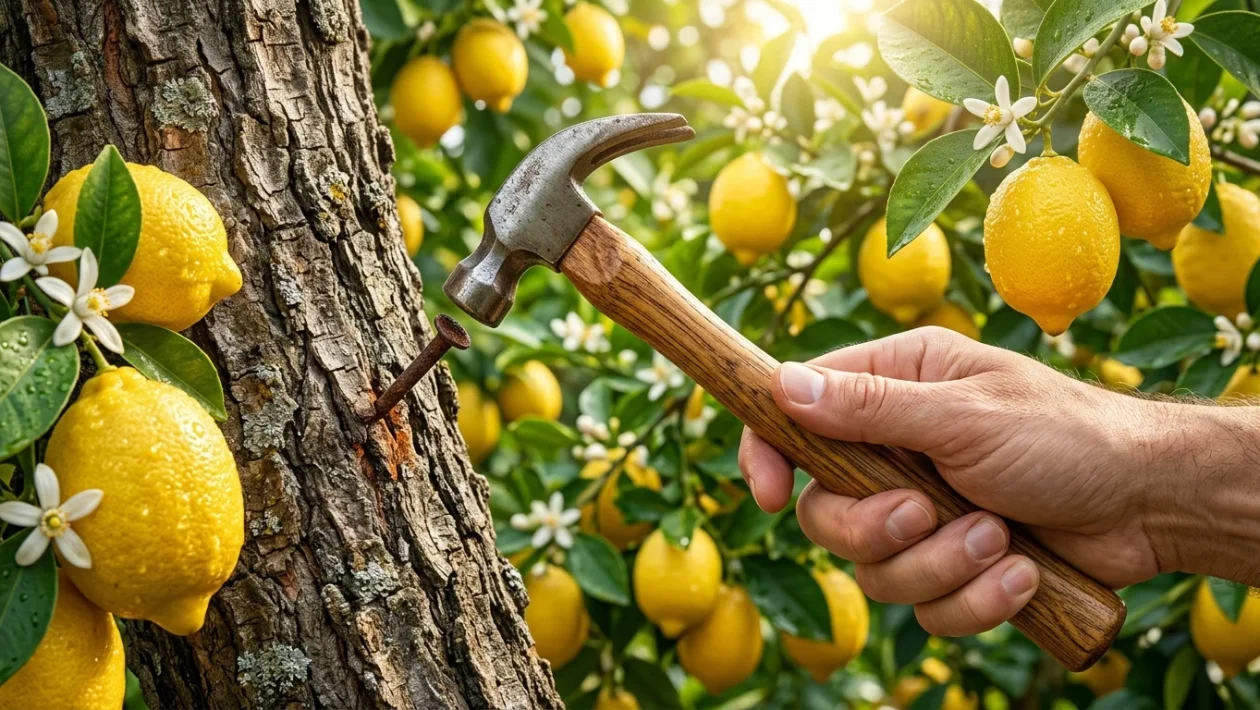
A close up view of a rusted iron nail driven into the bark of a mature lemon tree.
The lemon tree is a staple in Argentine patios and gardens. Its blossoms heavily perfume the air, and the plant reliably produces fruit for most of the year.
Among gardening enthusiasts, a specific homemade trick has been passed down through generations. The method involves hammering an iron nail directly into the tree’s trunk to stimulate growth and fruit production.
While this popular hack can technically provide a minor iron boost to the plant, horticulturalists confirm it is far from a miracle solution.
The Science Behind the Iron Nail
The core concept is entirely based on botany. Iron is a critical nutrient for lemon trees.
The mineral actively drives the formation of chlorophyll, the green pigment in leaves that makes photosynthesis possible. When a tree lacks sufficient iron, its overall health and development quickly decline.
Advocates of the trick argue that driving an iron nail into the trunk allows trace amounts of the mineral to slowly leach into the soil and the tree’s sap. In theory, this slow drip of nutrients fortifies the plant and improves its longevity.
Proceed With Caution
Gardeners deciding to test this technique must act carefully. Careless hammering can easily cause permanent structural damage to the trunk.
Important: A single piece of metal cannot replace fundamental plant care.
To guarantee optimal growth, the iron nail method should never substitute proper fertilization. A healthy lemon tree strictly requires a routine of organic compost, consistent watering, and regular pest management.