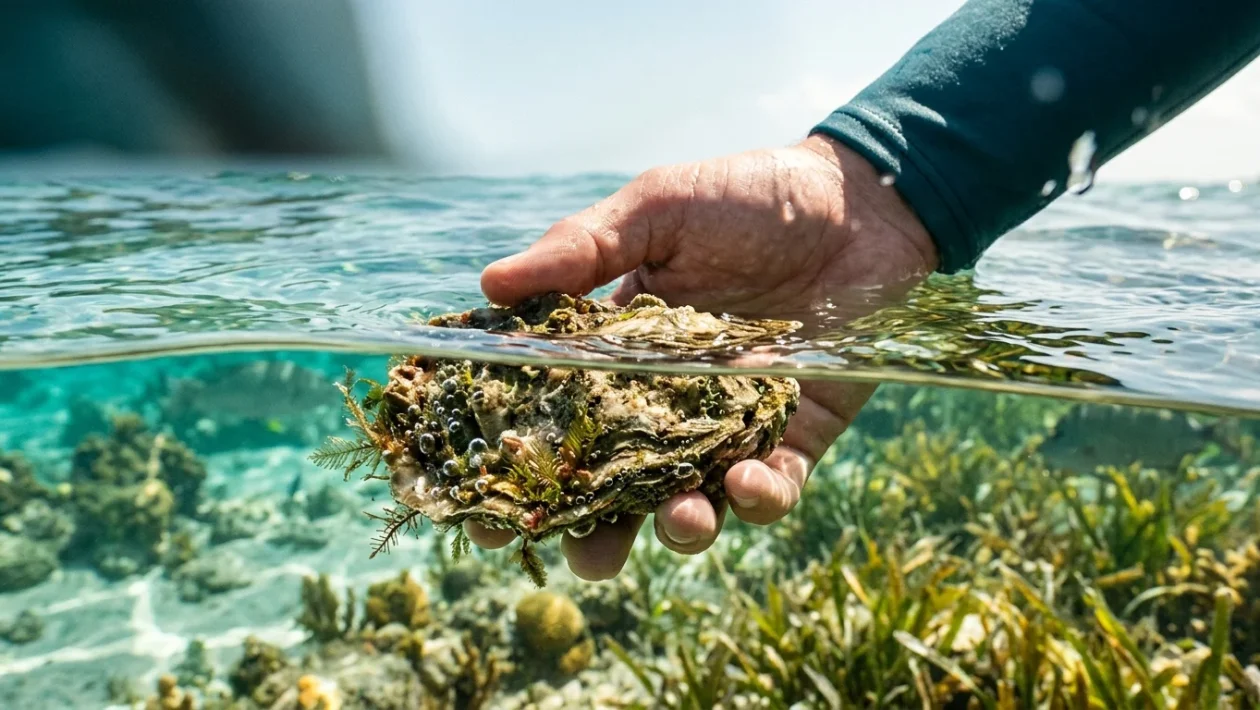
Recycled oyster shells resting on the ocean floor to rebuild marine reef habitats.
What initially looked like a massive waste disposal operation became a vital lifeline for Florida’s coastline.
Between 2007 and 2024, the state dumped over 500,000 tons of recycled oyster and clam shells into the Gulf of Mexico. The shells were not harvested from the ocean. Instead, they were collected from local seafood restaurants and processing plants.
The operation was part of an ambitious, long-term initiative to restore heavily damaged marine habitats.
A Controversial Start
Rather than sending the seafood waste to a local landfill, organizers plunged the shells into coastal waters where natural oyster reefs had previously vanished.
The public and critics heavily questioned the move. Many initially labeled the project as nothing more than illegal ocean dumping.
During the early phases, progress was completely invisible. Even the researchers behind the initiative were uncertain if the drastic measure would actually succeed.
The Science of Shell Decomposition
Beneath the surface, crucial biological processes had already begun.
As the discarded shells settled on the ocean floor, bacteria quickly colonized them. This formed a thin, critical layer known as a biofilm.
This biofilm acts as the foundational building block of a marine ecosystem. It creates the exact conditions necessary for other underwater organisms to attach, settle, and thrive.
Simultaneously, the shells began a slow decomposition process, releasing raw calcium into the surrounding water. This altered the localized chemical composition, generating the precise environment required for marine survival.
Rebuilding the Reef Foundation
Oyster reefs require hard surfaces for young oysters to attach and grow.
Because historical reefs had deteriorated over the years, the Gulf’s seabed had become soft and sandy. The recycled restaurant shells provided the missing solid foundation.
Young oysters successfully anchored to the recycled debris, kicking off a nearly two-decade recovery process.
Today, the native oyster population has surged. The newly thriving reefs naturally filter the ocean water, drastically reducing harmful algal blooms and fostering a cleaner environment for a wide variety of marine plants and animals.