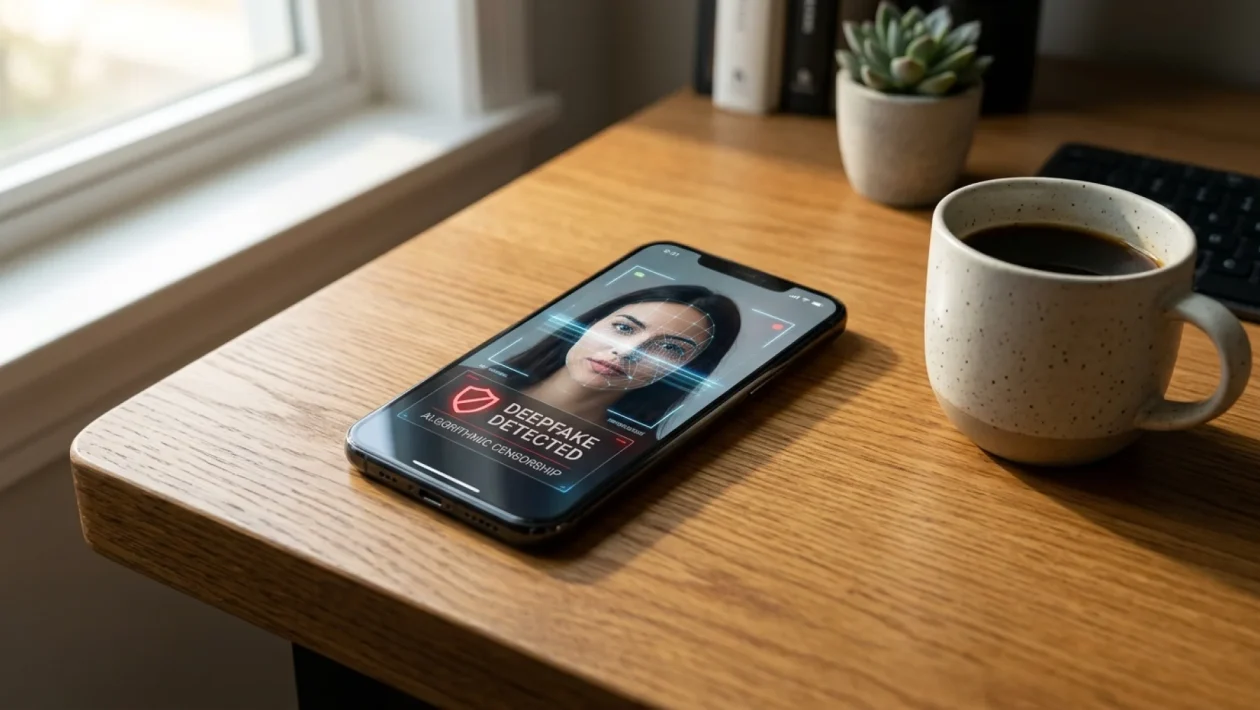
We are living in a digital wild west right now. You open your feed, and half the videos you see—from politicians making outrageous claims to celebrities hawking shady investments—are complete, synthetic garbage. The terrifying part isn’t just that the fakes are getting better. It is that the heavy-handed corporate filters designed to protect us are accidentally wiping out real, honest journalism in the process.
We urgently need a way to cut through the noise. You have to know how to spot the synthetic lies and bypass the aggressive algorithms hiding the facts. Today, I am going to show you exactly how to bulletproof your digital bullshit detector using the latest tech.
Deepfake Identification Protocols
We hear a lot of tech buzzwords on the news, but what does this actually mean for the average guy sitting at home? Think of deepfake identification protocols like a digital stud finder for your browser.
They do not just look at the surface of a video. They scan the underlying structural integrity of the media file itself.
I was grabbing a coffee with a buddy who manages network security over at Bell Canada, and he blew my mind with a hard reality check. By the spring of this year, a staggering 68% of flagged political videos circulating online contained some level of AI manipulation.
So, how do the pros actually catch these invisible fakes?
“The human eye is completely obsolete in the fight against synthetic media. We now rely on reverse-neural networks to spot the unnatural pixel blending and microscopic audio desynchronization that AI leaves behind.” — Dr. Sarah Jenkins, Cybersecurity Director at Citizen Lab.
These specialized protocols analyze invisible data. They check for unnatural shadows, bizarre eye blinking rates, and synthetic audio frequencies. If the digital signature doesn’t match the physics of the real world, the system flags it as fake.
Surviving Internet Censorship
Now, here is where things get incredibly frustrating for us up here in North America. To fight this massive flood of AI garbage, the big tech platforms have rolled out massive, automated censorship bots.
The problem is that these bots have a heavy hand. They are taking down legitimate news, independent creators, and honest opinions just because a video triggers a false positive.
You have probably noticed your search results feeling a little too “sanitized” lately. That is algorithmic internet censorship at work.
Instead of nuanced moderation, we get blanket bans. Let’s look at how this automated censorship actually compares to proper, manual verification.
| Automated Censorship Bots | Protocol-Based Verification |
|---|---|
| High rate of false positives (censors real news) | Highly accurate, targets specific AI artifacts |
| Zero transparency for the user | Provides a clear breakdown of why a video is fake |
Without Losing Your Mind
You do not need a degree in computer science to protect yourself from manipulation. You just need the right tools and a solid, everyday routine.
If you want to stop getting duped and bypass the overzealous content filters, you need to run your own personal verification process.
Here is the exact, step-by-step workflow I use every single time a viral video makes my spidey senses tingle:
- Pause and Detach: Do not share the video immediately. Emotional outrage is exactly what the creators of synthetic media are counting on.
- Run a Reverse Image Search: Grab a screenshot of the video’s most shocking moment. Run it through Google Lens or TinEye to see if the image was stitched together from older, unrelated news clips.
- Deploy a Browser Extension: Install a free, public deepfake identification protocol tool like Deepware or RealityDefender. Click the extension while the video plays to get a real-time authenticity score.
- Check the Audio Phase: AI struggles heavily with background noise. Listen closely with headphones; if the main voice sounds crystal clear but the background noise sounds like it is underwater, you are likely listening to an AI clone.
Frequently Asked Questions
Are deepfake identification protocols available to the public?
Absolutely. While the massive, enterprise-level tools used by intelligence agencies are locked down, consumer browser extensions are completely free. They are incredibly easy to install and run quietly in the background.
Why does internet censorship seem so much worse this year?
As we navigate the heated political climate of 2026, platforms are terrified of massive regulatory fines. They are aggressively over-filtering content to avoid any legal liability, catching legitimate, everyday voices in the crossfire.
Can I spot a deepfake without using fancy software?
Sometimes, yes. Look for unnatural teeth, weirdly blended fingers, or jewelry that changes shape when the person moves. But as AI generators improve every month, relying solely on your naked eye is a losing game.
🤝 Alright, my friends, that is the reality of navigating the web in the summer of 2026.
💡 You now have the right tools, you know how the protocols work, and you understand why the platform algorithms are working in overdrive.
📱 Good luck out there in the digital trenches, and remember to always question what you see before you hit that share button.
👇 I would love to hear how you are handling this wild west of information, so please share your thoughts below and let’s keep the conversation going!