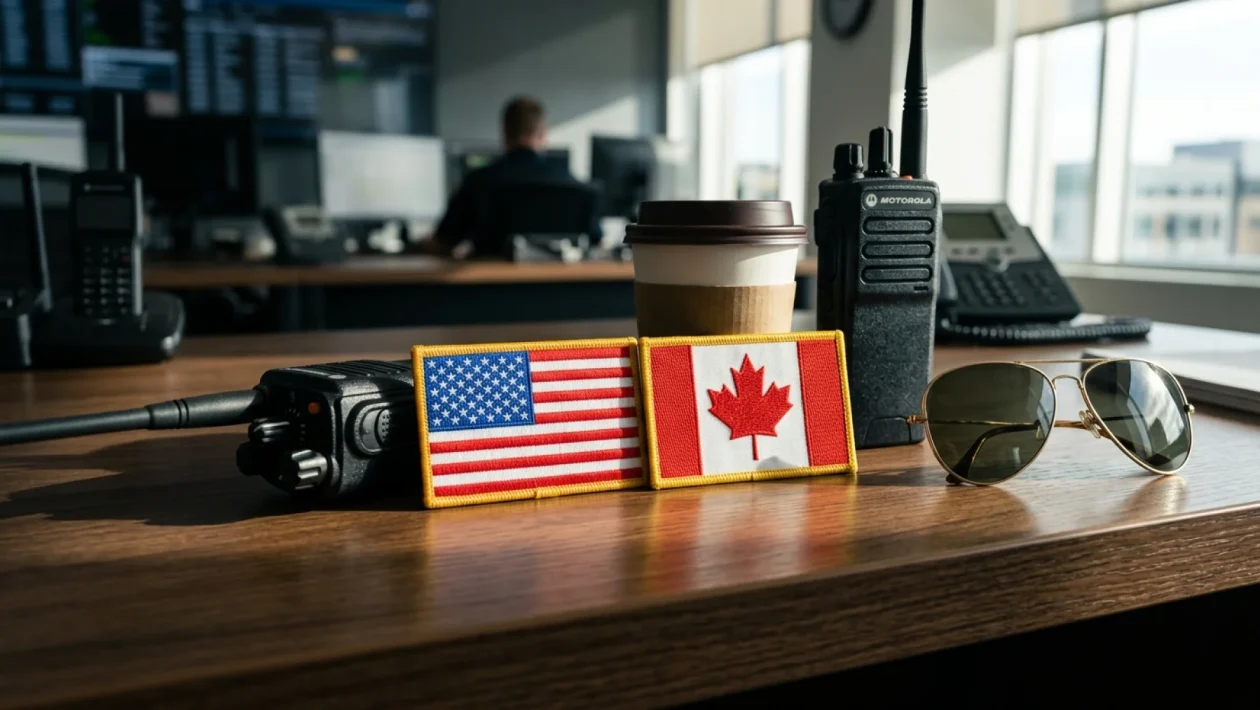
The days of assuming the world’s most heavily fortified drug war is strictly an American problem are officially over. We’re dealing with a sophisticated, highly organized network pumping deadly synthetic opioids across the 49th parallel, and it’s forcing a massive shift in how we police our own backyard. If you thought the border was just a minor hurdle for international cartels, brace yourself for the ultimate solution: Uncle Sam is bringing his heavy hitters directly to our hometowns.
DEA Canada expansion
It’s official—the United States Drug Enforcement Administration is expanding its footprint right here at home. They aren’t just visiting; they are permanently putting down roots.
By opening two brand-new operational offices in Canada this spring of 2026, the U.S. is signaling a massive shift in North American security strategy. We aren’t just neighbors sharing a massive trade route anymore.
We’re ground zero for an integrated, multi-national crackdown on the global fentanyl supply chain. DEA Canada expansion is the new reality of border security.
Why American drug agents are setting up shop
The harsh reality of the modern drug trade has changed dramatically. We aren’t talking about low-level smuggling in the trunks of rusty sedans anymore.
Today’s cartels are running billion-dollar logistics empires. They move synthetic materials with the exact same precision as major global courier services.
Here is a sobering hard fact: Fentanyl is roughly 50 times more potent than heroin. According to border authorities, a single intercepted shipment of just two kilograms holds enough lethal doses to wipe out the entire population of a mid-sized Canadian city.
Fentanyl seizures have skyrocketed, and the DEA knows they simply can’t wait for this poison to cross the border into Washington, Detroit, or New York. They have to cut off the head of the snake before it crosses the line.
North of the border
So, what does this look like for us north of the border? It means the RCMP and the Canada Border Services Agency (CBSA) are getting some serious, well-funded backup.
Instead of playing a massive game of broken telephone between Ottawa and Washington D.C., intelligence officers will be sitting at the exact same desks. When a suspicious commercial truck rolls past a Tim Hortons near the Windsor-Detroit crossing, agents on both sides of the border will already have its complete digital footprint.
Here is exactly how this joint-force approach works on the ground:
- Intelligence Sharing: American DEA analysts flag overseas chemical shipments bound for Canadian commercial ports.
- Target Acquisition: Canadian authorities instantly cross-reference the incoming shipment with domestic transport data.
- Interception: Joint tactical teams neutralize the threat and seize the narcotics before the product is ever loaded onto southbound transport trucks.
Let’s break down exactly what this cross-border integration looks like for our national security.
| Strategic Move | Expected Real-World Impact |
|---|---|
| Direct intelligence sharing | Faster, safer interception of synthetic opioids |
| Joint task force operations | Massively reduced bureaucratic red tape |
“The cartels don’t respect international borders, so our law enforcement can’t afford to be restricted by them either. Having DEA agents embedded in Canada turns a reactive border checkpoint into a proactive, unified strike force.”
Frequently Asked Questions
Will DEA agents have arrest powers in Canada?
No. American agents operating on Canadian soil cannot make direct arrests. They function strictly in an advisory and intelligence-gathering capacity, working shoulder-to-shoulder with the RCMP, who always handle the actual enforcement and arrests.
Where exactly will these new offices be located?
While the exact operational addresses are kept strictly under wraps for obvious security reasons, they are strategically placed near major trade corridors. You can expect them to be anchored close to massive international shipping hubs and major border crossings.
🤝 This border evolution might be a tough pill to swallow for those worried about sovereignty, but it’s a necessary upgrade to protect our communities. We simply can’t fight a modern, high-tech cartel war with outdated, fragmented communication.
💡 Partnering up with our neighbors to the south brings top-tier intelligence resources straight to our front door. It ensures that the absolute worst of the worst never even make it onto our local highways.
📱 Share your thoughts with us on this massive shift in border security—do you feel safer knowing the DEA is operating in our backyard?
👇 Good luck to the men and women on the front lines keeping our North American neighborhoods safe this year!