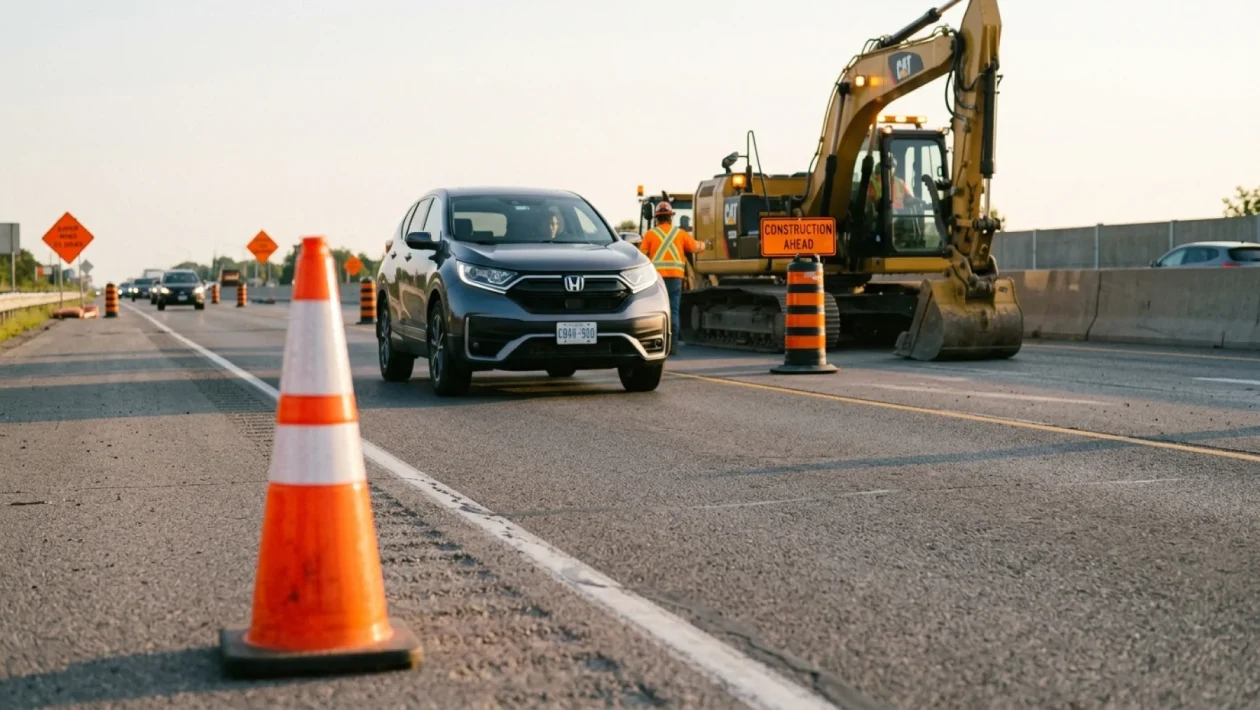
An SUV completely mangled. A scissor lift work platform tipped over. Two people rushed to the hospital.
That was the grim reality at the intersection of Highways 16 and 60 west of Edmonton on the morning of May 28, 2026. As a guy who has spent decades covering road infrastructure and wrenching on trucks, I can tell you firsthand that an impact with heavy construction equipment is a battle your commuter vehicle will never win.
We share the asphalt with massive machinery right now, and one distracted second can change multiple lives forever. Construction zone safety isn’t just a suggestion printed on an orange diamond—it is an absolute survival requirement. Let’s break down exactly how you can keep your rig out of the ditch, dodge wallet-draining tickets, and ensure those crews make it home to their families tonight.
Navigating Highway Work Sites
When you see the flashing amber lights and a sea of orange cones, your brain needs to instantly switch gears. The highway is no longer a predictable straightaway; it is an active, chaotic workspace.
The hardest part for most drivers is dealing with lane closures. People panic, brake hard, and cause rear-end pileups. Instead of raging at the driver merging late, you actually need to embrace the “zipper merge.”
Here is how you execute it flawlessly without causing a highway parking lot:
- Maintain your current speed and stay in your lane until you reach the designated merge point.
- Do not aggressively block other drivers who are using the ending lane.
- At the merge point, take turns. One car from the left lane, one car from the right lane—like the teeth of a zipper.
- Proceed through the work zone at the posted reduced speed with a smooth, consistent pace.
Of course, a smooth stop requires solid grip. If you are still riding on those bald tires you meant to swap out at Canadian Tire last month, you are a rolling hazard. Get your rubber checked.
Avoiding Massive Fines
Let’s talk about your wallet. Law enforcement does not mess around when it comes to protecting road crews. If the moral obligation doesn’t slow you down, the financial hit absolutely should.
Here is a hard fact that should wake you up: According to national transportation data, over 1,000 work zone crashes happen annually across Canada, with distracted driving and speeding being the main culprits.
Because of this, traffic fines absolutely skyrocket the second you cross into a designated construction area. In places like Alberta, speeding fines double when workers are present.
| Speed Over Limit (Construction Zone) | Estimated Penalty |
|---|---|
| 15 km/h over | $180+ and 2 demerit points |
| 30 km/h over | $350+ and 3 demerit points |
| 50 km/h over | Mandatory court appearance & license suspension |
Don’t let a heavy right foot ruin your summer road trip budget.
And Protecting Our Workers
At the end of the day, this entire conversation boils down to human lives. The men and women operating those pavers, dump trucks, and scissor lifts are completely exposed to highway traffic.
The recent crash on Highway 16 is a brutal reminder of how vulnerable they are. A work platform is no match for two tons of steel moving at highway speeds.
“When you blast through a construction site, you aren’t just breaking a traffic law. You are directly threatening the life of a father, a mother, or a kid fresh out of trade school who just wants to clock out and go home.” – Mark Dawson, Heavy Equipment Safety Consultant.
Put the phone down. Turn the radio down. Give them the space they need to build the roads we rely on every single day.
Frequently Asked Questions
Do I have to slow down if I don’t see any workers?
Yes. Even if a site looks abandoned, hazards like uneven pavement, sharp drop-offs, and narrow lanes are still present. Always obey the posted speed limit until you pass the sign indicating the end of the construction zone.
What is the safest way to pass heavy machinery?
Give them a wide berth. Heavy equipment operators have massive blind spots. If you cannot see their mirrors, they absolutely cannot see you. Pass slowly and never cut off a construction vehicle.
Final Thoughts On The Road Ahead
🤝 We are all in this together. The frustration of a five-minute delay is nothing compared to the lifetime of regret that comes from a fatal collision.
💡 Stay sharp behind the wheel. Treat every single orange cone as a warning sign, respect the zipper merge, and keep your eyes locked on the road ahead.
📱 Share your thoughts on this issue. Have you witnessed dangerous driving in a work zone recently? Let’s get the conversation going.
👇 Drop a comment below and tell me how you handle the stress of summer highway construction. Good luck out there, and drive safe, Canada!