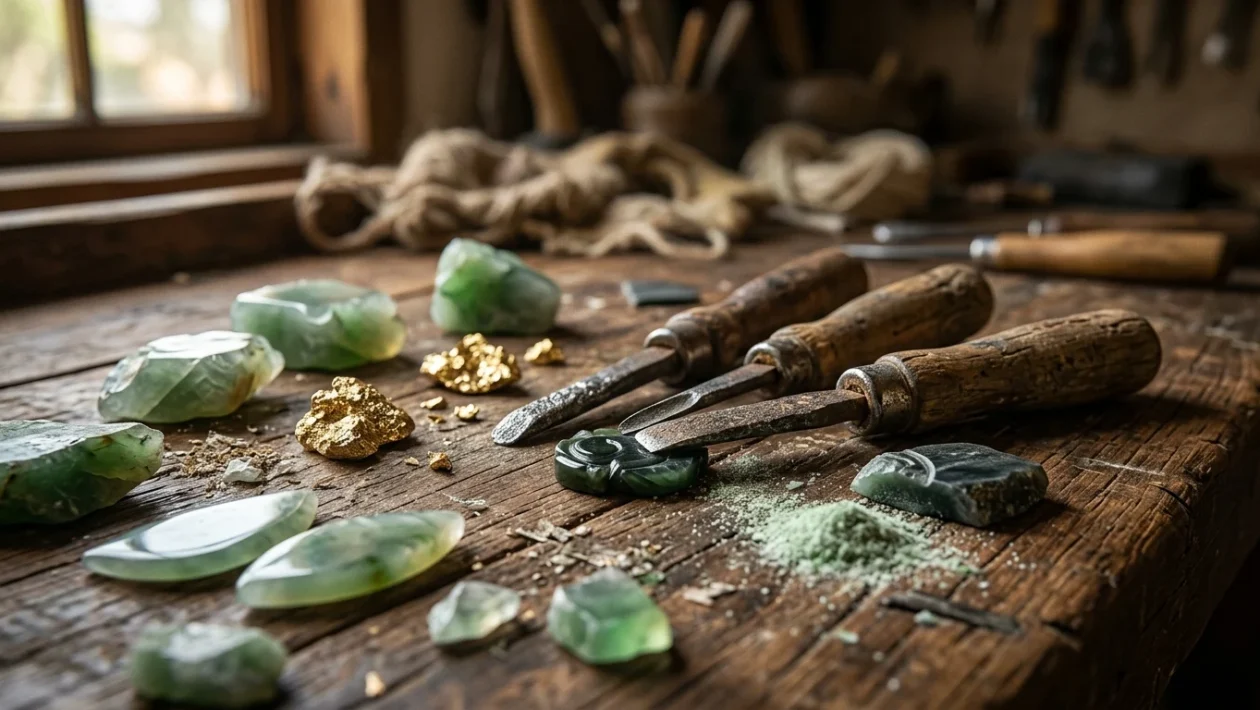
Archaeological excavation site revealing the structural foundations of an ancient gold and jade workshop.
Unearthing a 3,400-Year-Old Production Hub
Archaeologists in China have discovered a 3,400-year-old workshop packed with gold, jade, and carved stones. The site is located in Sanxingdui, just one kilometer north of the region’s famous sacrificial pits.
Experts from the Sichuan Provincial Institute of Cultural Relics and Archaeology identified the facility. They confirm the site operated as a primary artisanal production center for the ancient Shu Kingdom, a civilization that thrived between 2500 and 1000 B.C.
Rethinking the Origins of Ancient Relics
The Sanxingdui ruins, originally discovered in 1920, span 12 square kilometers across the Yangtze River basin. During an intensive survey in mid-2024, researchers mapped over 400 areas containing ancient remains.
Ran Honglin, director of the excavation for the Sichuan Institute, noted that the newly found workshop contains structural foundations, combustion zones, ash trenches, and dedicated processing areas. “This discovery offers us concrete evidence about the manufacturing methods used more than 3,000 years ago,” Honglin stated.
Excavation teams recovered raw stones, scattered fragments, jade pieces, and completed objects. Finding a complete production chain in one location proves that many of the sophisticated relics previously unearthed at Sanxingdui were manufactured locally, overturning earlier theories that the artifacts were imported.
Connecting the Shu Kingdom’s History
For over three millennia, the workshop remained buried, holding the missing link to the region’s vast archaeological treasures. Until now, many artifacts lacked clear associations with their manufacturing origins or their specific function within the Shu Kingdom’s economy.
According to the official Xinhua agency, excavations will continue to determine the broader economic, social, and spiritual role this massive craft center played in the ancient civilization.
Officials expect the discovery to heavily bolster the Sanxingdui site’s active bid to become a UNESCO World Heritage site while driving a significant increase in archaeological tourism to the region.