Wooden cutting boards are a kitchen staple, but washing them incorrectly can destroy them. Soaking wood in water quickly leads to swelling, warping, deep cracks, and dangerous mold growth.
Jacob Rhodes, a lead engineer and owner of a woodworking tool company with over 15 years of experience, warns against traditional washing methods. He advocates for a low-moisture approach designed to clean the board while preserving its natural oils.
The Ideal Cleaning Solution
Rhodes relies on a specific cleaning blend made of filtered water, white vinegar, Castile soap, and lemon and orange essential oils. This mixture provides a deep clean without relying on harsh commercial detergents that strip wood of its natural defenses.
Using a spray bottle is a critical part of this method. The spray format restricts how much water touches the wood, drastically reducing the risk of permanent warping.
The Right Way to Wash and Store
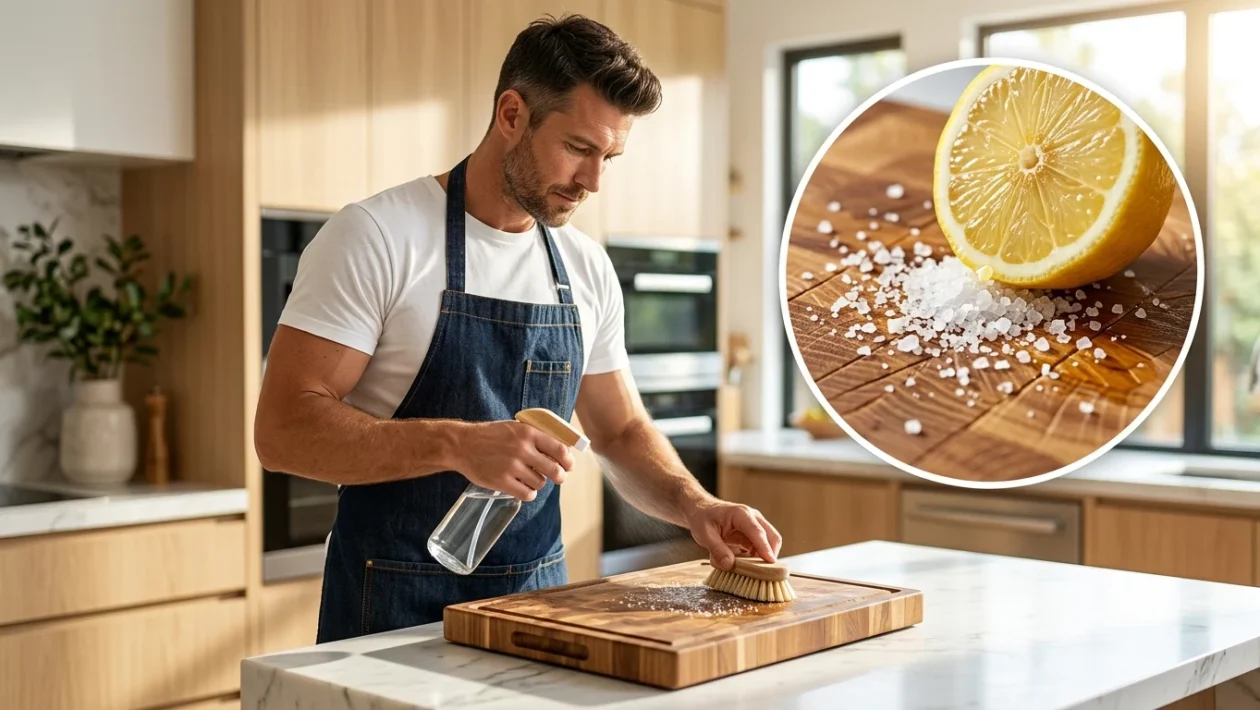
To safely clean the board, Rhodes advises applying a light mist of the solution. Gently scrub the wood using a soft nylon or natural fiber brush.
Once scrubbed, wipe the board clean or rinse it off quickly. You must dry the surface thoroughly with a towel immediately after washing.
Proper storage is just as important as the cleaning process. Always store your cutting board standing upright. This allows air to circulate evenly across both sides, preventing trapped moisture from rotting the bottom face.
Banishing Garlic, Onion, and Fish Odors
Pungent smells easily embed themselves into porous wood fibers. To extract these odors, Rhodes uses a simple, all-natural trick.
First, lightly dampen the cutting board and sprinkle a generous layer of coarse salt across the surface. Take a lemon cut in half and use it as a scrubbing pad directly over the salt.
The coarse salt acts as an abrasive, digging deep into knife scores to lift trapped food particles. Meanwhile, the acidity of the lemon actively neutralizes the foul odors instead of just temporarily masking them.
Multi-Surface Application
Consumers who use this gentle spray method report excellent results across various kitchen surfaces. The blend leaves a subtle, fresh scent while keeping the wood hydrated.
Beyond cutting boards, the solution is highly effective on butcher block countertops and wooden serving platters. It easily cuts through stubborn grease and food stains while enhancing the natural grain of the wood.