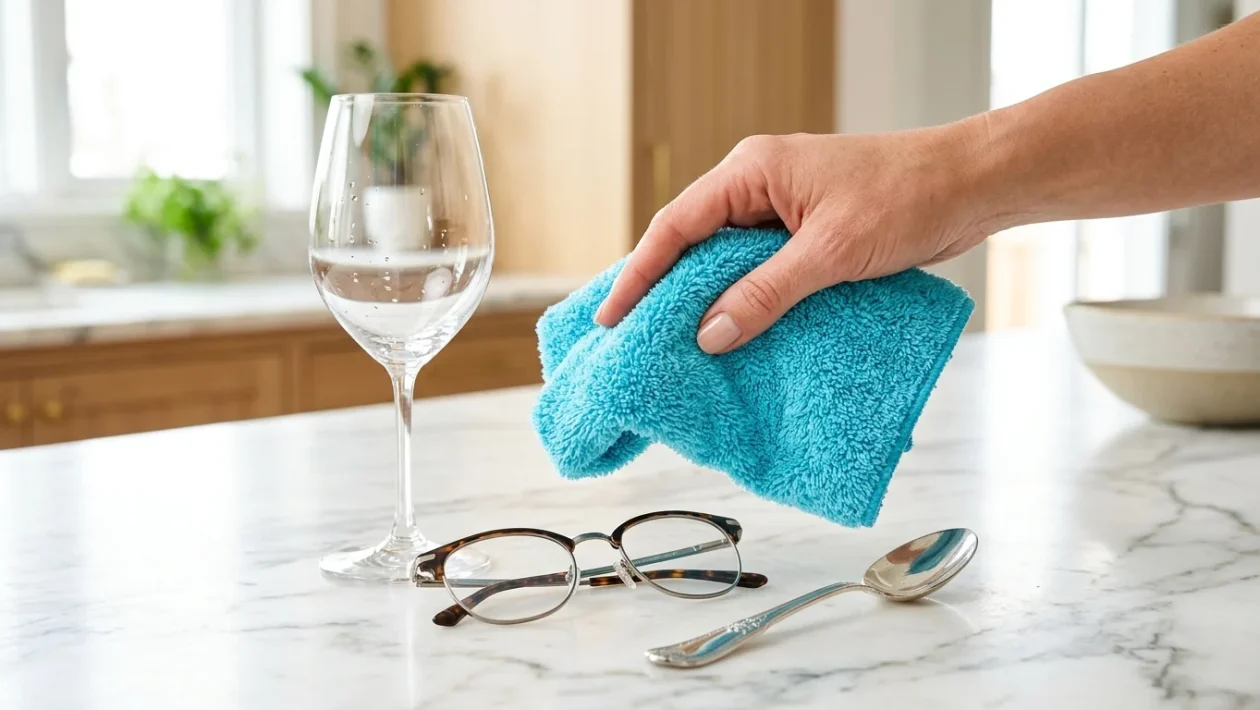
Microfiber cloths are the undisputed champions of modern cleaning. Woven from ultra-fine synthetic fibers, they harness a natural static charge to trap dirt, grease, and hair without leaving streaks or lint behind. They absorb spills better than paper towels and offer a reusable, chemical-free way to sanitize surfaces.
But this household staple has serious limitations. Used incorrectly, a microfiber towel can permanently damage delicate finishes.
The Hidden Risks of Microfiber
Because microfiber excels at trapping microscopic debris, a used cloth can easily transform into a sheet of fine sandpaper. Dragging a dirty towel across vulnerable surfaces leaves permanent micro-scratches in its wake. Older cloths also hold onto trapped oils, drastically reducing their cleaning power.
Furthermore, the synthetic materials used to make these towels are highly sensitive to heat. Exposing them to hot surfaces can cause the fibers to melt and fuse together.
What Not to Clean With Microfiber Cloths
Crystal, Glass, and Mirrors
Crystal and fine glass scratch easily. Low-quality microfiber, or a cloth holding trapped dirt particles, will carve tiny grooves into your delicate drinkware or mirrors. Opt for soft, lint-free cotton or a specialized waffle-weave glass cloth with a tighter weave instead.
Eyeglasses and Camera Lenses
Modern eyewear features sensitive anti-reflective and mirror coatings. Standard microfiber will permanently scratch these expensive treatments. Always use dedicated optic cleaning cloths, and apply a lens spray or water before wiping to prevent abrasive friction. Keep a separate, dedicated cloth strictly for camera lenses to protect your photography gear.
Car Paint
Cheap microfiber will ruin your car’s exterior by leaving dull swirl marks. Automotive detailing requires specialized, high-quality cloths manufactured without scratch-prone tags or stiff stitched edges. Wash these automotive towels exclusively with car soap, as regular laundry detergent coats the synthetic fibers in oily residues.
Hot Stovetops
Never touch microfiber to a warm stove. The synthetic materials are not heat-resistant and will instantly melt. This shrinks and fuses the fibers, creating a stiff, abrasive rag that will severely scratch your appliance while permanently losing its dust-trapping abilities.
Heirloom Silver
Vintage silver requires gentle care. Synthetic polyester fibers can leave micro-scratches on soft silver flatware and serving pieces. Stick to soft cotton flannel or dedicated silver polishing cloths for buffing and maintenance.
Stainless Steel Appliances
Kitchen appliances naturally accumulate grease, and microfiber acts as an oil sponge. Instead of lifting the mess, the cloth traps the oils and smears them across the metal, creating stubborn streaks. Use cloths specifically designed for stainless steel and always wipe with the grain.
How to Properly Wash Microfiber Cloths
- Wash them separately: Clean microfiber on its own or with similar synthetic cloths in cold or warm water with a mild detergent. Mixing them with cotton towels or t-shirts transfers heavy lint directly into the synthetic weave.
- Skip the chemical additives: Never use fabric softeners or dryer sheets. They coat the fibers in a waxy residue, destroying the cloth’s absorbency. Skip bleach entirely, as it breaks down the structural integrity of the fibers.
- Strip the grime: Restore older, less effective cloths by adding half a cup of white vinegar to your wash cycle to strip away built-up residue.
- Watch the heat: Air drying is highly recommended. If you must use a machine, tumble dry on the lowest possible heat setting to prevent melting.
Pro Tips for Maximum Efficiency
- Wash before use: Always launder brand-new cloths before their first use to remove factory dust and oily manufacturing residues.
- Implement color-coding: Assign specific colors to specific tasks. Use a yellow cloth exclusively for bathroom scrubbing and a blue one strictly for dusting furniture to prevent cross-contamination.
- Fold for longevity: Fold your cloth into fourths while cleaning. This gives you multiple clean surfaces to rotate through before needing to grab a fresh towel.
- Master the two-step method: Use a damp cloth to tackle grease and heavy grime, followed instantly by a dry cloth to buff the surface. Keep dry cloths reserved entirely for polishing and daily dusting.