
The Invisible Chain of Ocean Nutrients
Invasive rats on tropical islands are doing far more than devastating local wildlife on land. They are fundamentally rewiring the food webs of adjacent coral reef ecosystems.
A new study published in the journal Ecology reveals how the presence of ship-borne rodents alters the communities of tiny sea creatures that form the foundation of reef productivity. The research, led by scientists at Lancaster University and the University of Texas, focuses on the Chagos Archipelago in the remote Indian Ocean.
The root of the issue lies with seabirds. Islands without rats boast seabird densities 760 times greater than their infested counterparts.
These birds are crucial ecological engines. They feed in the open ocean and return to the islands to breed, depositing nutrient-rich guano that washes into the sea and acts as a natural fertilizer for the coral reef below. When rats eat the seabirds, their eggs, and chicks, this vital nutrient pipeline abruptly stops.
Cryptofauna: Winners and Losers on the Seafloor
Without bird guano, the ripple effects stretch down to the reef’s cryptofauna—the small fish and invertebrates living at the base of the ecosystem.
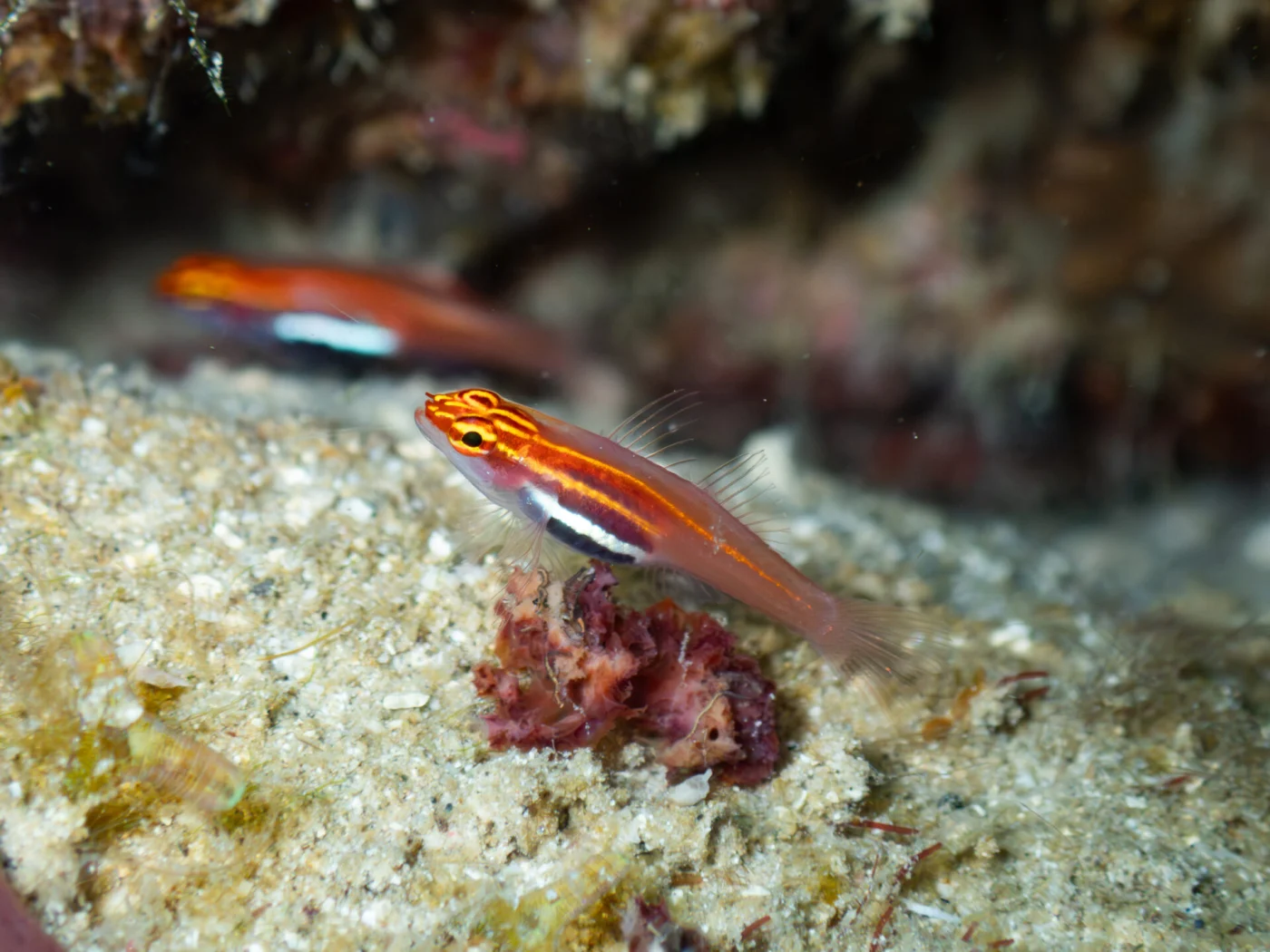
Coral reef ecosystem in the Chagos Archipelago.
On rat-free, nutrient-rich islands, cryptobenthic fish like gobies and triplefins dominate the seafloor. Their biomass is more than five times greater than that of small invertebrates.
Around rat-infested islands, however, the balance flips. Invertebrates such as coral crabs, porcelain crabs, and snapping shrimps multiply, reaching near parity with the fish.
Laura-Li Jeannot, lead author and PhD researcher at Lancaster University, noted that the resulting low-nutrient conditions do not universally harm all reef life. “Nutrient-loss impacts are not uniform. There are winners and losers,” Jeannot said.
The rapid growth and reproduction rates of cryptobenthic fish require heavy nutrient loads, making seabird-fertilized reefs their ideal habitat.
“This allows these fish populations to flourish and expand in favourable conditions,” Jeannot explained. “Beyond chasing invertebrates away from their homes, they also outcompete them for food: our results show that cryptobenthic fish, when more abundant, likely drive invertebrates to seek alternate, less preferred resources.”
In contrast, invertebrates thrive in nutrient-poor, rat-infested environments because their lower metabolic rates require less energy to survive.
Rewiring the Predator Diet
This shift from fish to invertebrates drastically alters how energy moves up the food chain to apex predators.
Dr. Simon Brandl, assistant professor at the University of Texas and co-principal investigator, pointed out the distinct dietary differences between the two prey groups. “Cryptobenthic fish are a nutrient-dense, protein-packed, highly digestible resource for predators; on the other hand, much of invertebrates’ mass is represented by a tough outer shell,” Brandl said.
Because fish are significantly more abundant in nutrient-rich environments, predators exert less effort foraging for a superior meal.
Jeannot emphasized that the primary pathway for seabird nutrients moving up the food web is through these small fish. “As such, when seabird nutrients are added or taken away from ecosystems, there is a rewiring of how energy travels up food webs, and a reconfiguration of larger fish communities,” she said.
Professor Nick Graham of Lancaster University, co-principal investigator, added that seabird nutrient flows govern more than just basic reef health. “Therefore, invasive species like rats that cut off these nutrients can drive significant changes to the food webs of the reefs,” Graham said.