Growing vibrant roses requires more than just good sunlight and occasional pruning. Water is the lifeblood of these iconic blooms, but establishing the perfect watering schedule is rarely simple.
Weather, soil consistency, and root depth all dictate exactly what your plants need to survive. Discovering the right rhythm means understanding your unique growing environment.
What Determines a Rose’s Water Needs?
Growing conditions vary wildly across the United States. Recognizing your specific microclimate and checking the US Hardiness plant zone map are crucial first steps.
The Role of Soil
The ground beneath your roses dictates how long moisture sticks around. “Sandy soils require more frequent irrigation than clay soils,” says Stephanie Turner, Clemson Extension Horticulture Agent and Master Gardener Coordinator for Greenwood County, South Carolina. “Roses prefer loose, well-drained soils.”
Gardeners can improve soil retention by adding organic mulch. “Over time the soil organisms will break down and incorporate organic mulches and improve the soil,” Turner notes. “Meanwhile, the mulch will retain moisture, control weeds, and insulate the root zone.”
Climate and Temperature
Hotter climates naturally strip moisture from the earth faster than cool regions. “The weather plays a big role in how often you will water your roses,” explains Stephanie Waltz, Rose Trial Coordinator at Star® Roses and Plants.
During extreme heatwaves or droughts, younger plants demand heavy monitoring. “Newly planted roses dealing with hot, drought weather will need the most attention,” Turner says.
How Often to Water Roses
A rose’s age directly influences its thirst. A recently transplanted bush suffers from transplant shock and requires heavy hydration to adapt.
“Newly planted roses are going to require frequent watering until they are more established,” Waltz says. Depending on the weather, gardeners should water these plants every day or every two to three days for the first few months.
Mature roses are far more resilient. “A good rule of thumb is to make sure that your roses are receiving 1 to 2 inches of water per week during the growing season,” says Waltz.
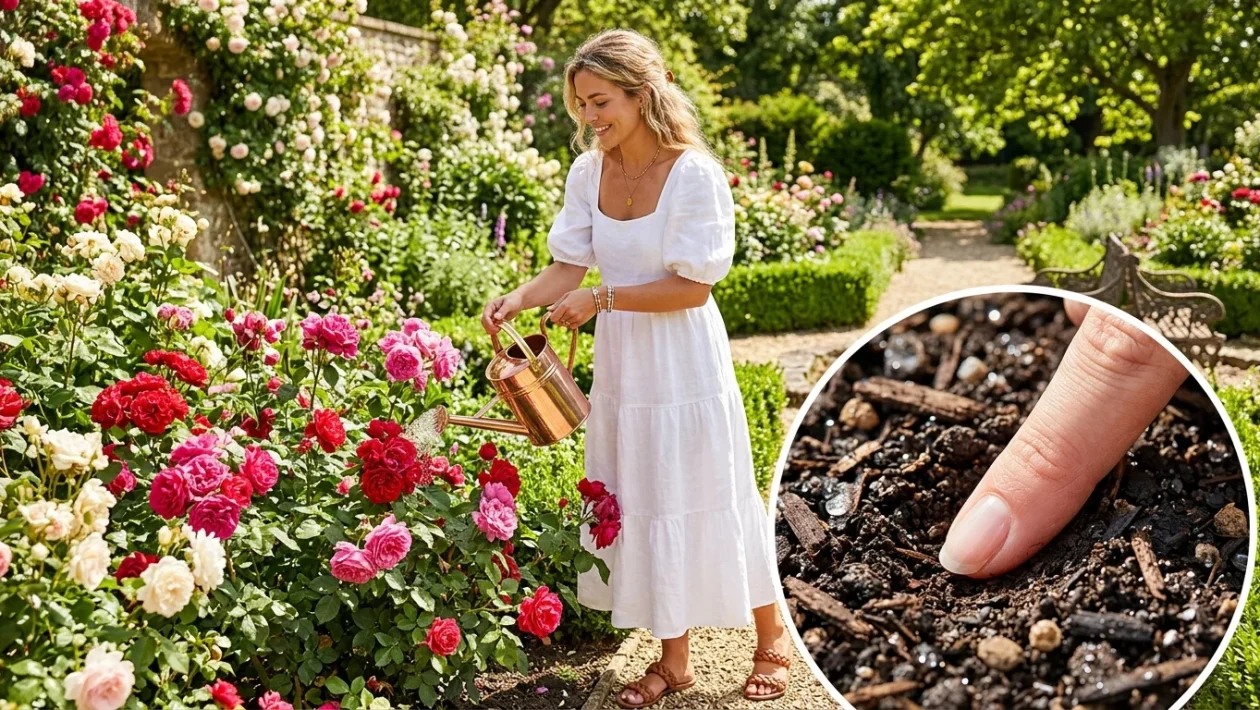
To test soil moisture, simply push a finger an inch deep into the dirt. If it feels dry, water the plant deeply. Waltz advises watering deeper and less frequently to build drought tolerance, noting that plants need dramatically less water when they go dormant in the winter.
Containers vs. In-Ground Planting
Where you plant your roses drastically changes your watering strategy.
Watering Potted Roses
Roses in pots lose moisture rapidly. “Any time you garden in containers you need to check moisture levels more frequently,” says Turner. “Limited soil volume in the container also limits the available space for water.”
Pots heat up quickly in the sun, baking the roots and drying the soil. The container’s material matters, too. “Unglazed clay containers lose moisture through the pores in the clay and need to be more frequent,” Turner explains.
In-Ground Roses
Garden beds offer superior insulation. “In-ground roses generally have a more extensive root system,” Waltz says. The soil remains cooler deeper underground, allowing established in-ground roses to weather drought-like conditions with ease.
Signs You Are Watering Incorrectly
Roses communicate their stress clearly. Ignoring these visual cues can stunt a plant’s growth.
If you are drowning your plants, the foliage will suffer. “Roses getting too much water may have widespread yellowing of the leaves, and you may notice mold or algae growing on the soil surface,” Waltz says.
Dehydration looks entirely different. “Under-watered roses may have drooping or dry, crispy leaves and the soil will be overly dry around it,” Waltz warns.
The Right Way to Water
Timing and technique are just as critical as frequency.
Water the Base, Not the Leaves
Keeping the foliage dry is a primary defense against disease. “Try to only water the base of your plant and not the leaves,” Waltz says.
Turner strongly recommends drip irrigation systems for precision. “You can conserve water by placing emitters precisely in the root zone of each plant,” she says.
Skip the Sprinklers
Overhead sprinklers invite fungal pathogens like black spot and rust by repeatedly soaking the leaves. If overhead watering is unavoidable, Turner advises doing it early in the morning so the sun can evaporate the moisture.
Morning Watering is Mandatory
Watering early in the day protects the plant through the afternoon heat. “Morning is the best time to water,” Waltz says. “This gives the leaves a chance to dry off before the end of the day, which helps prevent fungal diseases.”
Apply Mulch Correctly
A thick layer of mulch reduces evaporation and watering frequency. “A few inches of mulch can go a long way in bringing water needs down,” Waltz says.
However, mulch must never choke the stem. Waltz advises leaving a few-inch mulch-free diameter around the base of the plant to prevent rot and promote air circulation.