Summer heat takes a heavy toll on gardens, but few plants suffer quite as visibly as hydrangeas. As temperatures spike into the 80s and 90s, these thirsty shrubs require strategic care to survive.
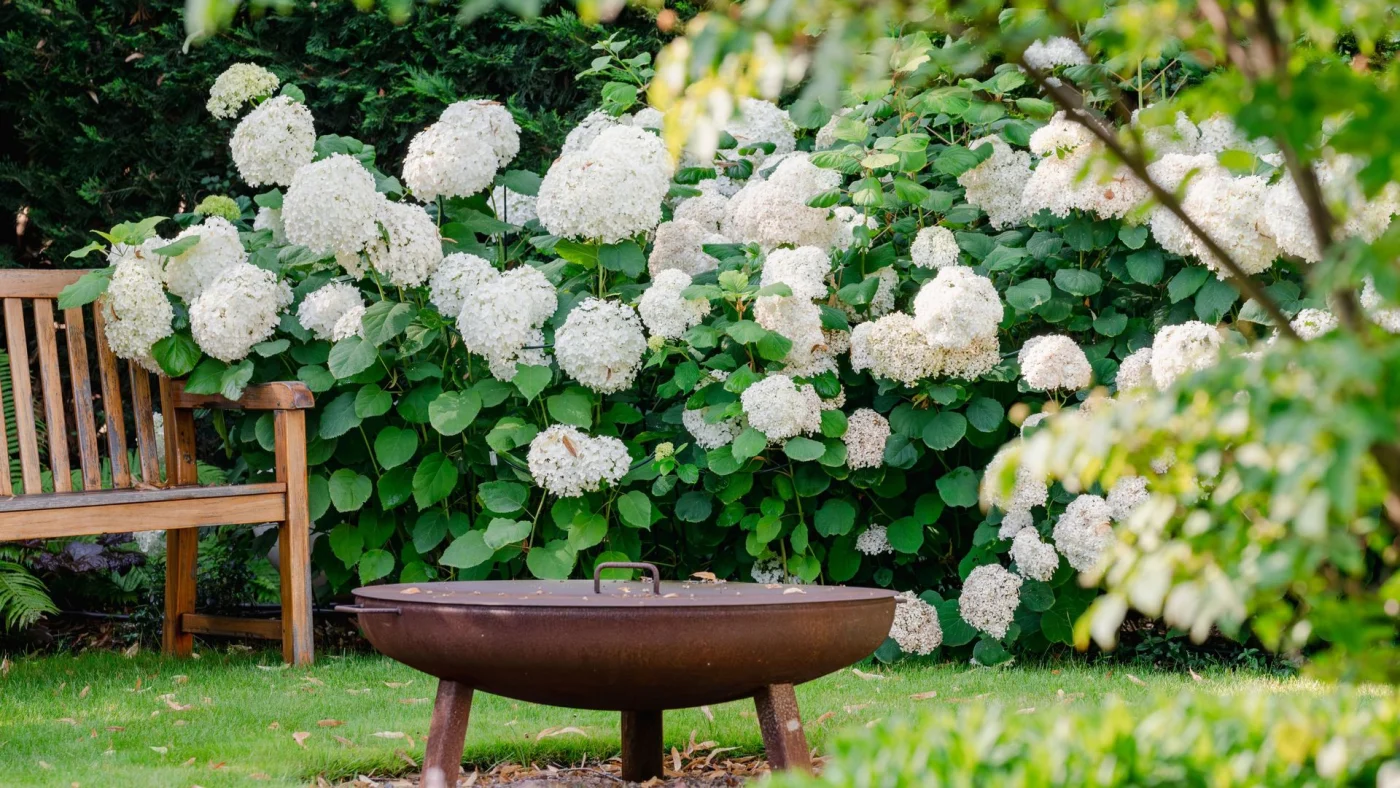
Hydrangeas blooming in a garden border.
Experts agree that August is not the time for heavy pruning. Instead, your primary focus should be watering and feeding to sustain them through the intense late-summer heat.
Master the Deep Soak
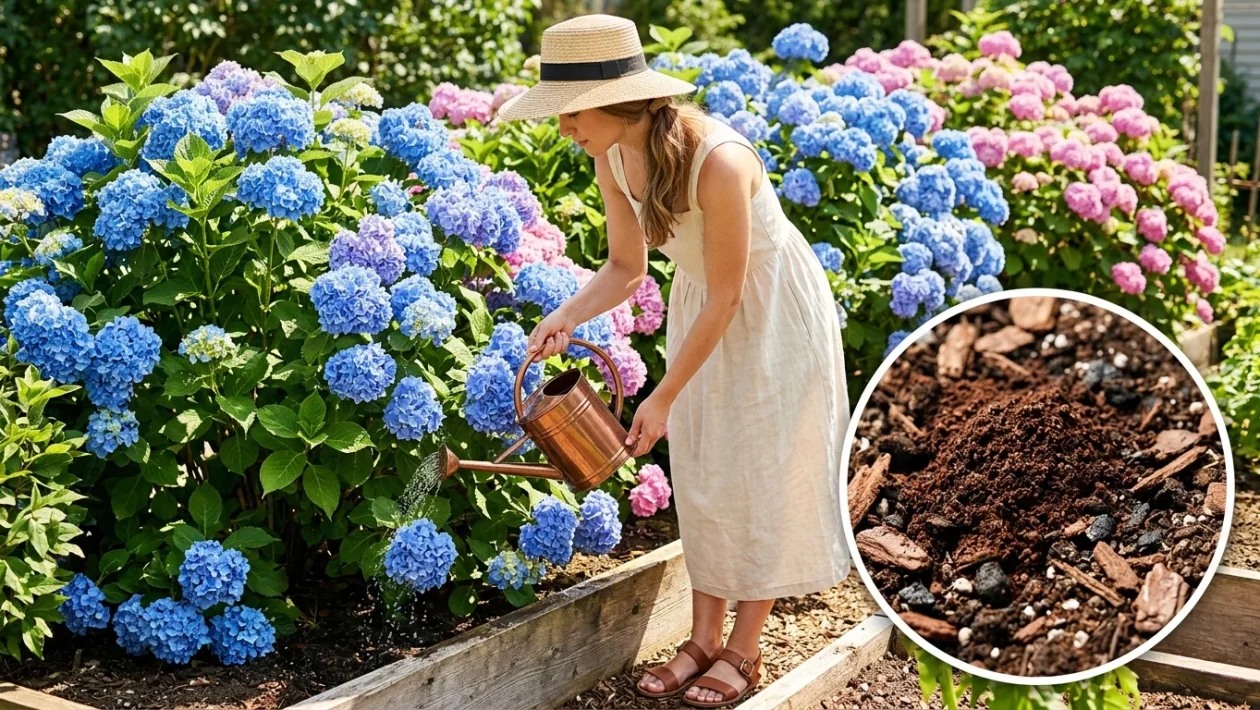
Hydrangeas literally translate to “water vessels,” meaning they demand consistent moisture. Shelley Davis, a flower expert at Flying Flowers, recommends deep watering at the base once or twice a week rather than light daily sprays.
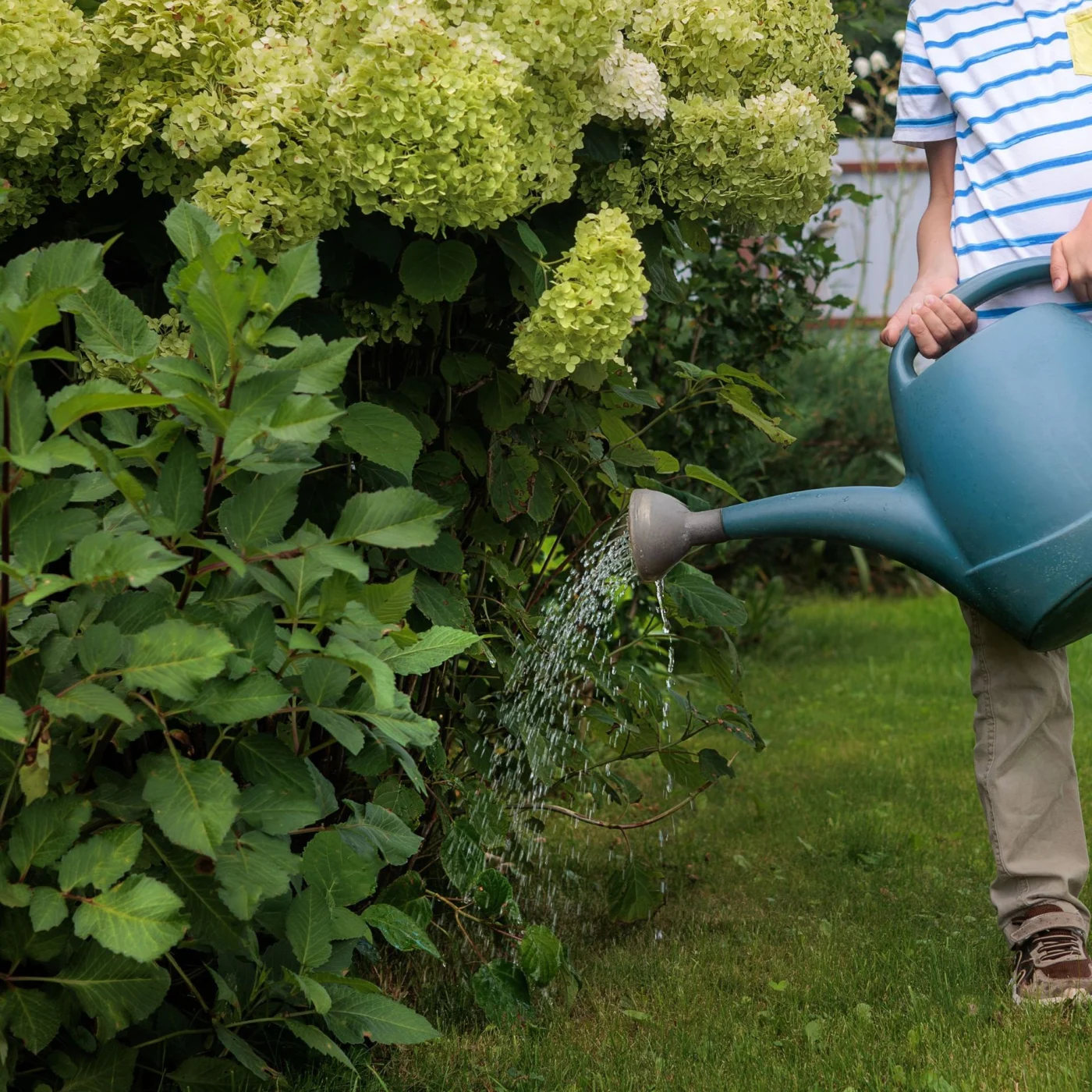
Watering hydrangeas at the base of the plant.
Test the top two inches of soil; if it feels dry, it is time to water. For periods of extreme drought or local water restrictions, Davis suggests a clever hydration hack.
Cut the bottom off an old plastic bottle and bury it upside down near the roots. Fill it with water to ensure a slow, deep release directly into the soil.
If your cut hydrangeas start wilting inside the house, you can revive them quickly. Dunk the entire flower head upside down in a bowl of cool water for 20 minutes to let the petals absorb moisture directly.
Time Your Watering Correctly
Timing is everything when combating summer heatwaves. Chris Bonnet, founder of Gardening Express, stresses the importance of watering early in the morning.
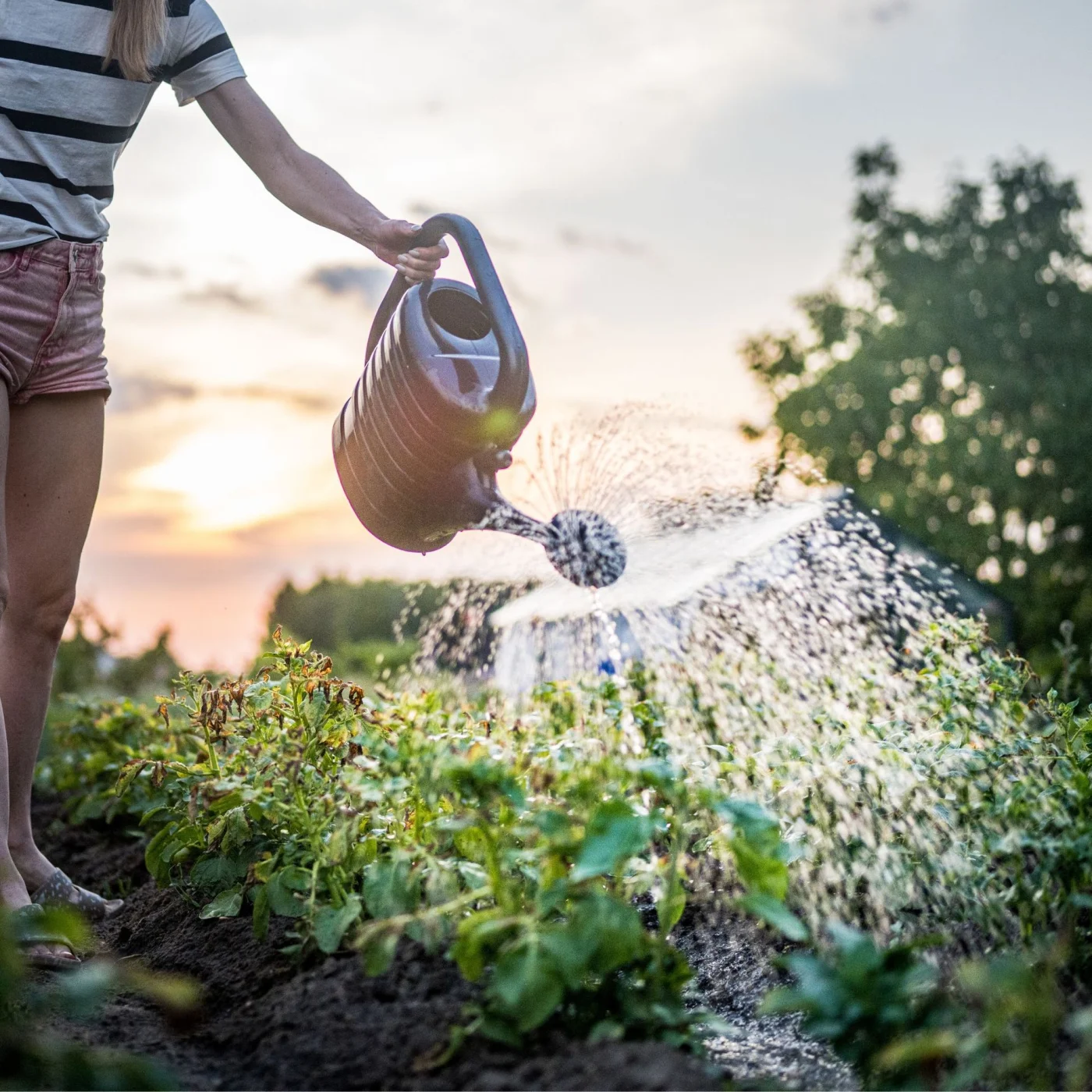
Watering the garden during the early morning.
Soaking the roots before the sun peaks prevents rapid moisture loss from the plant’s large leaves. If a hydrangea depletes its water reserve during the day, the blooms will droop and the foliage will scorch brown.
David Denyer, a flower and garden expert at Eflorist, adds that watering late at night is a viable alternative. Both morning and nighttime watering ensure moisture reaches the roots instead of evaporating in the midday sun.
Apply Mulch to Lock in Moisture
Organic mulch is a highly effective shield against soil evaporation. Denyer recommends layering garden compost or well-rotted bark around the base of the shrub.
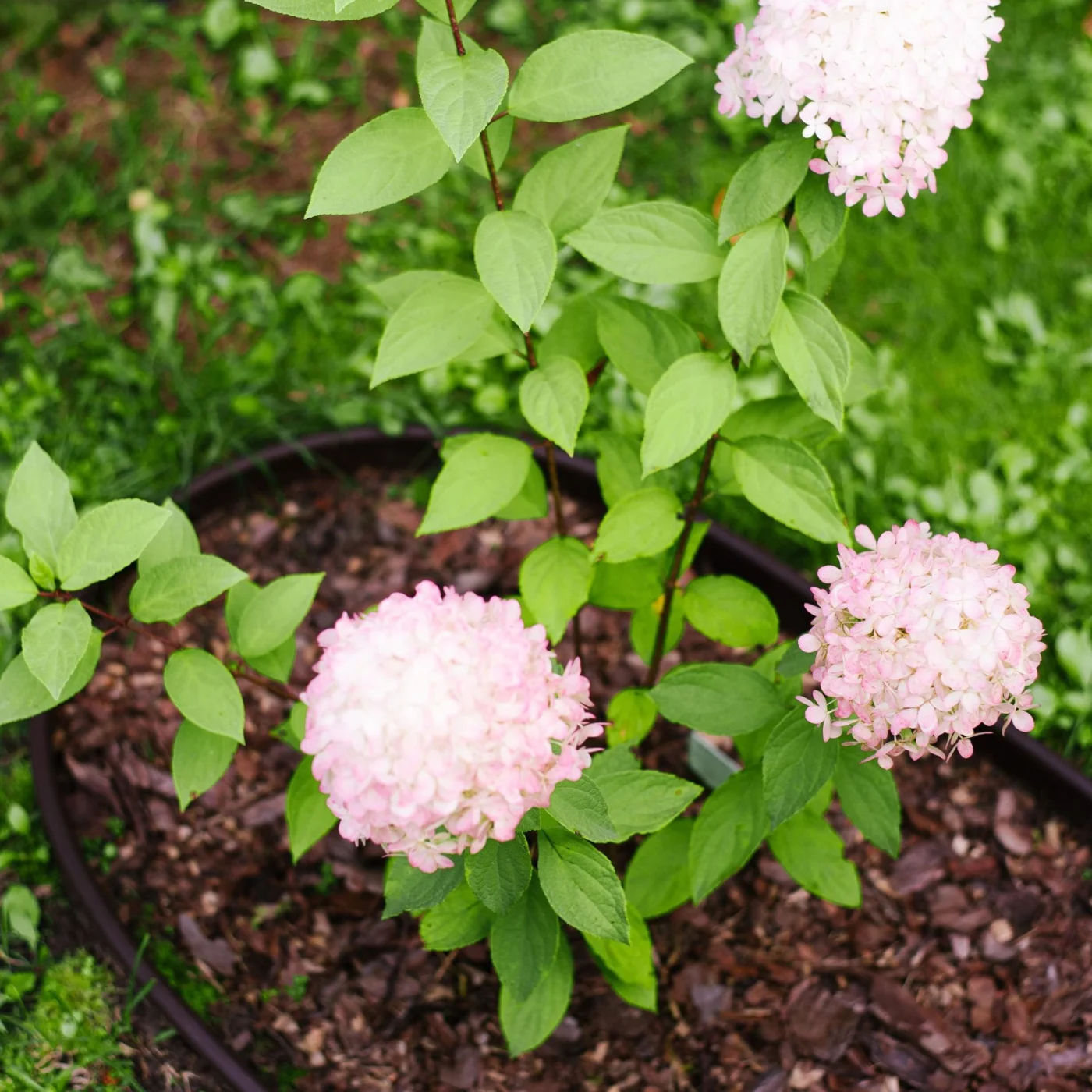
Hydrangeas planted in a border covered with mulch.
This simple step keeps the roots cool and locks in vital moisture. Bonnet notes that a fresh layer of mulch also stops summer weeds from germinating and competing for water.
When applying mulch, leave a small gap around the main stems to prevent rot and allow fresh water to reach the roots. Because hydrangeas are acid-loving plants, you can also mix used coffee grounds into the soil for an extra nutrient boost.
Deploy Sun Shields
Direct, scorching sunlight can quickly burn hydrangea leaves and destroy delicate blooms. If your plants are situated in full sun, they will need physical protection during peak heat.
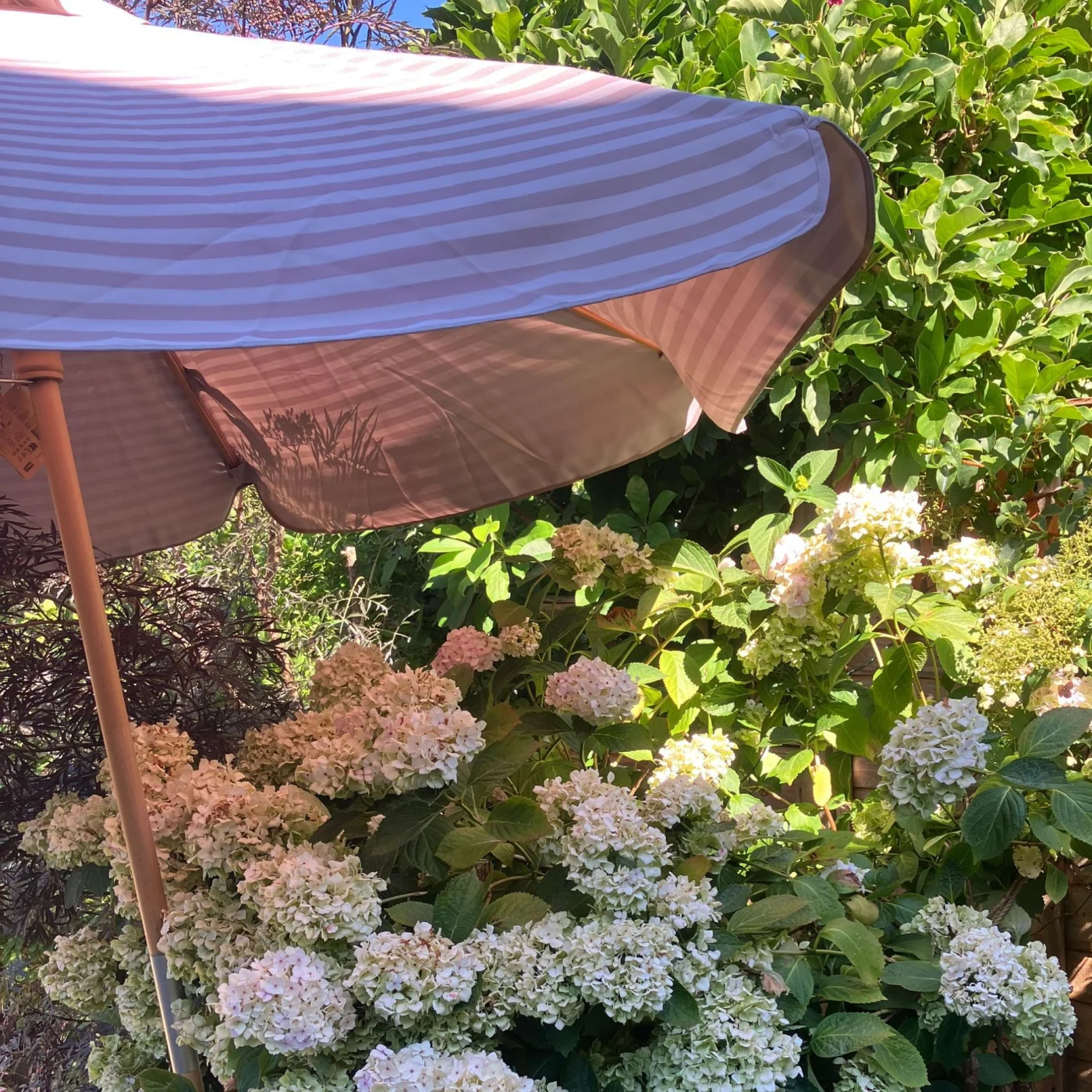
Hydrangeas shielded from the sun under a parasol.
Davis recommends setting up a temporary shield, such as a patio umbrella or a specialized plant parasol. Casting artificial shade over the shrubs during the hottest part of the day prevents irreversible sun damage.