August does not mark the end of the gardening season. While many homeowners spend late summer merely watering and deadheading faded blooms, the planting window remains wide open.
You can still sow specific seeds and transplant robust seedlings for autumn color or early spring blooms. Your August garden strategy requires careful timing. Never plant during the peak heat of the day.
Put your new plants in the soil during the late afternoon or on overcast days, and water them deeply immediately. The blazing summer sun can dry out the top few inches of soil in a matter of hours.
1. Pansies and Violas for Fall Containers
Pansies remain the top choice for replacing spent summer annuals. Nurseries stock well-developed seedlings in late summer that instantly revive window boxes, porch containers, and garden borders.
They thrive in full sun or partial shade. Smaller-flowered violas often handle heavy wind and rain better than large-headed pansies.
Under the right conditions, these plants will maintain their color from autumn all the way through to the following spring. Keep them protected from the harsh midday sun during the first half of August.
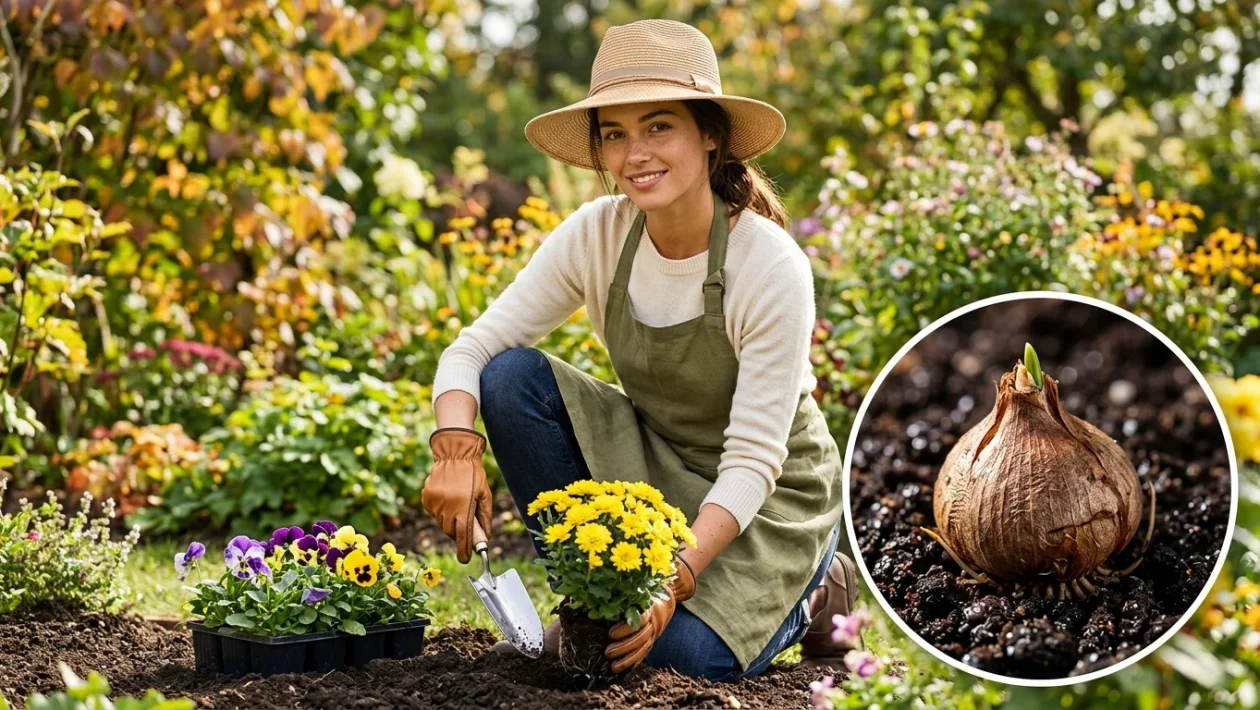
2. Chrysanthemums to Fill Garden Gaps
Chrysanthemums deliver the most diverse autumn color palette, blooming from late summer deep into fall. You can find them in white, yellow, burgundy, pink, orange, and purple.
Plant potted mums directly into garden beds or larger patio containers with well-draining soil. Buy plants loaded with closed buds rather than fully open flowers for a longer display.
They inject new life into the garden exactly when summer plants begin to look tired. Regularly remove dead flower heads to keep the bushes looking tidy.
3. The Sudden Blooms of Meadow Saffron
Also known as autumn crocus, meadow saffron corms go into the ground in late summer or early fall. The plant’s foliage appears in spring, dies back by summer, and then pushes up pink, purple, or white flowers seemingly out of nowhere in the autumn.
Plant corms about four inches deep in well-drained soil. They look best planted in small clusters in sunny or bright locations.
Note that all parts of meadow saffron are highly toxic, so keep it away from pets and small children. Wear gloves when planting, and never confuse this plant with the edible saffron crocus.
4. Saffron and True Autumn Crocuses
Most people associate crocuses with spring, but autumn-blooming varieties exist. The most famous is the true saffron crocus (Crocus sativus), which produces the world’s most expensive culinary spice.
These corms require warm, sunny spots with loose, fast-draining soil. Heavy, wet winter soils will cause them to rot.
Plant them in late summer. They look exceptional grouped together in rock gardens, border edges, and large containers.
5. Calendula from Direct Seed
Calendula is one of the easiest annuals to grow from seed. When sown directly into garden beds in late summer, the seeds germinate quickly and yield autumn blooms.
Sow the seeds in a sunny spot with loosened soil, covering them with just a thin layer of dirt. Keep the seedbed lightly moist until germination.
These young plants often survive the winter in milder zones, giving them a massive head start on next year’s growing season. Keep some seeds in reserve for spring planting if you live in a colder climate.
6. Love-in-a-Mist for Cottage Gardens
With its delicate, thread-like foliage and blue, white, or pink flowers, love-in-a-mist fits perfectly into natural, country-style gardens. It produces distinct seed pods that dry beautifully for indoor arrangements.
This plant resents transplanting, so sow the seeds exactly where you want them to grow in sunny, well-draining soil. Late August sowings will overwinter and bloom much earlier than spring-sown batches.
Sow the seeds sparingly. Overcrowded plants grow leggy and become highly susceptible to disease.
7. Ornamental Poppies for Next Summer
Poppy seeds are tiny and need light to germinate, so press them onto the soil surface or plant them very shallowly. Sowing ornamental poppies in late August mimics their natural lifecycle.
They establish strong roots over winter for an explosive, robust display next summer. Like love-in-a-mist, poppies despise being moved, so direct sow them in a sunny, open spot with loose soil.
Leave a few faded flower heads on the stems. The seeds will scatter naturally, ensuring new poppies appear year after year.
8. Forget-Me-Nots for Spring Borders
You do not plant forget-me-nots in August for fall blooms. As biennials, they spend their first months developing roots and foliage before unleashing tiny blue, pink, or white flowers the following spring.
Start these seeds in a partially shaded nursery bed and transplant the strong seedlings to their permanent homes in autumn. They look exceptional planted among spring bulbs like tulips and daffodils, filling the gaps between taller plants.
Forget-me-nots self-seed easily in ideal conditions. This makes them perfect for naturalized, slightly wild garden layouts.
Water is the Key to August Success
The greatest threat to late summer planting is rapid soil dehydration. The soil around freshly sown seeds must remain lightly and consistently moist during germination.
Use a watering can with a fine rose or a gentle mist setting on your hose to avoid washing tiny seeds away. Water established transplants deeply but less frequently to ensure moisture reaches the root zone.
Mulch lightly around transplants to slow evaporation. However, do not cover fresh seedbeds with thick bark or grass clippings.