Every fall, millions of homeowners repeat the same tedious ritual. They apply draft blockers to doors, stick weatherstripping tape to windows, and replace foam seals along the frames.
Yet, the cold air continues to seep in. The actual culprit usually isn’t the window glass or the frame itself, but the space sitting quietly just above it.
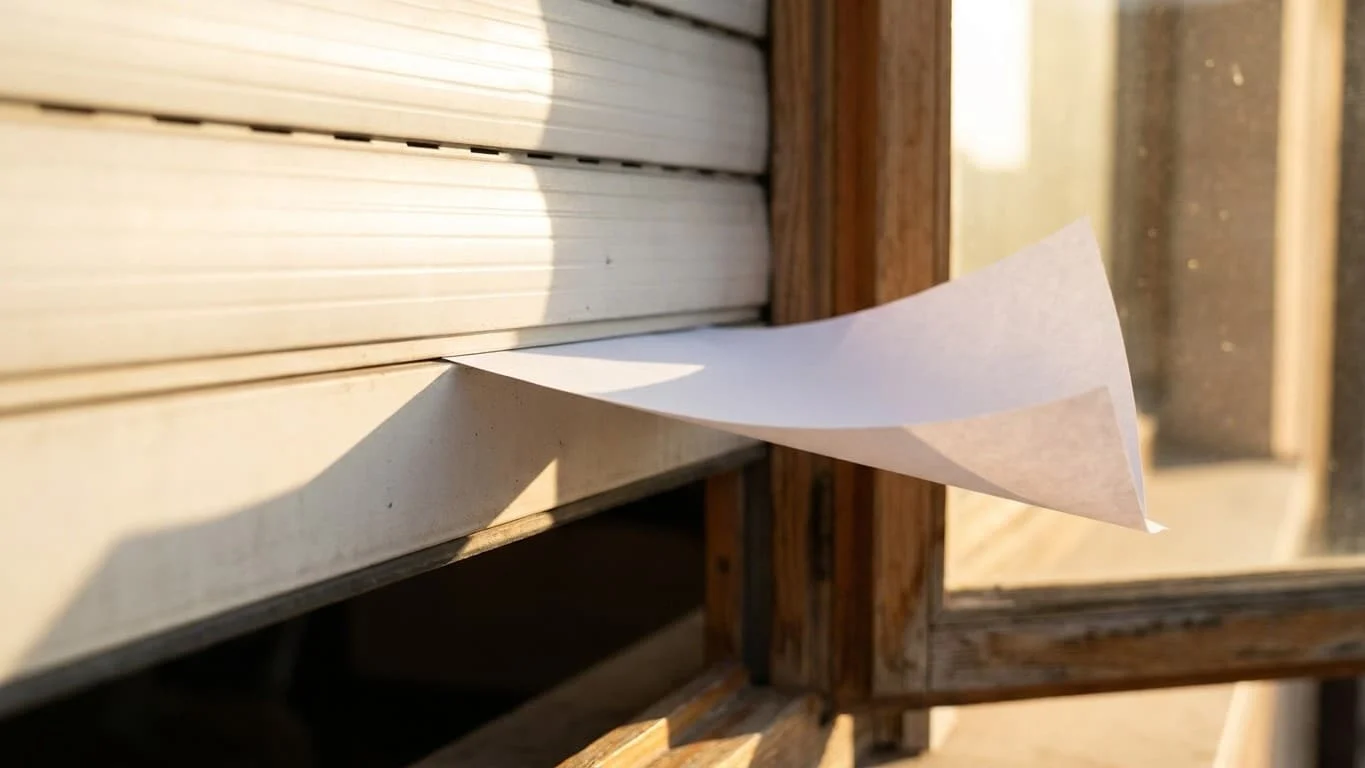
A close-up view of a window and roller shutter assembly where hidden drafts often occur.
The interior roller shutter box acts as an invisible thermal bridge. This overlooked housing can be responsible for massive energy drains, but a simple sheet of paper is all you need to expose the leak.
The Test That Doesn’t Lie
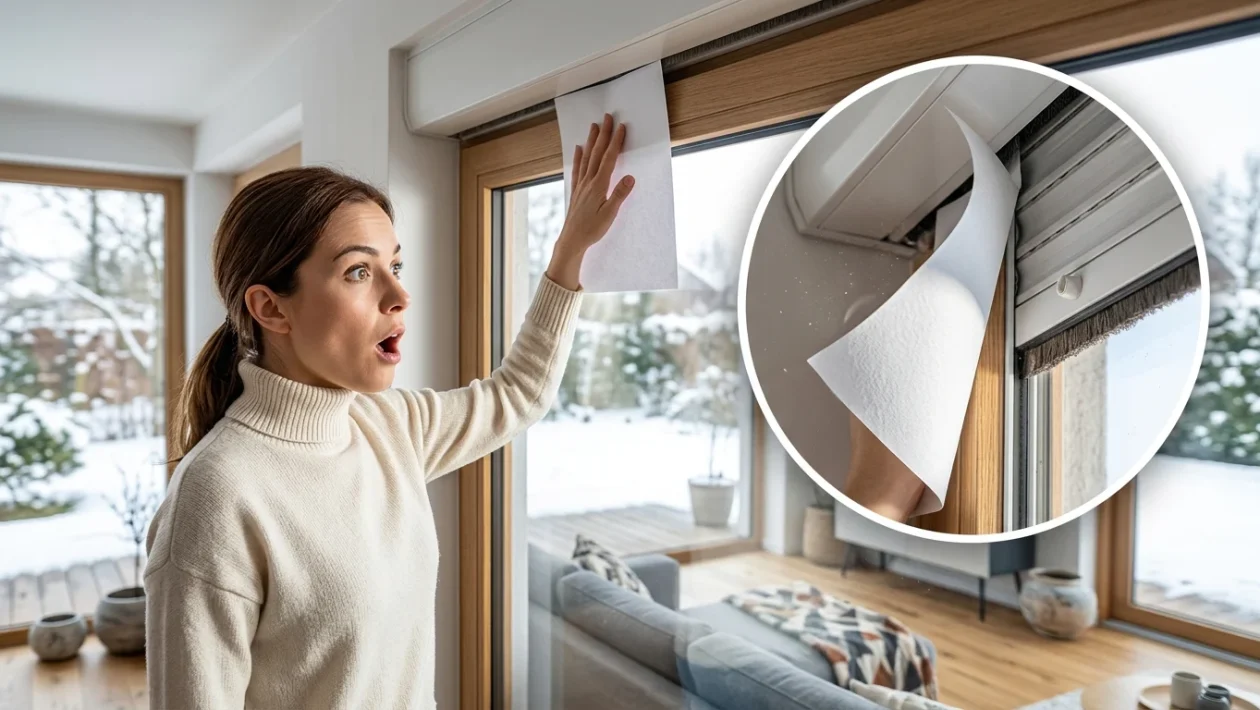
You can diagnose this hidden draft in exactly thirty seconds. With your roller shutter completely lowered, slide a standard sheet of paper under the apron, right where the shutter feeds into the room.
If the paper moves, flutters, or lifts even slightly, you have your answer. Outside air is circulating freely directly into your roller shutter box.
This zero-cost DIY test instantly rivals professional thermal diagnostics. It pinpoints exactly where your expensive heating is escaping.
Why Shutter Boxes Become Thermal Sieves
Interior roller shutter boxes are never entirely sealed off from the outside world. They consist of an outer casing, the shutter apron, a rolling mechanism, and an unavoidable exit slot for the shutter to pass through.
That mandatory opening acts as a permanent highway for outdoor air. Compounding the problem are the thin materials used to build the boxes, heat-conducting internal parts, and poorly insulated joints.
The result is a constant flow of heated room air escaping through the slot, even when your shutters are locked tight. During summer, the reverse happens, pulling hot outdoor air inside and neutralizing your air conditioning.
What the ADEME Data Actually Shows
The French Agency for Ecological Transition (ADEME) classifies windows and their accompanying shutter boxes among the most severe sources of heat loss in residential buildings. General estimates show standard windows account for 10 to 15% of a home’s heat loss.
However, poorly insulated roller shutter boxes can tack on an additional 15% in thermal loss on top of that. This staggering statistic routinely catches homeowners off guard.
The physical size of the box dictates the severity of the leak. Research shows that a compact 6-inch (15cm) deep box has a larger thermal exchange surface relative to its volume, losing up to 25% more heat than a deeper 10-inch (25cm) model.
Insulating Without Jamming the Motor
Fixing the leak starts with lining the inside of the box with rigid insulation. Thin extruded polystyrene (XPS) or expanded polystyrene (EPS) panels are the ideal lightweight materials for this job.
You simply measure and cut the foam panels to fit the exact dimensions of the bottom, side walls, and roof of the box casing. The goal is to create a thermal envelope that restricts air exchange without touching the moving parts.
Precision is critical here. You must never restrict the rolling axis or impede the shutter apron as it retracts. Overstuffing the box will cause friction, leading to premature failure of the shutter’s electric motor.
The Essential Brush Seal
Once the interior walls are lined, you still have to deal with the exit slot. The most effective solution is installing a brush seal—a thin strip lined with synthetic bristles that conforms to the shutter’s movement.
These synthetic bristles act as an air filter. They block drafts and minimize dust entry without creating excessive friction against the shutter apron.
Homeowners should note that some brush seals can flatten over time, bending in the direction of the shutter and losing their airtight seal. To counter this, several manufacturers now offer flexible tube seals as an alternative to rigid bristles, depending on your specific box configuration.
A One-Hour Fix That Lasts Years
You do not need to hire a contractor to eliminate these thermal bridges. The project is easily accessible to anyone comfortable handling a box cutter and a tape measure.
Outfitting a standard shutter box takes roughly one hour per window. The financial payback, however, accrues daily on your utility bill.
Once the insulation and seals are installed, repeat the paper test. When the sheet finally stays dead still, you will know you’ve stopped the silent draft that has been stealing your heat for years.