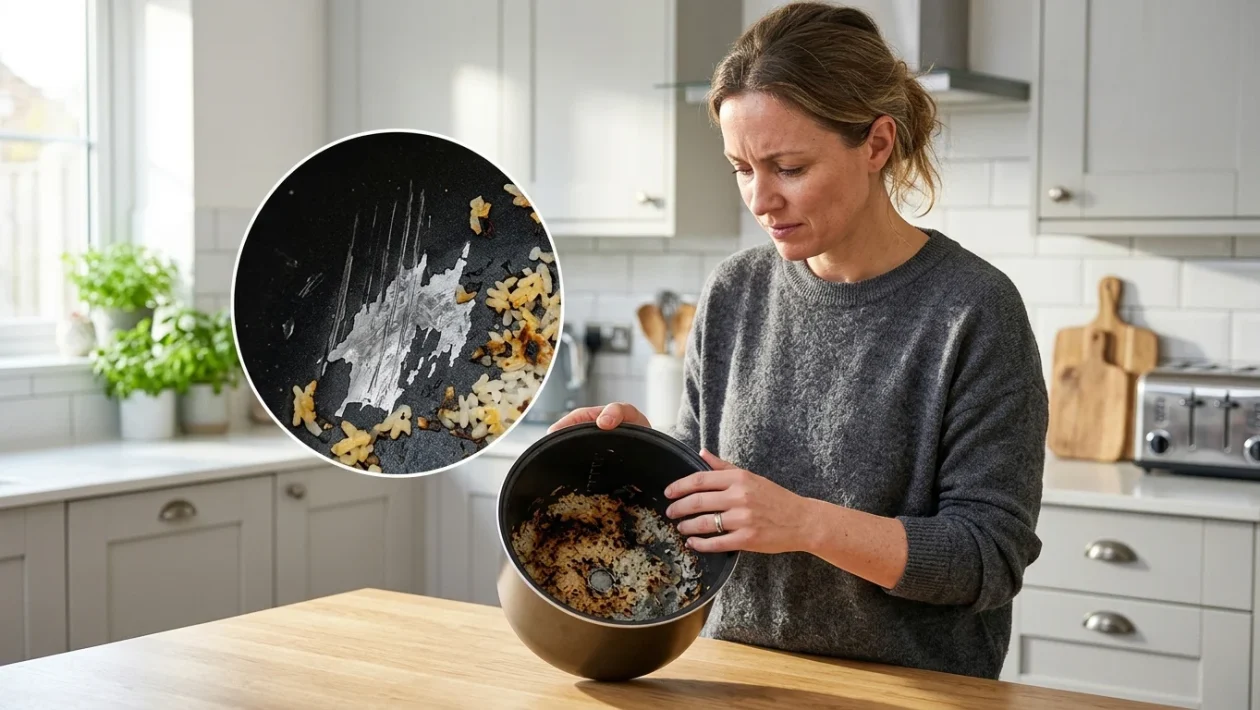
Scraping a thick layer of stuck rice from the bottom of your cooker is frustrating. Many people immediately assume the non-stick coating is ruined and throw the pot away.
However, sticky rice is often caused by cooking habits, the type of grain, or simple user error. Before you purchase a replacement pot, you need to perform a quick diagnostic check.
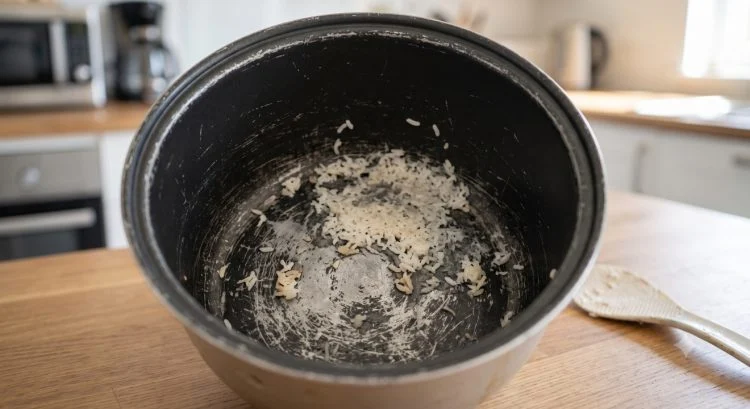
A rice cooker inner pot sitting empty, ready to be inspected for non-stick coating damage.
Why Rice Sticks to the Bottom
A degrading non-stick surface is just one variable in the equation. Water ratios play a massive role.
Using inadequate water for high-starch rice varieties forces the bottom layer to dry out rapidly, baking it onto the metal. Unwashed rice also leaves excess surface starch, acting like a glue when heated.
Additionally, older rice cookers can suffer from uneven heat distribution. A failing internal sensor may blast the bottom of the pot with too much heat, scorching the grains.
How to Inspect the Coating
A crusty layer of rice is a warning sign, not a death sentence for your appliance. You can verify the integrity of the coating with a simple touch test.
- Wash the inner pot thoroughly to remove all debris.
- Dry it completely with a microfiber towel.
- Hold the pot under bright, direct light.
- Gently run a clean finger across the bottom to check for smoothness.
If the surface remains smooth without deep gouges, your sticking issue likely stems from preparation methods. Never use sharp tools during this inspection.
Operator Error: When the Pot is Fine
If your coating passes the physical inspection, look at your cooking routine. Failing to rinse rice until the water runs clear traps excess starch in the pot.
Leaving the machine on the “Warm” setting for extended hours is another common culprit. Continuous low heat slowly evaporates the remaining moisture, cementing the bottom layer of rice to the pan.
When to Buy a Replacement
While you shouldn’t rush to replace a dirty pot, certain types of physical damage are undeniable. If the non-stick coating is actively peeling or flaking off, the pot must be retired.
Deep scratches that expose the bare metal underneath indicate irreversible damage. Dents are also fatal; a warped pot prevents even contact with the heating element, guaranteeing scorched food.
Essential Maintenance Facts
Extending the life of your rice cooker requires a few basic adjustments in the kitchen.
- Utensils matter: Always serve rice using plastic, silicone, or wooden paddles. Metal spoons will destroy the coating.
- Cleaning protocol: Never aggressively scrub a crusted pot. Soak it in warm water for 15 minutes to soften the starch, then wipe it out with a soft sponge.
- Dullness is normal: A fading or dull finish does not automatically mean the pot is dead. As long as it isn’t peeling or heavily scratched, it is perfectly safe to use.