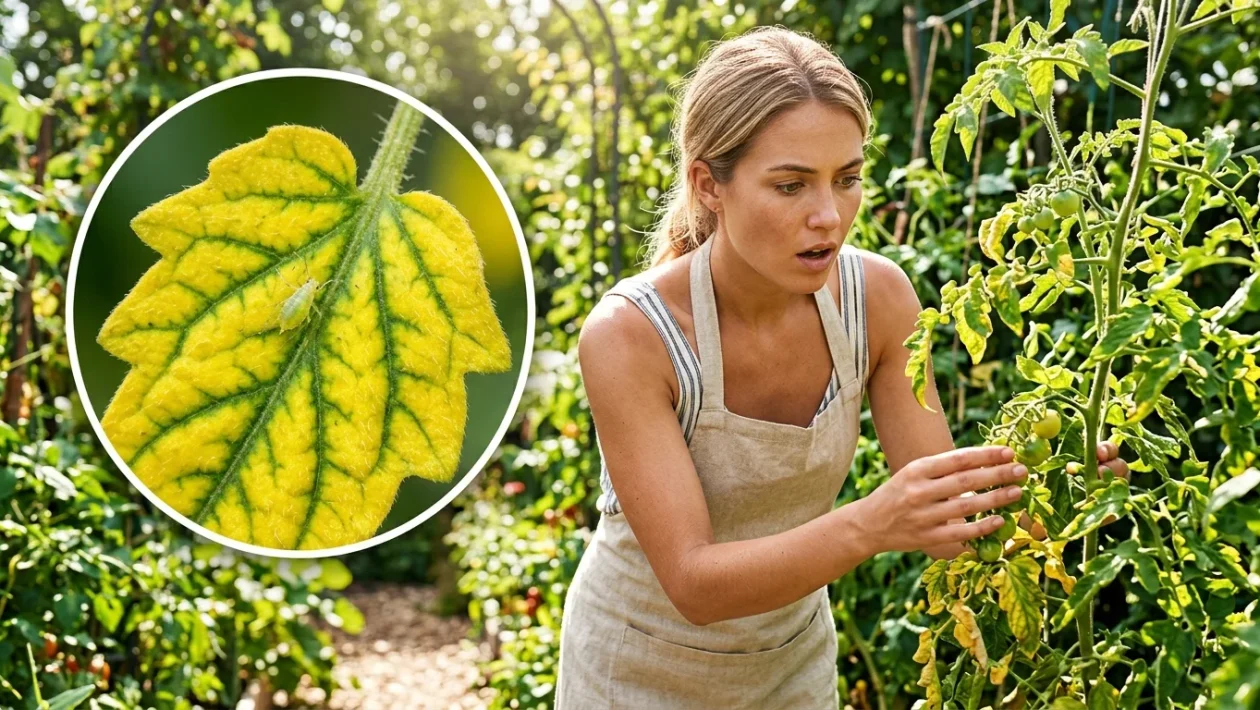
Tomatoes are a staple of the American summer garden, but they demand precise care to produce a heavy harvest. When their vibrant green leaves start turning yellow, do not ignore it.
Yellowing leaves are not a disease in themselves, but a clear symptom of plant stress. Your tomato plant is actively signaling that its growing conditions are off balance.
Fortunately, most of these issues are entirely reversible if you act fast. The key is observing which leaves are changing color, how quickly the problem is spreading, and whether accompanying symptoms like wilting or dark spots are present.
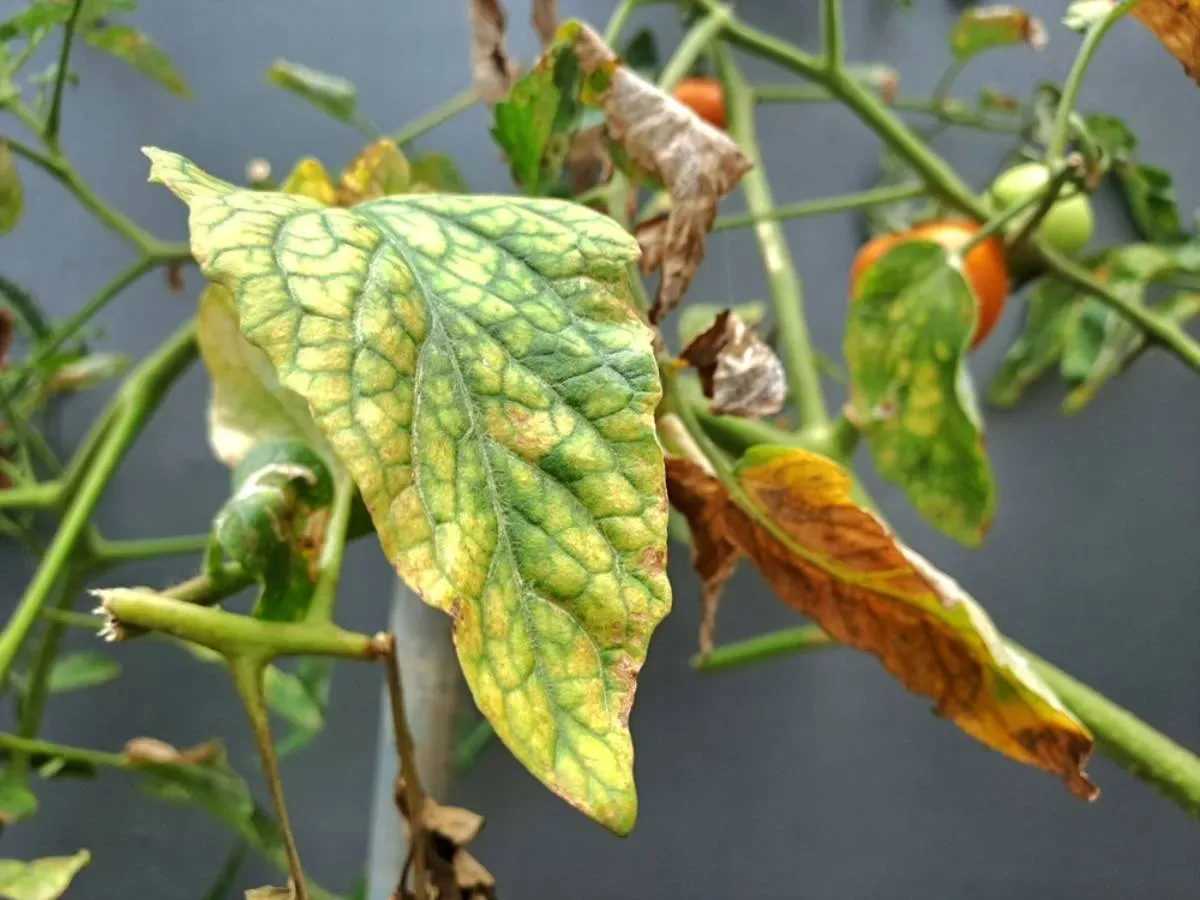
A close-up view of a tomato plant leaf turning yellow while still attached to the stem.
1. Overwatering: The Most Common Mistake
Tomatoes need consistent moisture, but they despise sitting in waterlogged soil. When the ground remains constantly wet, plant roots are suffocated and cannot absorb oxygen.
This root suffocation immediately halts nutrient uptake. The first visible sign of this underground crisis is the widespread yellowing of the foliage.
2. Nutrient Deficiencies
A starving plant will quickly change color. Depending on which nutrient is missing, the yellowing pattern will look completely different.
- Nitrogen: This is the most frequent deficiency. Yellowing begins on the older, bottom leaves and climbs upward. The plant literally steals nitrogen from its old growth to feed new shoots.
- Magnesium: The leaf tissue turns yellow, but the internal leaf veins remain a stark, healthy green.
- Iron: This deficiency strikes the newest growth first. Fresh shoots emerge pale or bright yellow instead of deep green.
Pro Tip: Run a basic soil test. It eliminates the guesswork so you can apply the exact fertilizer your garden actually needs.
3. Lack of Sunlight
Tomatoes are aggressive sun-seekers. They require an absolute minimum of six to eight hours of direct sunlight every single day to thrive.
If they are planted in the shade, the leaves will gradually fade, turn yellow, and fruit production will plummet. If you are growing tomatoes in containers, simply drag them to a sunnier patio spot.
4. Pests Draining the Plant
Tiny insects like aphids and whiteflies cause massive structural damage by piercing plant tissues and sucking out the sap. This constant feeding leaves the foliage yellow and brittle.
Always inspect the undersides of your tomato leaves. This is where sap-sucking pests establish their colonies and hide from predators.
5. Fungal and Bacterial Infections
If yellowing is accompanied by dark brown spots, blackening edges, or sudden wilting, you are likely dealing with a severe infection.
Diseases like blight move aggressively. Prune off the infected foliage immediately and throw it in the municipal trash. Never toss diseased leaves into your compost bin, or the pathogens will return next season.
6. Transplant Shock
If you recently moved young tomato seedlings into the garden bed, a few yellow leaves are standard. The root system is simply traumatized from the move.
Give the plant time to acclimate to its new environment. With proper watering and a few days of patience, the plant will push out fresh, green growth.
Yellowing foliage observed closely on a garden tomato plant.
When Should You Actually Worry?
Context is everything. If your plant is strong, flowering, and actively producing fruit, a couple of yellow leaves near the dirt are nothing to panic over.
However, if the yellowing travels rapidly up the main stem, develops ugly spots, or stops fruit development dead in its tracks, you must intervene immediately. Pinpoint the specific cause, adjust your watering, or treat for pests to save the season’s harvest.