Aloe vera remains one of the most popular houseplants in the United States, prized for its striking appearance and well-known medicinal properties. While this hardy succulent is notoriously easy to keep alive, its watering requirements demand precision.
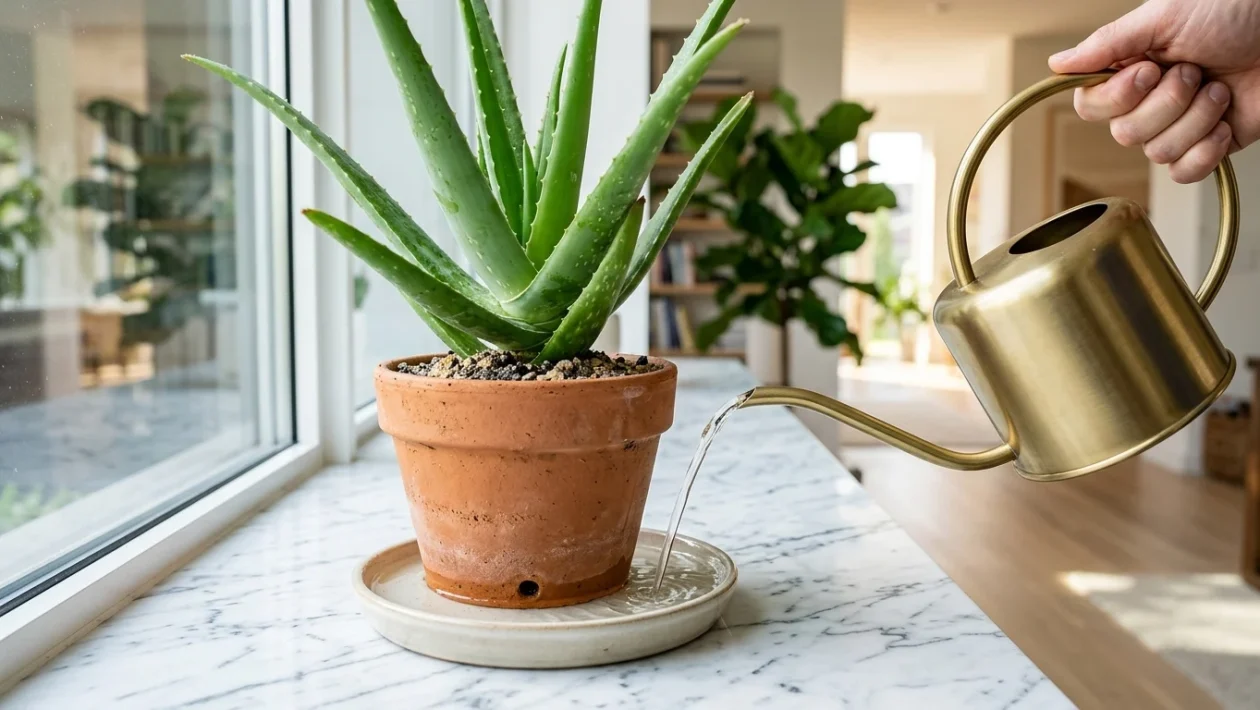
A healthy aloe vera plant growing indoors with thick, fleshy green leaves.
Mastering this schedule ensures the plant thrives rather than simply surviving. Aloe vera thrives on neglect, requiring water only when the soil surface has completely dried out.
The Summer Hydration Schedule
During the warmer months, an aloe vera plant typically needs water about once a week. The foolproof test involves inserting a finger into the soil. If the top inch feels bone dry, it is time to water thoroughly.
Succulents require well-draining potting soil, ideally a sandy mix formulated specifically for cacti. Many owners move their potted aloe vera outdoors during summer to maximize growth.
If placed outside, the plant must be sheltered from rainfall. Controlling its exact water intake is the only way to prevent mushy, discolored leaves and deadly root rot.
Winter Dormancy Adjustments
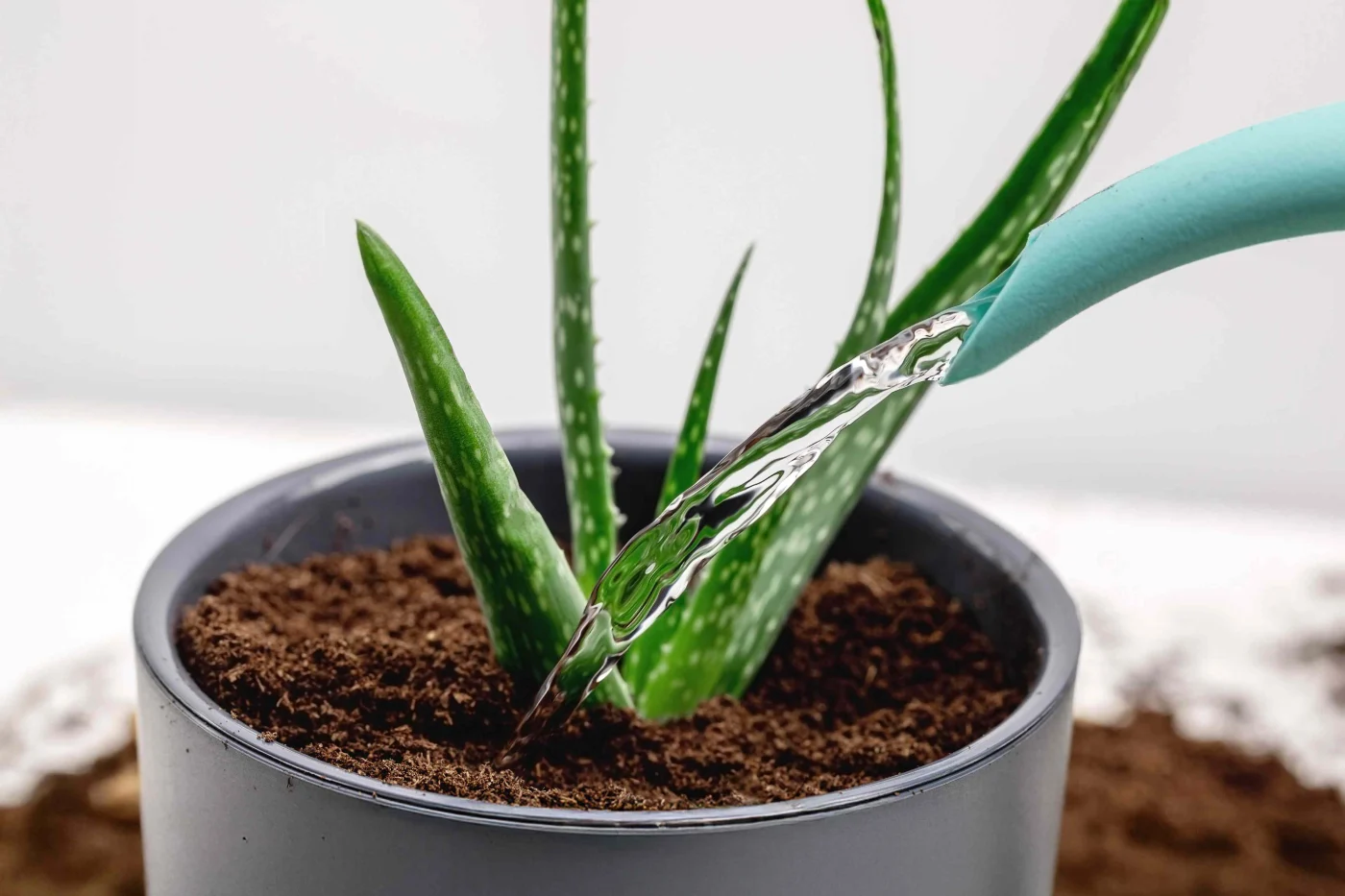
Close-up detailing the textured edges and vibrant coloring of aloe vera leaves.
As winter approaches, the aloe vera enters a dormant phase and its growth cycle dramatically slows. A plant that received consistent hydration throughout the summer might not require a single drop of water during the coldest months.
A light watering every three to four weeks is generally more than enough. When freezing temperatures threaten, move the plant indoors near a window providing bright, indirect sunlight.
Indoor plants must be shielded from cold drafts and extreme heat sources like radiators. For plants permanently stationed in outdoor garden beds, packing gravel or stones around the base ensures proper drainage during heavy winter storms.
The Bottom-Watering Technique
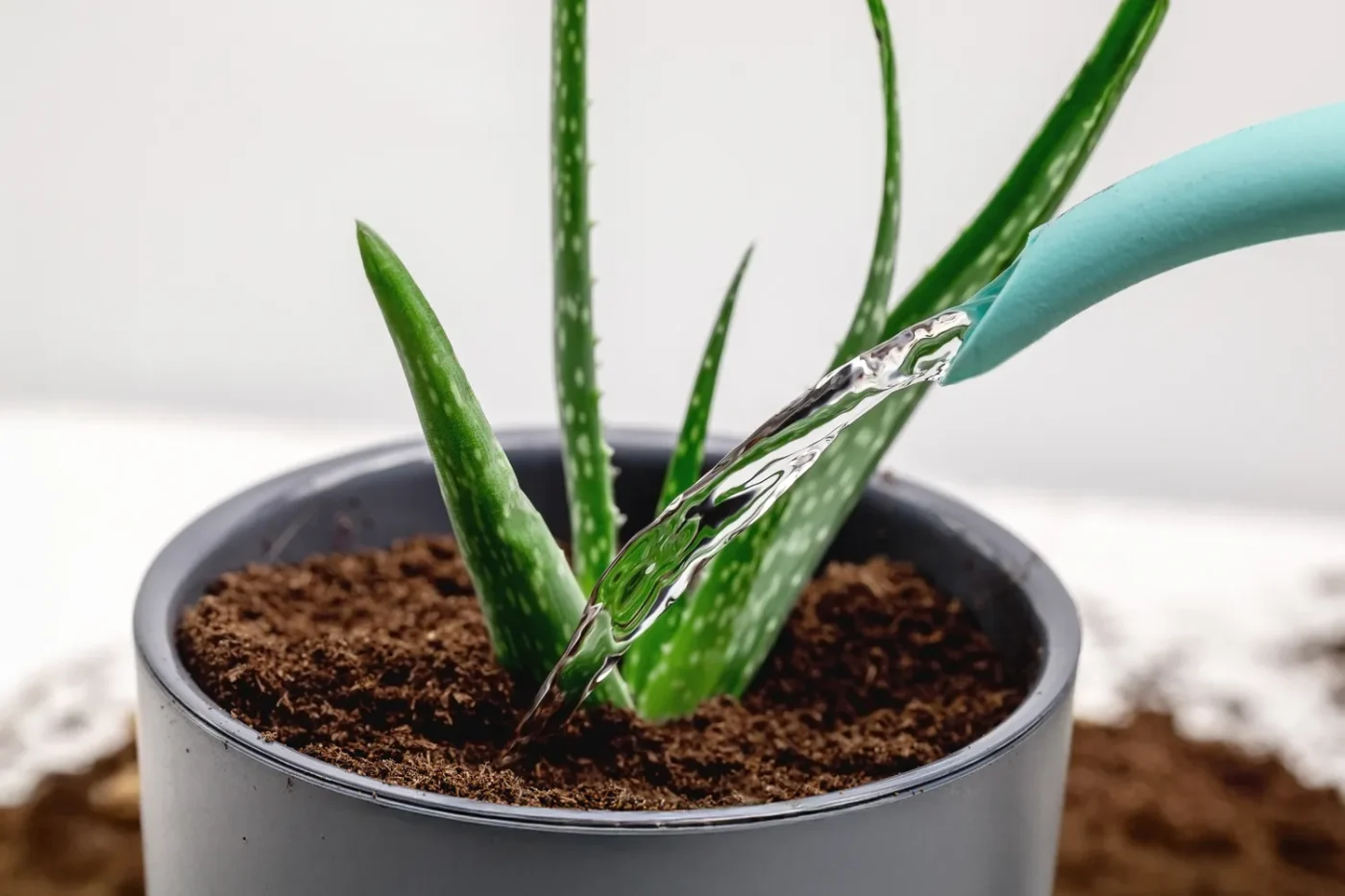
Houseplant experts strongly recommend watering aloe vera from the bottom. This method prevents the spread of soil-borne diseases and keeps the fleshy leaves clean from muddy splashes.
There is no need to submerge the entire pot in a sink. Simply pour water into the drainage tray beneath the pot using a standard watering can.
Allow the soil to pull up the moisture naturally through the drainage holes. Once the soil is hydrated, discard any remaining water in the tray to prevent the roots from sitting in a puddle.
Signs You Are Drowning Your Plant
Overwatering is the primary cause of death for indoor succulents. Providing too much moisture creates a breeding ground for mold, mildew, and severe root rot.
Watch the leaves closely. If they begin turning yellow or appear abnormally bloated and squishy, the plant is holding too much water. Adjust the schedule immediately and allow the soil to dry out completely before the next watering session.