
White baking soda powder ready to be mixed into a natural household cleaner.
American households are increasingly ditching harsh industrial chemicals in favor of natural cleaning alternatives.
One specific DIY mixture is gaining serious traction: a simple paste made from liquid detergent, baking soda, and sugar. This combination has become a go-to for sanitizing kitchens without relying on bleach, especially in areas where food is prepared.
The Science Behind the Three-Ingredient Cleaner
The effectiveness of this homemade paste comes down to how its three basic ingredients interact.
Liquid detergent contains surfactants that easily break down stubborn grease and lift dirt from hard surfaces. This makes it simple to wash away lingering microorganisms with just a quick rinse of water.
Baking soda steps in as a heavy-duty degreaser and natural odor neutralizer. It acts as the backbone of the cleaning paste, tackling deep-set kitchen grime and maintaining base-level hygiene.
Finally, standard table sugar provides a crucial, mild abrasive effect. The small granules allow you to physically scrape away dried food and dirt without scratching your underlying surfaces.
How to Mix Your Own Cleaning Paste
Creating this chemical-free cleaner takes less than a minute. You only need a small container and three household staples.
Gather your ingredients using this specific ratio:
- Two tablespoons of liquid dish detergent
- One tablespoon of baking soda
- One tablespoon of sugar
Mix the three ingredients thoroughly until they form a smooth, consistent paste.
If your mixture feels too runny, simply stir in a bit more baking soda. If the paste is too thick to spread, add water one drop at a time until it reaches the right texture.
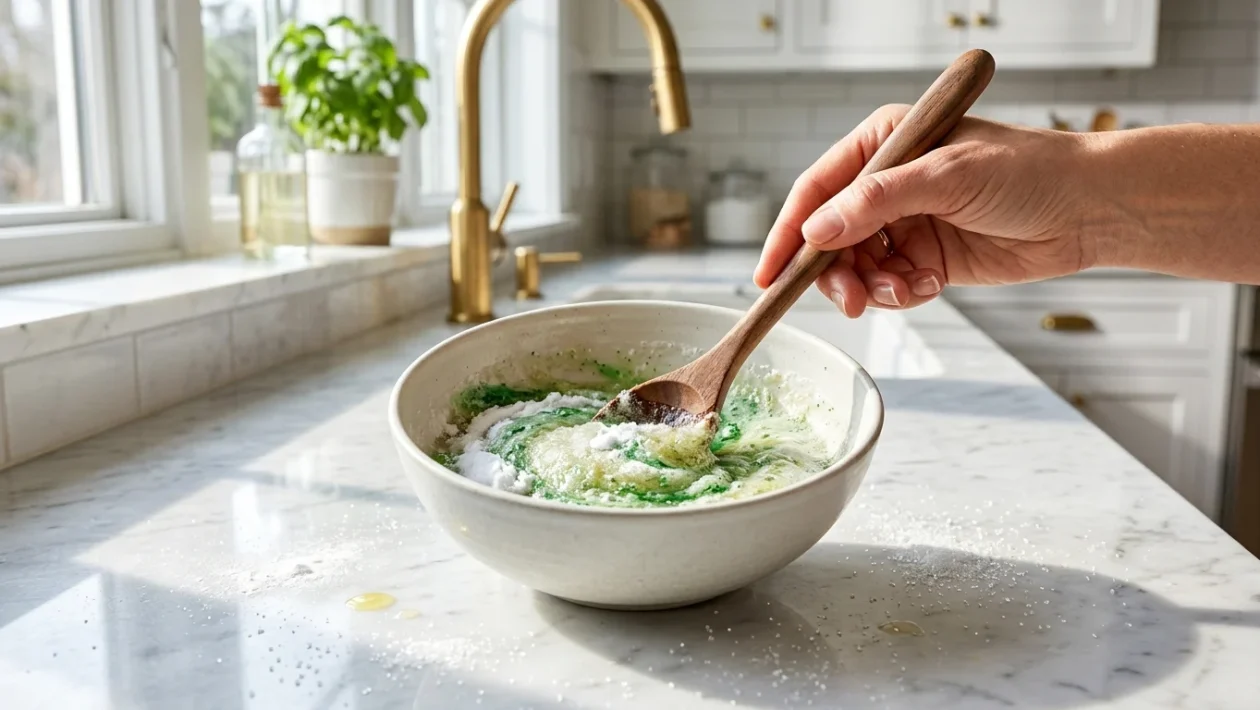
A close-up of detergent and sugar being combined to create a homemade cleaning solution.
Where to Apply the Mixture Safely
This paste is highly effective for scrubbing countertops, tile floors, pots, pans, and the dark spaces under your sink. It also doubles as a bathroom sanitizer, easily cutting through soap scum on fixtures and tiles.
However, you must exercise caution on delicate materials. If you plan to use this slightly abrasive paste on untreated wood or polished marble, always test it on a small, hidden section first to ensure it doesn’t leave micro-scratches.
Upgrading Your Natural Cleaner
For those looking to boost the cleaning power, experts suggest adding a few drops of essential oils. This simple upgrade enhances the sanitizing effect while leaving a fresh, lasting scent.
You can also keep white vinegar nearby as a secondary agent. Thanks to its natural acidity, following up your scrub with a vinegar wipe helps dissolve tough, set-in stains and provides an extra layer of household disinfection.

