Every day, millions of people face the same choice at the bathroom sink: pump the liquid soap or grab the classic bar. Both formats effectively strip away dirt, excess oil, and microscopic threats from the skin.
For decades, a stubborn myth suggested that bar soaps harbored more bacteria and were inherently less hygienic. Dermatologists have finally put that misconception to rest. When used correctly, both solid and liquid soaps are completely safe and effective.
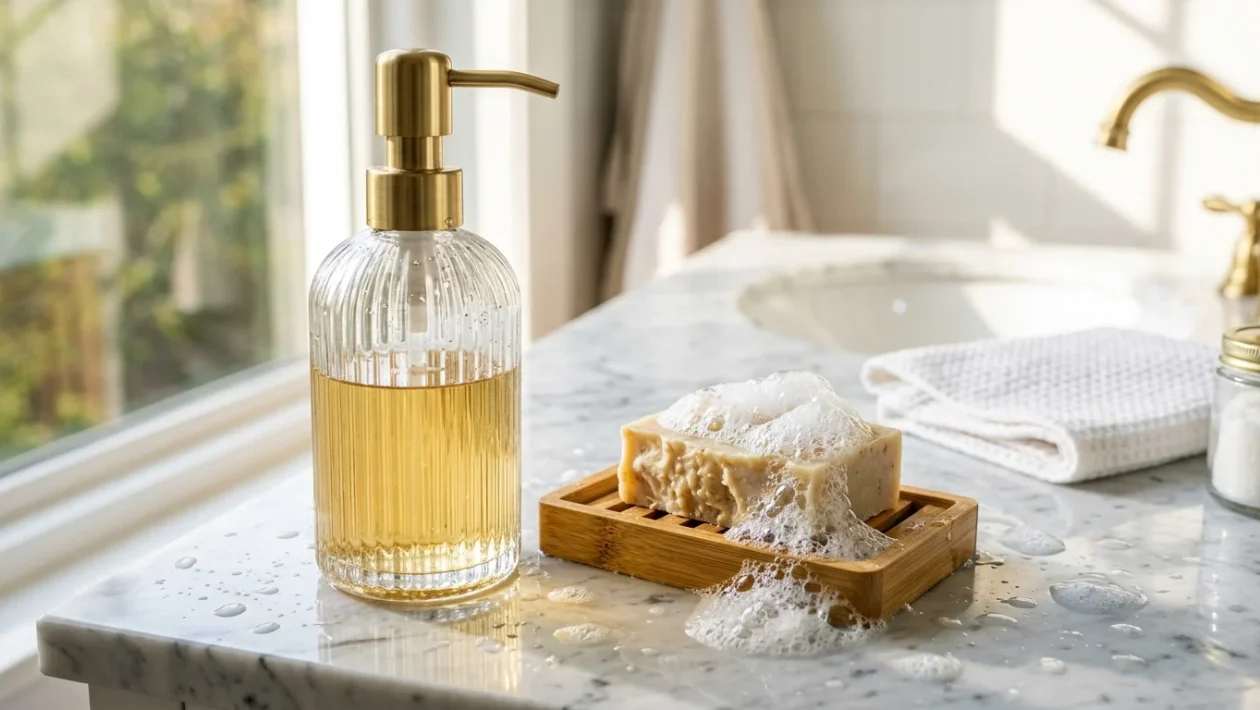
A clean liquid soap dispenser ready for use in a modern bathroom.
The Case for Liquid Soap
Liquid soap dominates public restrooms, busy office buildings, and shared households. Its main advantage lies in the dispenser, which drastically reduces direct physical contact between different users.
Manufacturers often load liquid formulas with heavy humectants, making them a solid choice for people struggling with dry skin. Dispensers are also highly practical, especially for young children or elderly individuals with limited grip strength.
However, convenience comes with a higher price tag. Liquid soap is consistently more expensive than its solid counterpart and relies heavily on single-use plastic packaging.
Euro banknotes, reflecting the ongoing consumer costs associated with daily household products.
Additionally, the chemical preservatives, dyes, and synthetic fragrances required to keep liquid soap stable on store shelves can easily trigger irritation in highly sensitive skin.
The Case for Bar Soap
The traditional bar remains a staple for consumers prioritizing efficiency, budget, and environmental impact. Bars last significantly longer than liquid alternatives and generate a fraction of the plastic waste, often arriving wrapped in simple cardboard or paper.
A classic bar of soap producing a rich lather with water.
Modern bar soaps have evolved well beyond harsh, skin-stripping blocks. Many brands now offer specialized bars packed with natural oils and hydrating ingredients tailored for delicate skin.
The drawbacks of bar soap usually stem from storage. If left sitting in standing water, a bar will quickly soften into a mushy, unusable mess. Shared bars require a properly draining soap dish to prevent residue buildup.
Furthermore, traditional bars often feature a higher, more alkaline pH. If used excessively, this can strip away natural barrier oils and leave the skin feeling tight.
The Dermatologist Verdict
When forced to pick a definitive winner, skin experts refuse to take the bait. Dermatologists agree that neither format is objectively superior for basic hygiene.
Instead of debating the packaging, experts urge consumers to scrutinize the ingredient list. The smartest choice is a gentle, fragrance-free formula—especially for anyone battling dermatitis, eczema, or reactive skin.
If your skin is chronically dry, liquid soaps with added moisturizers or “syndet” bars (synthetic detergents engineered with a milder pH) offer the most comfortable cleanse. For those with normal skin, a high-quality traditional bar soap performs flawlessly.
The 20-Second Rule
When it comes to actual cleaning power, the liquid versus bar debate is entirely irrelevant. Both formats will annihilate dirt, bacteria, and viruses with equal efficiency.
The true secret to clean hands has nothing to do with the soap you buy. Health experts stress that proper technique, thorough rinsing, and scrubbing with water for at least 20 seconds are the only metrics that actually matter at the sink.