Wrapping a standard sweeping broom in aluminum foil is an unconventional cleaning method gaining rapid traction. While it looks unusual, the technique relies on basic physics to solve a common household frustration: dust and pet hair scattering across the floor.
A red broom wrapped in aluminum foil sweeping the floor
The Science of Static Electricity
Sweeping hard surfaces—whether laminate, ceramic, or vinyl—often generates static electricity. This charge causes fine particles to repel the broom and resettle on the floor moments later.
Aluminum foil acts as a grounding agent. By wrapping the bristles or base of the broom with standard kitchen foil, the metal alters the static charge. Instead of floating into the air, dust, dirt, and lint lock onto the foil.
Why Pet Owners Swear By It
Household cleaners note a stark difference when using this method, especially in homes with shedding animals or allergy sufferers. The foil provides several distinct advantages:
- Traps fine dust: Allergens stick directly to the broom rather than dispersing into the air.
- Collects pet hair: Strands of hair cling to the foil instead of getting tangled deep inside the broom bristles.
- Reduces surface static: The floor holds less charge, keeping airborne dust from immediately clinging back to the freshly swept surface.
- Protects equipment: The barrier extends the life of the broom by shielding the bristles from heavy wear and tear.
Because the foil gathers debris so efficiently, it often eliminates the need to follow up with a vacuum cleaner or wet mop.
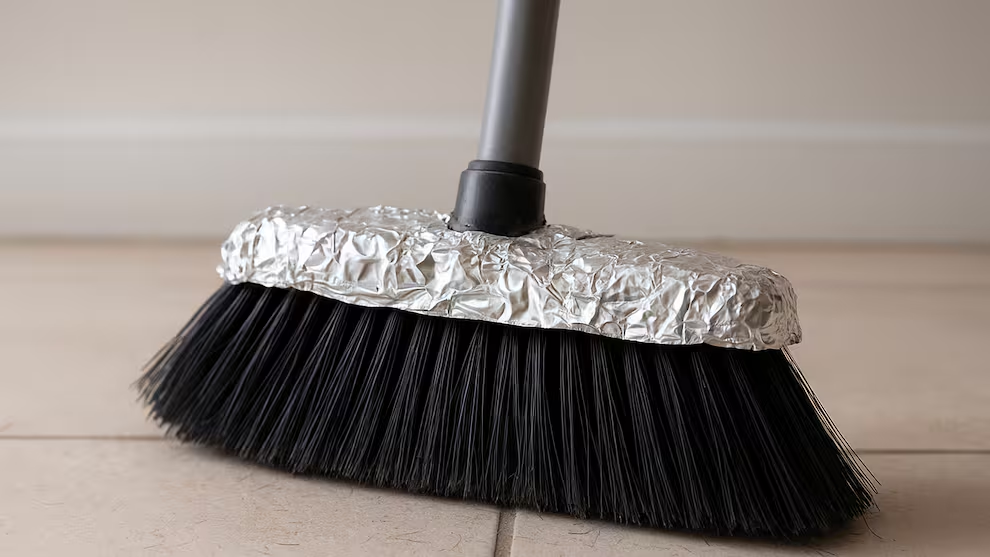
Close-up of broom bristles completely covered with a sheet of aluminum foil
When to Replace the Foil
The trick requires minimal upkeep, but the foil is not a permanent fixture. Its effectiveness drops rapidly as the metal degrades during routine cleaning sessions.
Users must replace the aluminum sheet once it becomes heavily wrinkled, visibly dirty, or torn. The replacement frequency depends entirely on how often you sweep and the texture of your floors.
Quiz
Foil Broom Cleaning Trick
Answer 5 questions about the article you just read.
-
Which common household item is used to cover the broom in this cleaning technique?
Why: The article discusses the unconventional method of wrapping a broom in standard kitchen aluminum foil to trap dust.
-
What physical mechanism makes this sweeping trick effective?
Why: The foil serves as a grounding agent that changes the static electricity, causing fine particles to lock onto the metal.
-
How does the wrapped broom specifically help when dealing with pet hair?
Why: The text explains that strands of hair will cling to the exterior foil rather than getting tangled inside the broom's bristles.
-
Because the foil gathers debris so efficiently, what follow-up chore can often be skipped?
Why: The efficient gathering of debris often eliminates the need to clean the floors again with a vacuum or a wet mop.
-
Which two factors dictate how frequently you need to replace the metal sheet?
Why: The article explicitly states that replacement frequency depends entirely on how often you sweep and the texture of your floors.