
Close-up of worker ants marching in a line toward a food source.
As temperatures rise and windows open, nature reclaims its rhythm. This seasonal awakening brings a surge of insects, with ants leading the charge to colonize newly accessible spaces.
Biologist and pest control advisor Aron Kuiper notes that this invasion is a purely natural process. After wintering underground, colonies emerge into the warming soil to hunt for food and rapidly expand.
Spring and early summer also trigger the “nuptial flight.” New queens abandon their original nests to establish their own colonies, which explains why ants suddenly appear in previously insect-free zones.
Beyond being an indoor nuisance, garden ants actively protect aphids to harvest their honeydew. This destructive partnership accelerates aphid plagues that weaken plants and crops.
Forget the Folk Remedies
Generations of homeowners have relied on chalk lines, copper coins, and coffee grounds to deter invasions.
Pest control specialists dismiss these tactics. At best, they create temporary barriers that never address the root of the infestation.
Targeting only the visible workers is a critical mistake. If the nest and the attractants remain intact, the colony simply reroutes and returns in record time.
Proven Strategies for Elimination
1. Erase the Scent Trails
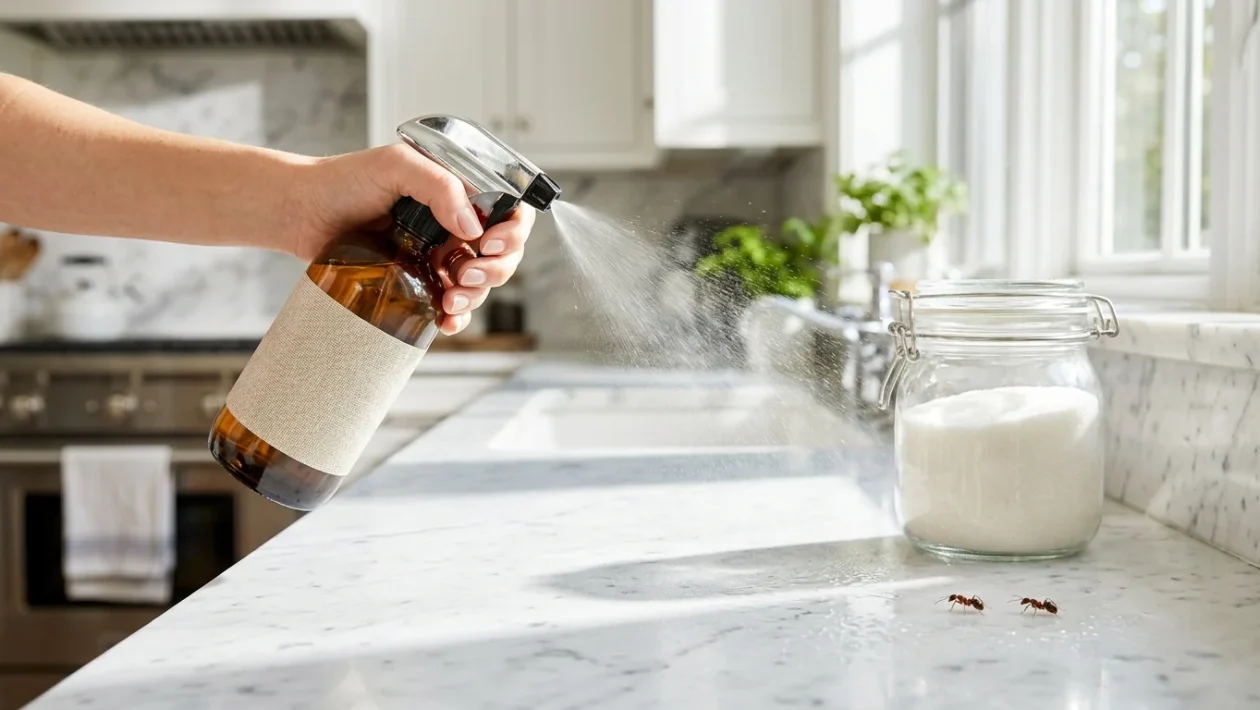
Ants navigate using invisible chemical pathways that lead directly to food sources. Sanitation is your first and most vital line of defense.
Store food in airtight containers and immediately clean up sugar and crumbs. Washing high-traffic surfaces with vinegar or neutral soap obliterates these chemical trails and severely disorients the colony.
2. Destroy the Nest Directly
Killing stray ants accomplishes nothing while the queen remains alive to breed new workers.
For outdoor nests, pouring boiling water directly into the colony is highly effective. You must repeat this over several days to ensure the lethal temperature reaches deep inside the nest, though care must be taken not to damage nearby plant roots.
3. Deploy Biological Warfare
Eco-conscious gardeners are increasingly turning to nematodes. When applied to the soil, these microscopic organisms infiltrate the nest and release bacteria that wipe out the colony without harsh chemicals.
This approach aligns with modern sustainable pest management. The European Food Safety Authority (EFSA) officially recommends this biological control for organic gardening programs.
4. Block Entry Points
Ants relentlessly seek out heat and moisture. Deny them access by sealing foundation cracks, repairing window frames, and eliminating damp areas.
Simple structural maintenance drastically reduces the odds of a full-scale infestation taking hold indoors.
Knowing When to Stand Down
Despite the frustration they cause, ants play a vital ecological role. They aerate the soil, break down organic waste, and help balance the local ecosystem.
Experts emphasize that an insect’s presence does not automatically signify a plague. While indoor infestations require immediate action, outdoor colonies that cause no visible damage are often best left alone.
True pest management isn’t about blind eradication. It is about understanding the environment and stepping in only when a natural process becomes a genuine problem.




