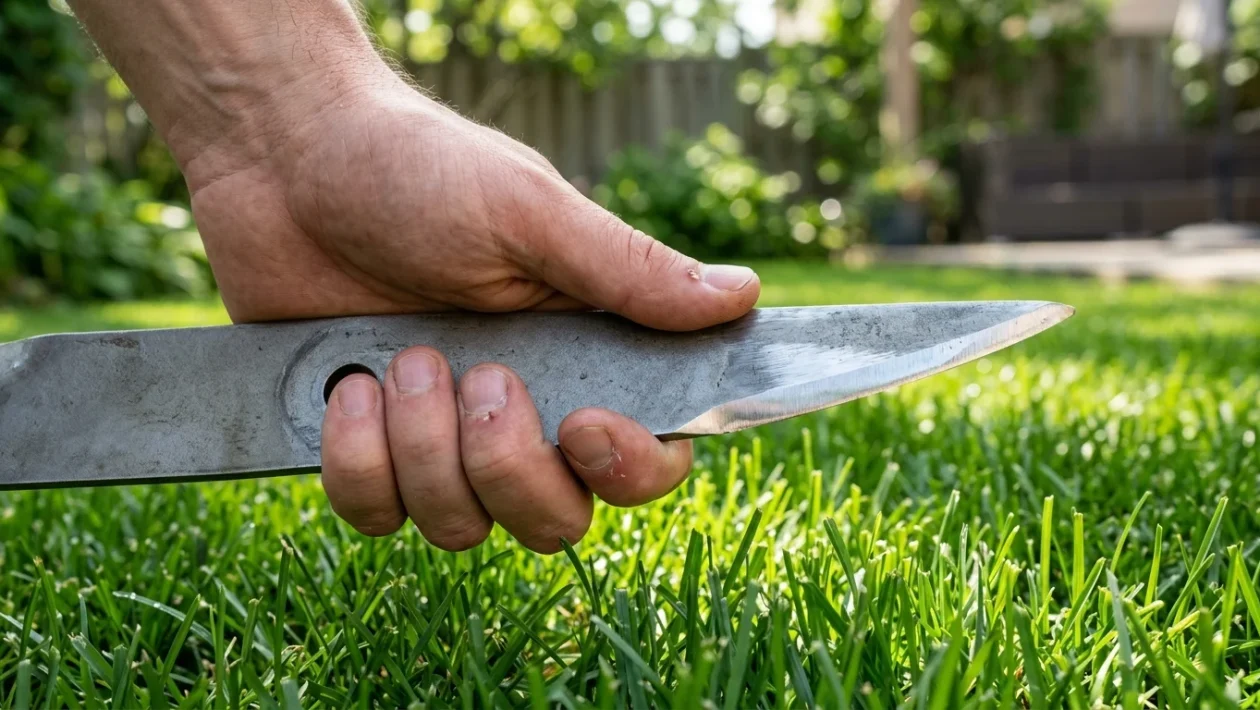
A close-up view of a metal lawn mower blade being inspected for sharpness and wear.
Routine summer lawn maintenance often skips the most crucial step: blade sharpening. Running a mower with a dull edge doesn’t cleanly cut grass; it violently rips it apart.
The 25-Hour Benchmark
Most homeowners should sharpen their blades after every 20 to 25 hours of use. According to Ryan Duffy, division merchandise manager of power equipment at The Home Depot, this translates to roughly twice a mowing season.
“That’s typically when normal wear begins to affect cutting performance,” Duffy notes. Sticking to this schedule guarantees clean cuts and keeps the machine operating efficiently.
However, heavy rainfall or hitting hidden yard debris will accelerate this timeline. “The more you mow, the more frequently you’re going to need to sharpen,” says Mark Brokaw, go-to-market manager for turf parts at John Deere.
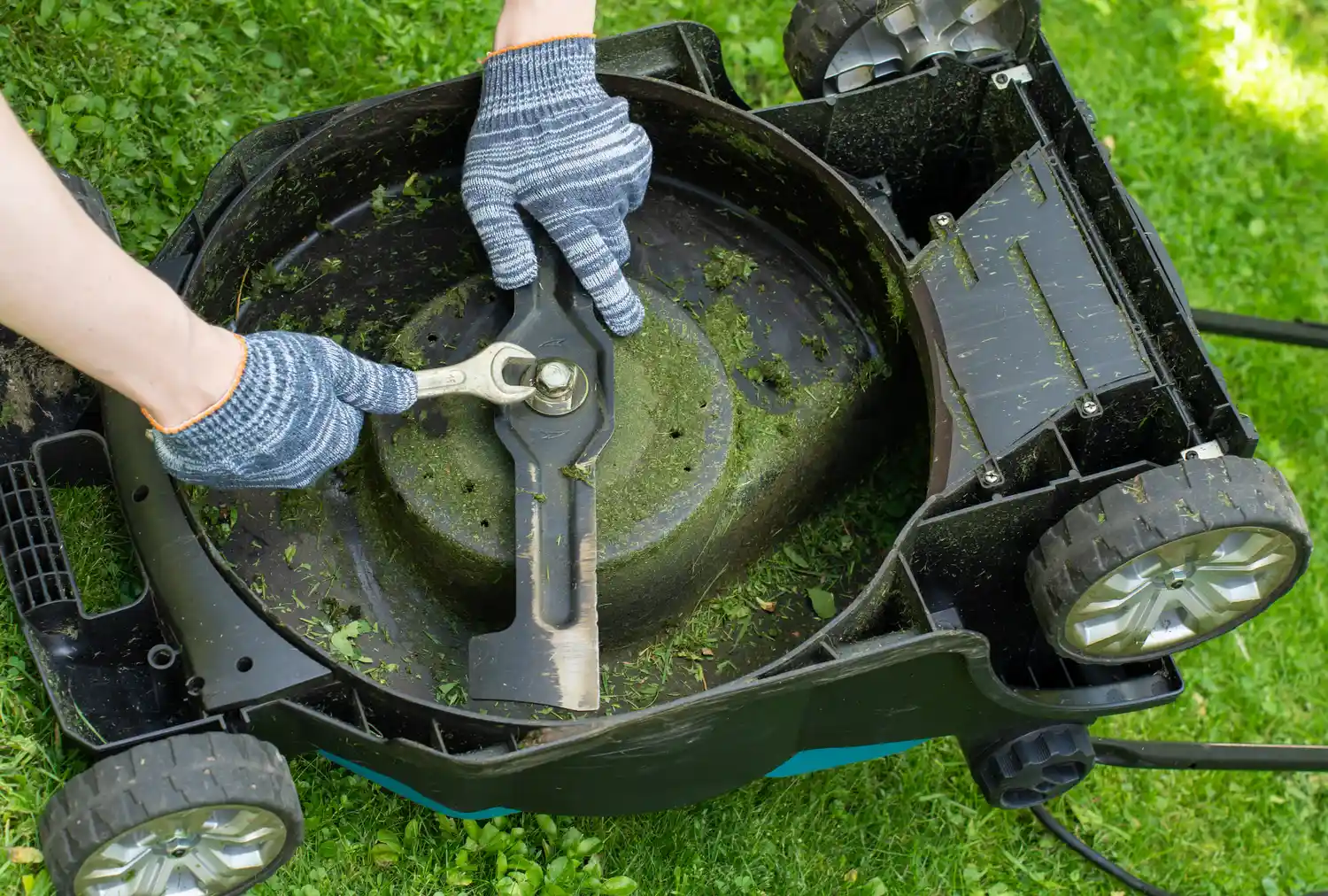
A close-up view of a lawn mower blade showing signs of standard wear along the cutting edge.
Red Flags in the Yard
You don’t need to guess if your blade is dull. The grass will give you clear visual cues.
Look closely at the tips of your freshly cut lawn. If the edges are brown and frayed, your blade is mangling the grass rather than slicing it.
Performance drops are another clear indicator. If you find yourself making multiple passes over the same patch of grass to get an even cut, it’s time for maintenance.
Brian Shaunfield, a store manager at Lowe’s, points to physical feedback from the machine itself. “If you notice the mower vibrating more than usual, that can sometimes mean blade damage,” he warns. He advises quickly inspecting the blade immediately after running over sticks or exposed roots.
The Hidden Cost of Tearing Grass
A dull blade creates massive aesthetic and biological problems for your yard.
Tearing the grass leaves jagged, oversized wounds. Shaunfield explains that the turf must expend massive amounts of energy to heal these ragged cuts.
This forced recovery period leaves your lawn highly vulnerable to pests, fungus, and disease. It also takes a toll on your hardware.
“A dull blade forces the mower to work harder to achieve the same results, reducing cutting efficiency, and increasing the strain on the mower,” Duffy says. Over time, this added strain shortens the overall lifespan of your equipment.
Avoid the Over-Sharpening Trap
While sharp edges are essential, grinding them down constantly is a costly mistake.
“Every time you sharpen your mower blade, you remove material from the blade,” Brokaw says. Excessive sharpening grinds the metal down prematurely, forcing you to buy replacement blades long before necessary.
Safe Removal Protocol
Sharpening the blade at home is a simple DIY task, provided you follow basic safety steps.
Never reach under a mower deck while the power source is active. Always disconnect the spark plug wire on gas models before attempting to remove the blade.
For battery-powered cordless mowers, physically remove the battery from the machine before you grab your wrench.