
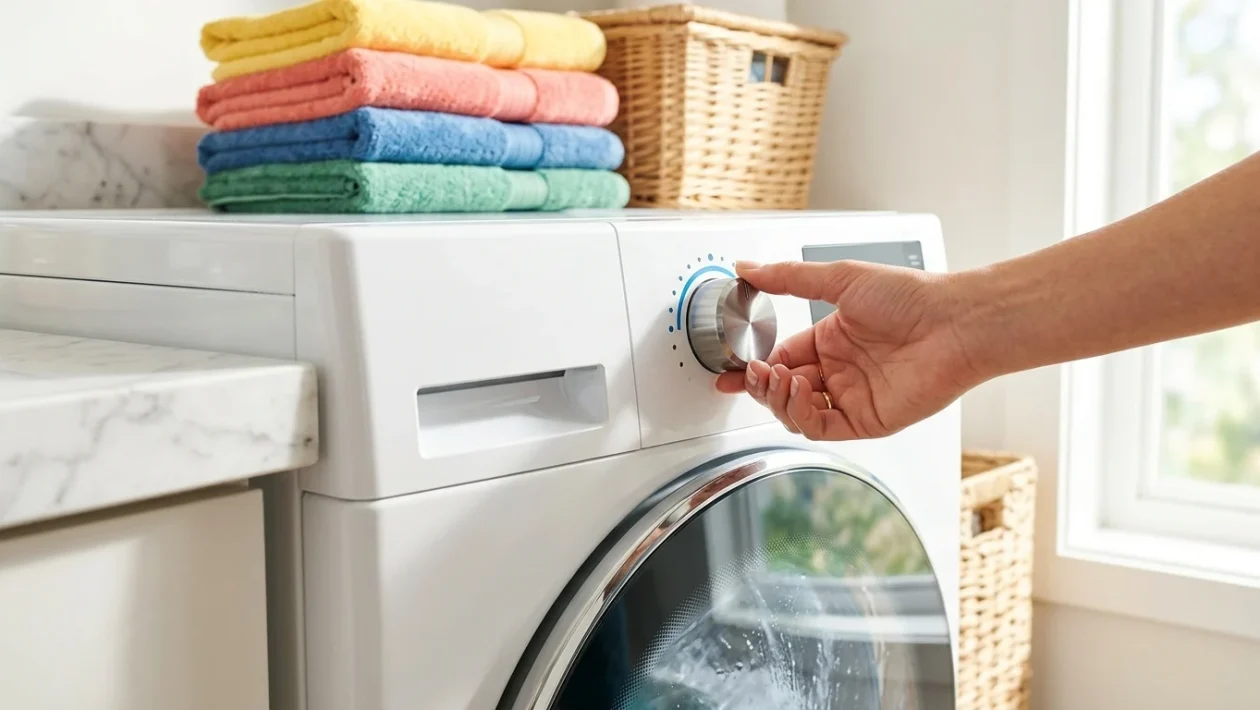
A hand adjusting the temperature dial on a modern washing machine to a cold wash setting.
For generations, hot water was the undisputed champion of laundry day. The logic was simple: higher temperatures equal a deeper clean.
Today, laundry experts argue the exact opposite. Thanks to advancements in modern detergents, cold water is now the superior choice for your everyday wash.
Why Cold Water Wins the Everyday Wash
The American Cleaning Institute (ACI) advises that cold water is perfectly suited for standard laundry loads. Many modern detergents are chemically engineered to break down common dirt and stains effectively at lower temperatures.
Washing in cold water does more than just save energy by bypassing your home’s water heater. It acts as a protective shield for your wardrobe.
Cold wash cycles prevent vibrant colors from fading and drastically reduce the risk of shrinking delicate fabrics. The lower temperature is significantly gentler on materials like cotton, wool, and synthetic blends.
When Hot Water is Absolutely Necessary
Cold water cannot handle everything. When dealing with illness or heavy grime, hot water remains essential.
The Centers for Disease Control and Prevention (CDC) recommends using the warmest water temperature permitted by a garment’s care label when washing items exposed to bodily fluids. This critical rule applies to towels, bedding, or clothing used by someone who is sick.
Hot water is also the most effective tool for sanitizing heavily soiled work clothes, durable white cottons, and specific household linens. The heat works alongside detergent to eliminate stubborn grease and potential pathogens, provided the fabric can tolerate it.
The Expert Consensus
If you want to preserve your clothes and lower your utility bills, default to cold water for daily washes.
Reserve the hot cycles strictly for sanitizing sickbed linens or breaking down heavy, oily soils. Always check the manufacturer’s care label on your garments before setting the temperature dial.


