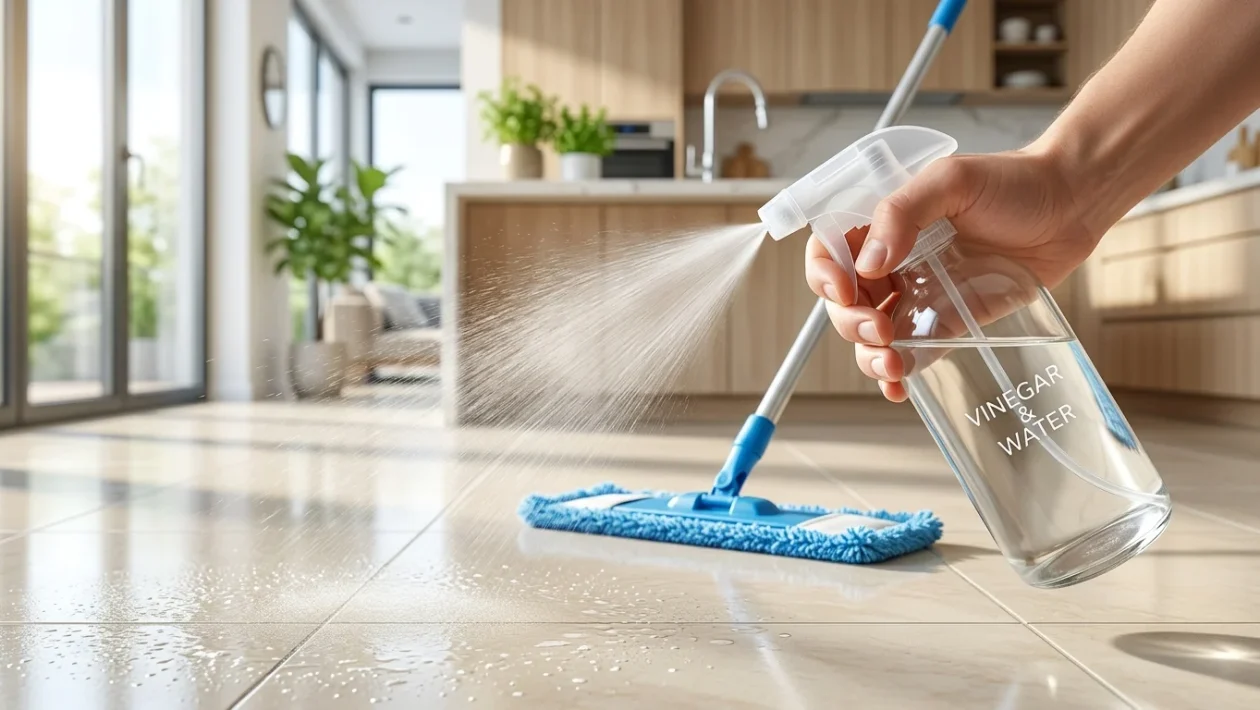
A person mopping a floor using a natural vinegar and water solution.
Households are increasingly ditching expensive industrial cleaners for a cheap pantry staple: vinegar. What started as an isolated homemade tip has solidified into a mainstream cleaning strategy.
This shift is driven by a desire for practical, budget-conscious solutions. Consumers are actively replacing harsh synthetic chemicals with eco-friendly alternatives that actually get the job done.
The Power of Acetic Acid
Vinegar’s cleaning effectiveness comes down to its primary active component: acetic acid. This compound naturally provides powerful disinfectant and degreasing properties.
Thanks to its low pH, vinegar easily cuts through stubborn dirt, grease, and mineral deposits that commercial cleaners often leave behind. It also acts as a heavy-duty odor neutralizer, refreshing indoor spaces without relying on artificial fragrances.
These chemical characteristics have cemented vinegar as a highly capable natural cleaner, allowing households to replace multiple traditional products with one simple bottle.
The Right Way to Mop with Vinegar
Do not pour pure vinegar directly across your entire floor. Cleaning specialists recommend diluting it with warm water to protect your surfaces while maximizing efficiency.
The standard formula is straightforward: mix half a cup of vinegar into a standard bucket of water, then mop as usual. This ratio prevents the acidity from becoming too aggressive while still breaking down grime.
For isolated, stubborn stains, you can apply undiluted vinegar directly to the spot before wiping it away. Always ventilate the room immediately after cleaning. The sharp vinegar scent dissipates rapidly, leaving behind a crisp feeling of freshness.
When to Avoid This Method
While highly effective, vinegar is not a universal solution. The exact acidity that cuts through grease will permanently damage certain materials over time.
Never use vinegar on hardwood, marble, or granite floors. The acid will slowly break down protective sealants and etch natural stone, causing irreversible wear.
More importantly, never mix vinegar with bleach. This dangerous chemical combination produces highly toxic vapors that pose an immediate risk to your respiratory health. Vinegar remains a brilliant economical tool, provided it is used with care and precision.