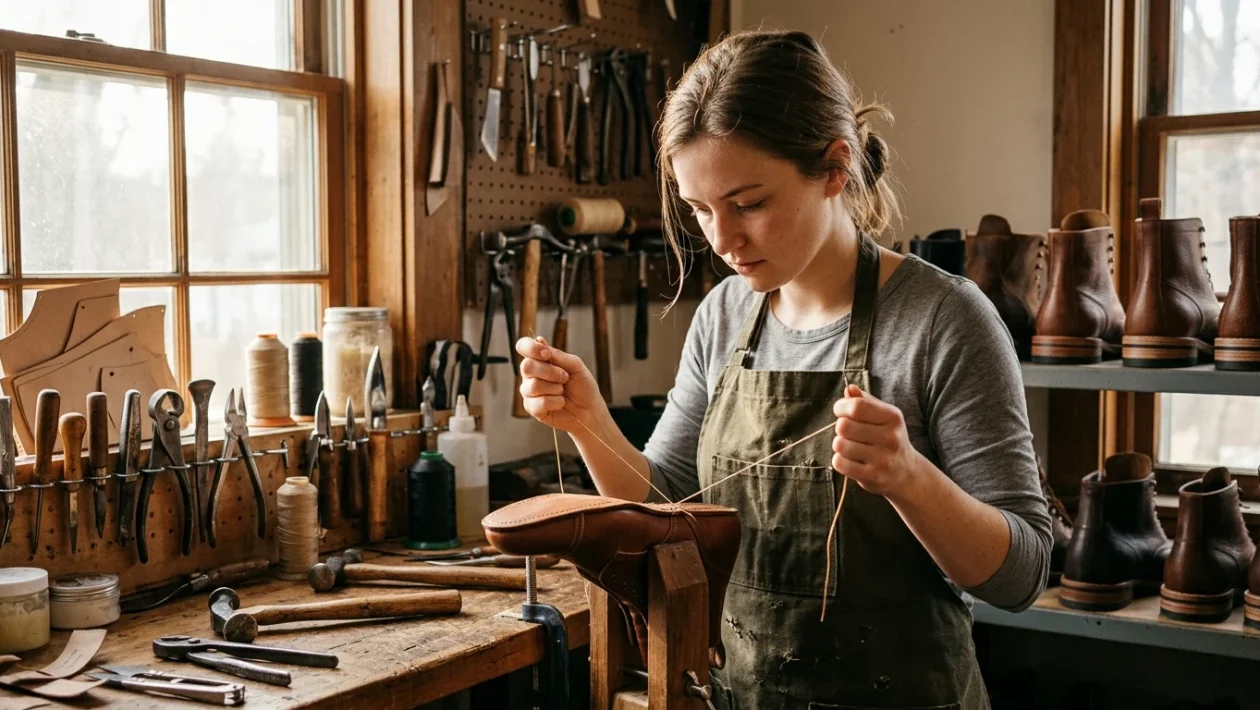
Giulia Rhodes designing handcrafted leather shoes in an Italian workshop.
Giulia Rhodes had her post-graduate life mapped out. The 23-year-old London College of Fashion graduate was ready to launch her career in the United States.
Then, a work visa rejection abruptly ended those plans.
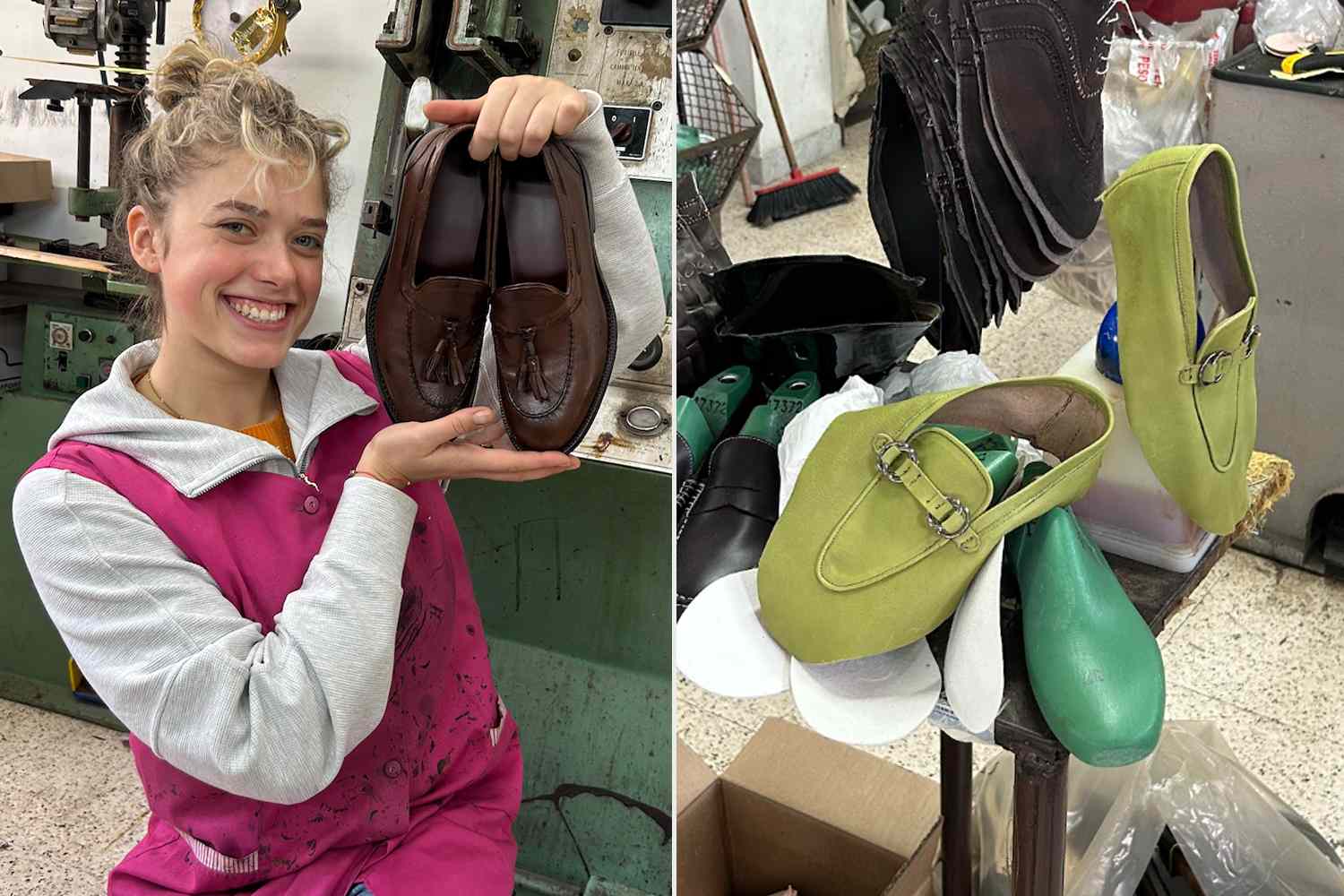
A pair of handcrafted leather shoes resting on a wooden workbench.
Suddenly without a roadmap, the Canadian citizen sat down for dinner with her uncle, a doctor living in Italy. Rhodes confessed a lingering dream: she wanted to learn the traditional art of shoemaking.
During her studies in London, Rhodes had developed a deep appreciation for manipulating leather and fur. Hearing this, her uncle immediately took action. He phoned a longtime family friend in Italy’s Campania region whose family owned a generational leather workshop, known as a bottega.
“Within the minute he had told me to come and be an apprentice,” Rhodes says. “I moved in the new year, where I lived with my uncle’s best friend from childhood.”
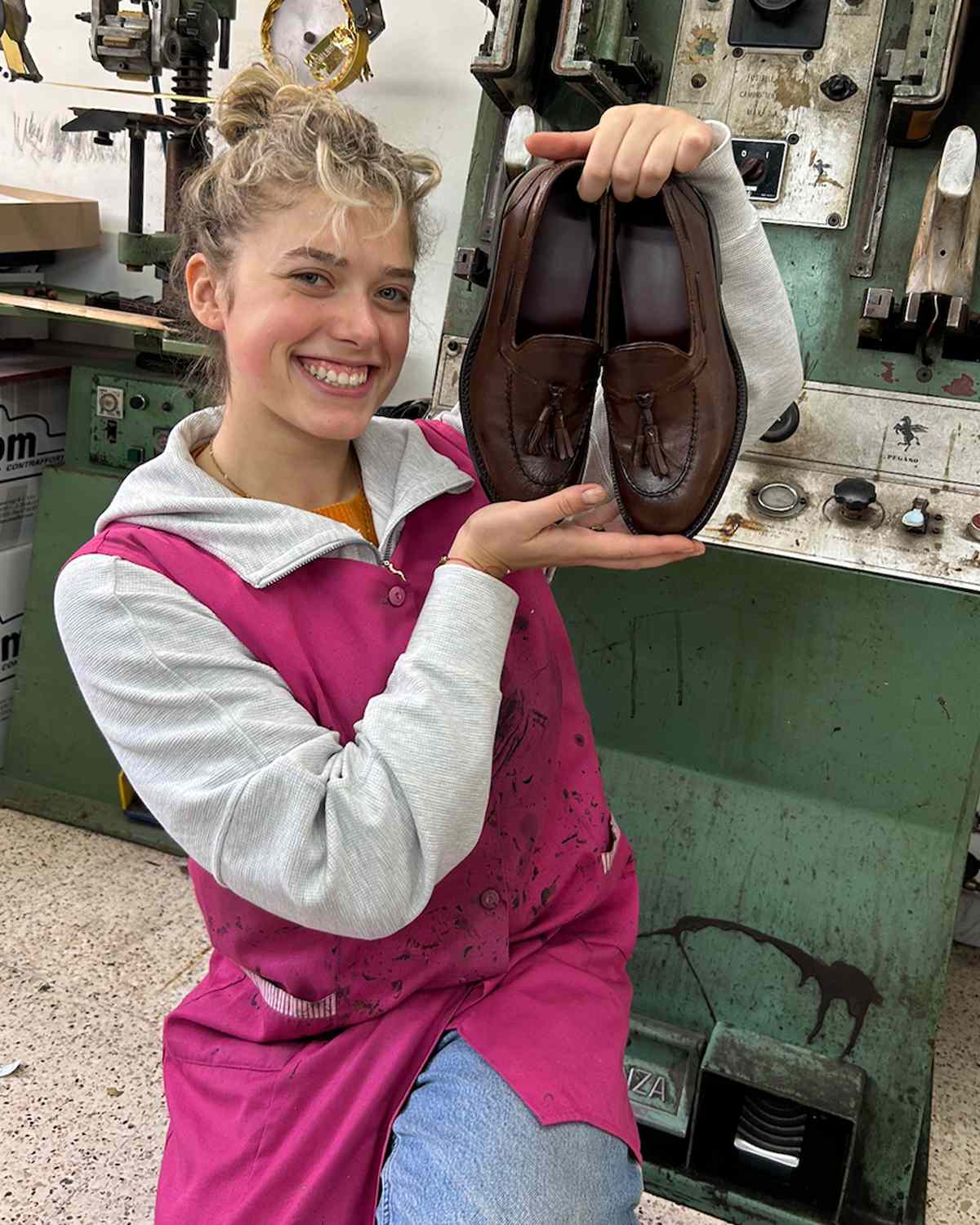
Giulia Rhodes working on a leather shoe design in the Italian workshop.
Life Inside the Bottega
By early January, Rhodes relocated to a tiny village outside Naples. She fully immersed herself in the centuries-old craft.
Every day, Rhodes worked alongside six seasoned artisans from 8 a.m. to 5 p.m. She focused heavily on the foundation of the shoe—stitching, shaping, lining, and refining the intricate details.
“I wanted to learn every step,” she says. She spent most of her time shadowing a cobbler named Maria.
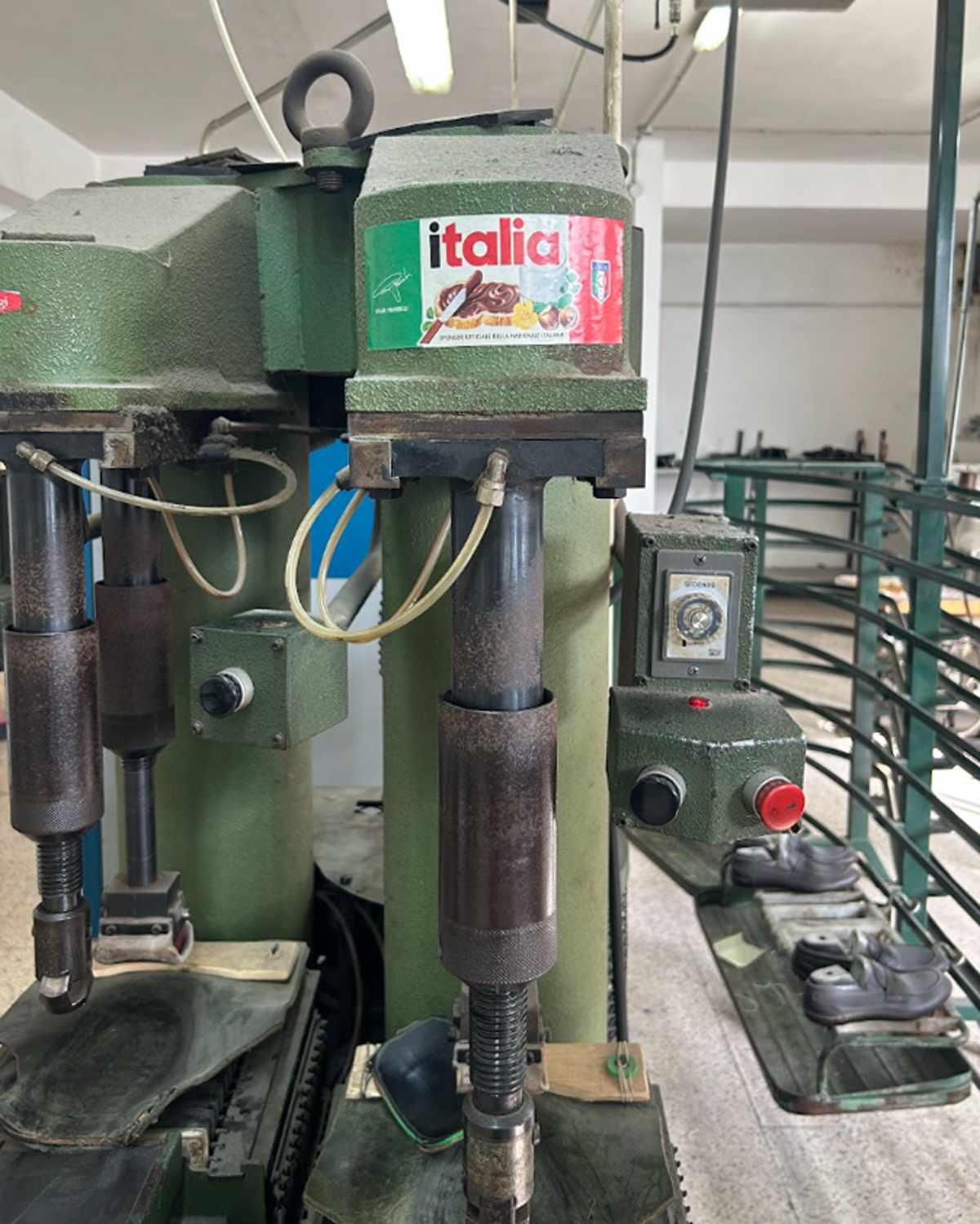
Shoemaking tools and leather materials arranged neatly on a worktable.
“The cobbler I worked alongside the most is Maria, the most loving and generous woman I’ve ever met,” Rhodes recalls. Maria brought her a homemade lunch daily, and the two shared espresso and pastries during breaks before shutting down the machines at 5 p.m.
The Mental Toll of Village Life
The workshop quickly felt like home, but adjusting to the quiet village proved difficult. Despite speaking Italian and holding dual citizenship, Rhodes felt isolated.
Transitioning from fast-paced metropolitan cities to a rural town tested her resilience. “I’d say the hardest part was all mental,” she admits. “I felt isolated but also like everyone knew I wasn’t supposed to be there.”
Beyond the cultural shift, Rhodes wrestled with the reality of mastering a generational trade.
“On a technical level, I think the hardest part I had to realize was that I wasn’t going to finish learning,” Rhodes says. “I wasn’t going to be a master. I wasn’t going to know close to everything.”
“I think a big problem we have nowadays is that everyone wants things and they want them fast,” she adds. “I felt like I was rushing and pressuring myself to be perfect when the people I was learning from have been working at the same studio for over 30 to 50 years.”
Crafting the First Pair
Her patience ultimately paid off. Rhodes completed her very first pair of shoes during her first week at the bottega.
“It was a huge accomplishment for me,” she says. “Being able to hold a pair of shoes I made felt surreal.”
Though she was experienced in garment construction, Rhodes found that footwear provided a uniquely tangible satisfaction. By her second month, she had finalized her first original design.
The timeline for creating a shoe varies wildly. A simple design might take one day, while an experimental concept could take a week of trial and error.
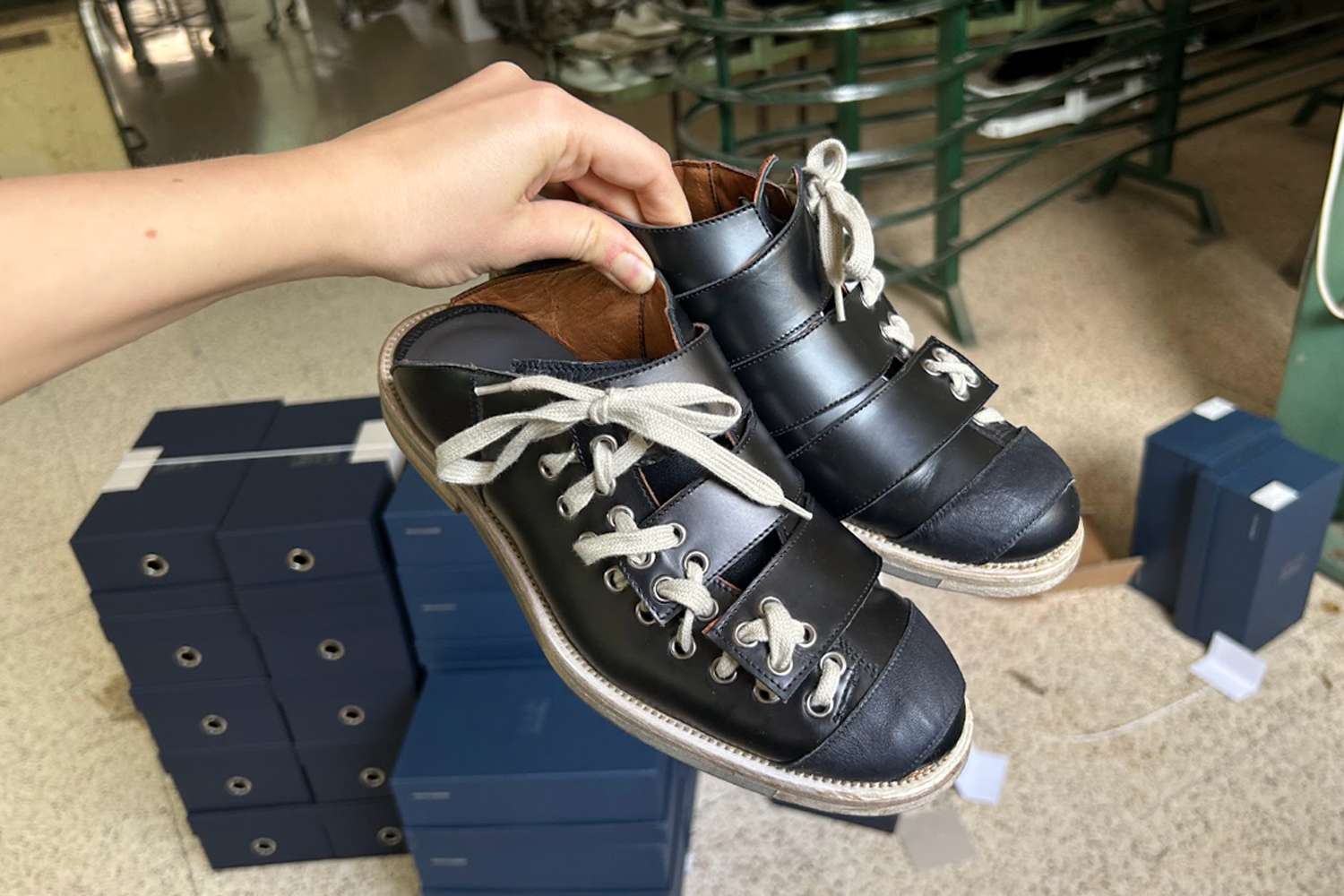
A finished pair of handmade leather shoes displayed outdoors.
The studio utilizes a meticulous, multi-step process where one artisan handles a specific phase of production. Because of this specialized labor, the studio’s handmade shoes sell for between €500 and €800.
Rhodes crafted numerous pieces during her apprenticeship, including green loafers for her mother. Yet, her first creation remains her favorite.
“The most special shoe is definitely the first loafer I made,” she notes. “It was made with so much love and attention. I was so scared to mess up.”
A Viral Goodbye
As her apprenticeship in Campania concluded, Rhodes filmed a TikTok video to document the shoes she had built. The clip exploded online, quickly surpassing 500,000 views.
“I never would have thought how much positivity I would receive,” Rhodes says. “It made me quite emotional seeing so many strangers wish me success.”
The viral reaction validated her unconventional detour. Rhodes initially assumed she would have to leave shoemaking behind upon returning to Canada, but the massive online demand completely shifted her perspective.
Now back in Canada, Rhodes works as a stylist, model, and freelance designer while actively assembling her own shoemaking studio.
“It’s going to take time and lots of tool searching and sourcing,” she says, eager to bring her bold designs to the market.
“If one path or opportunity doesn’t work out, there’s always another direction you can go!” she says. “If that visa worked out, I would have probably never bit the bullet, moved, and made my first shoe.”