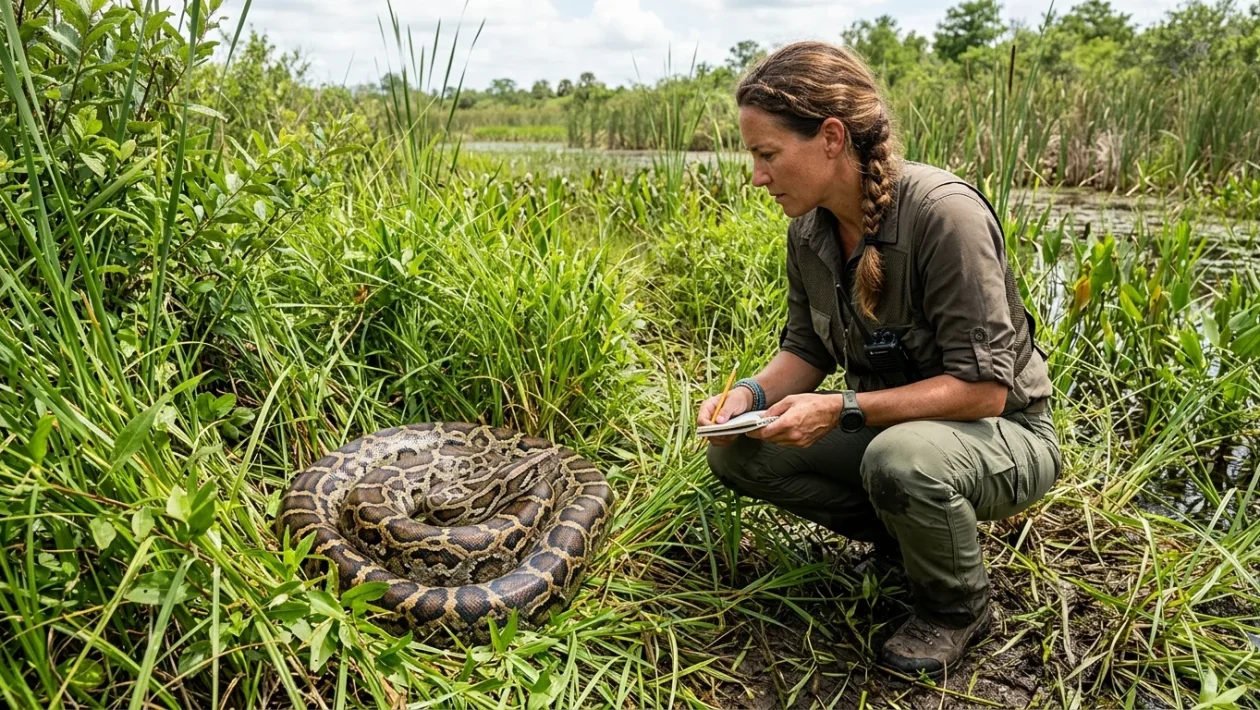
A cluster of invasive Burmese pythons resting together in the wild.
Burmese pythons are expanding their footprint in South Florida, pushing well beyond their established territory in Everglades National Park.
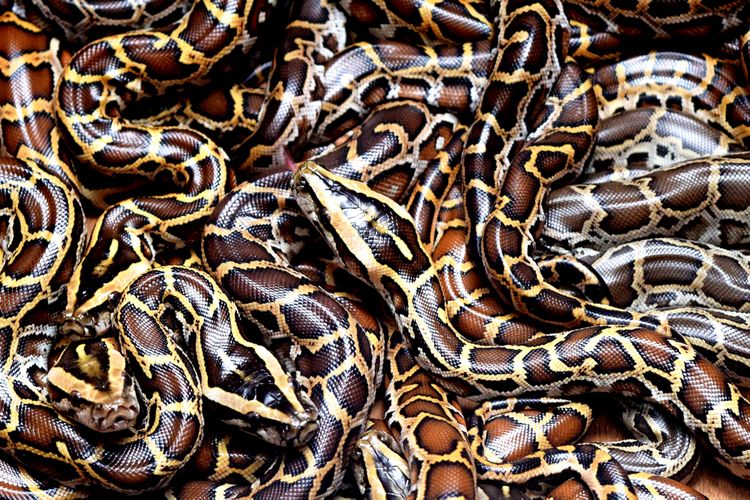
A dense pile of Burmese pythons gathered together.
The Florida Fish and Wildlife Conservation Commission (FWC) recently confirmed the emergence of a new python hotspot in Charlotte County, located north of Naples and Fort Myers.
Historically, the invasive constrictors dominated an area stretching from south of Lake Okeechobee to Key Largo, and from western Broward County to Collier County. Until this recent discovery, wildlife officials assumed any pythons found outside this primary zone were isolated escaped pets.
A Separate Satellite Population
The FWC reports that this new Charlotte County population did not migrate from the Everglades. Evidence suggests the hotspot originated from a localized group of captive snakes that either escaped or were intentionally released.
Confirming the boundaries of these new populations is a complex task. The FWC noted that the cryptic nature of pythons means it takes substantial time to gather enough evidence to officially declare an area as a newly established breeding zone.
Ecosystems Under Siege
As apex predators with virtually no natural threats besides humans, Burmese pythons systematically decimate native wildlife. Their unchecked expansion into Charlotte County threatens to strip the region of its natural resources and local species.
Robert McCleery, a wildlife ecologist at the University of Florida, noted that python invasions rapidly strip biodiversity, leaving behind a “simplified ecosystem” where the invasive snakes dominate the top of the food chain.
“This is a pattern we have not yet found a way to stop or reverse at the scales needed to address the problem,” McCleery stated.
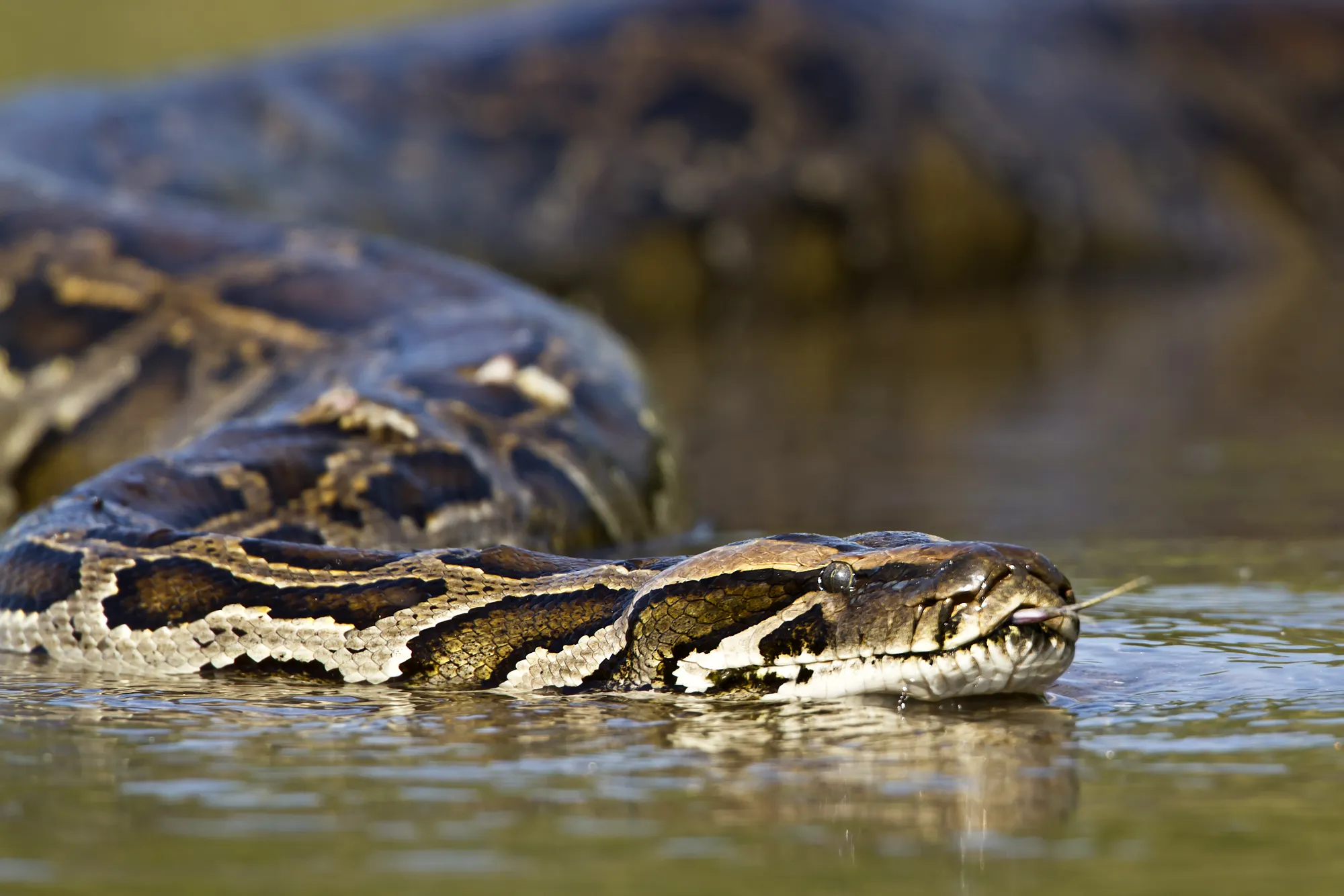
A Burmese python slithering through tall, green grass.
Tracing the Florida Invasion
Native to Southeast Asia, the non-venomous constrictors originally entered Florida’s wild through the exotic pet trade. Their numbers exploded in 1992 after Hurricane Andrew destroyed a captive breeding facility, releasing countless pythons directly into the Everglades.
Keeping a Burmese python as a pet is now illegal in Florida. To prevent further ecological sabotage, the state operates the Exotic Pet Amnesty Program, which allows owners to surrender nonnative species without facing legal penalties.
Florida relies heavily on human intervention to manage the escalating crisis. The state hosts an annual python challenge, recruiting public hunters to track down and humanely euthanize the reptiles to slow their aggressive spread across the state.